


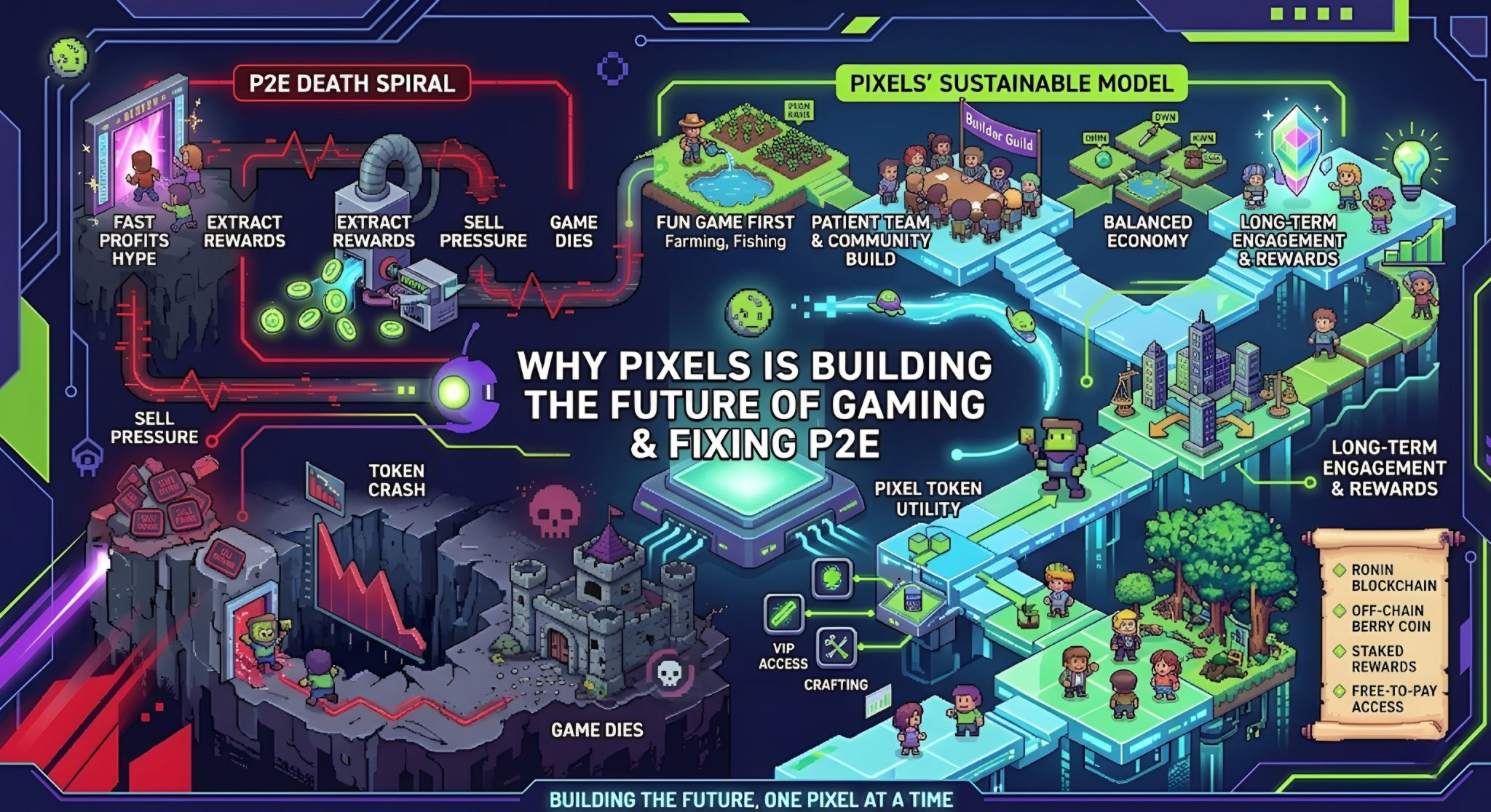
After noticing that recurring line from the Pixels team, I spent some time reflecting on why it stands out to me as a new player.
Most projects I’ve seen in this space start with big ideas, detailed roadmaps, and promises of what the system “will” do one day. Stacked feels different because the team keeps emphasizing that the core infrastructure was already battle-tested inside Pixels itself — processing hundreds of millions of rewards, handling millions of players, and contributing real revenue (they’ve mentioned figures in the tens of millions range from the reward systems).
That “built in production” mindset means the lessons came from actual gameplay data, not just theory. They saw what worked for retention, what caused issues, and what kept the economy healthier over time. Then they productized that experience into Stacked — first powering their own game, and now making it available more broadly.
From my current early stage, this gives the whole thing a more grounded feel. I’m not worried that the rewards layer is some fragile new experiment. The foundation has already been running and improving for a while inside a live game with real economic activity.
It also changes how I think about $PIXEL . The token isn’t carrying the entire weight of unproven mechanics. The system around it has already shown it can support sustainable reward design at scale. That separation — proven LiveOps engine + evolving token utility — feels more mature than many other setups I’ve come across.
Of course, as a beginner my view is still limited. My plot is basic, my activity is small, and I haven’t seen the deeper layers yet. But even at this stage, knowing the team built from real production data rather than starting from scratch makes me more willing to stay consistent and watch how things develop.
I’m particularly interested in how this “production-first” approach will help when other games start plugging into Stacked. Will the same lessons translate smoothly? Will the AI layer (which they mention helps analyze patterns) make reward decisions even sharper?
For now, my personal takeaway is quiet confidence. In a space full of hype and theoretical designs, seeing a team point to actual running systems and learned lessons feels refreshing. It doesn’t promise perfection overnight, but it suggests the foundation is solid because it was already tested where it matters most — with real players in a live game.
I’ll keep playing my short daily sessions and observing. As my own activity grows and more of the ecosystem becomes visible to me, I want to see how this production-honed system actually performs from a regular player’s perspective.
Right now, it already makes the early journey feel more trustworthy.