
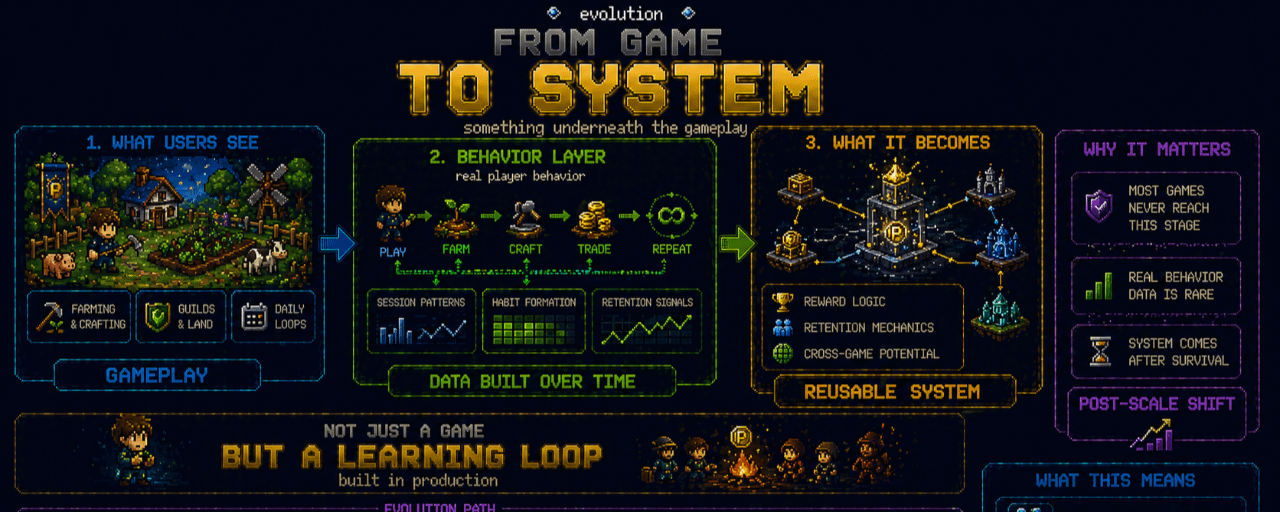
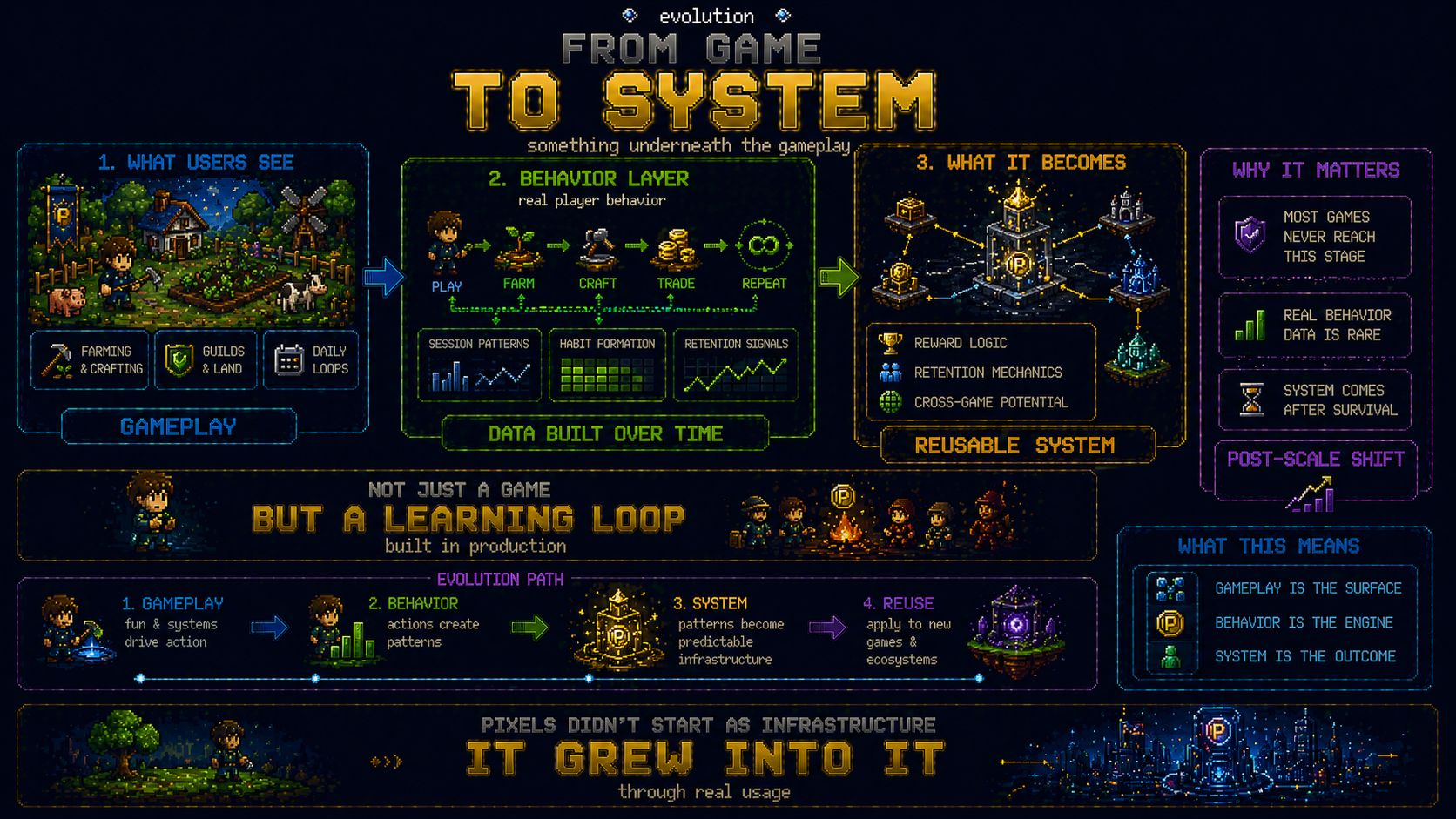
I used to think about Pixels as just another farming MMO that happened to get some traction. But at some point that framing started to feel too small. The more I looked at it, the more it seemed like the real thing they’re building isn’t just the game itself, but something underneath it.
The farming loop still matters, obviously. That’s where the users came from. Farming, crafting, land, guilds, all of that created actual behavior over time, not just short bursts of activity. And in Web3, that kind of data is rare. Most projects never get far enough to understand what real players actually do once the rewards normalize.
That’s why this shift feels important.
When Pixels talks about becoming a platform where other games can plug into shared systems, it changes the question completely. It’s no longer just “is this game fun enough to survive?” It becomes “can this system help other games keep players longer than they normally would?”
That’s a much harder problem, but also a more valuable one if it works.
The token starts to make more sense in that context too. PIXEL isn’t only tied to one loop anymore. Staking, ecosystem support, access across different projects, it all points toward something broader than a single in-game currency. More like a coordination layer across multiple experiences, at least in theory.
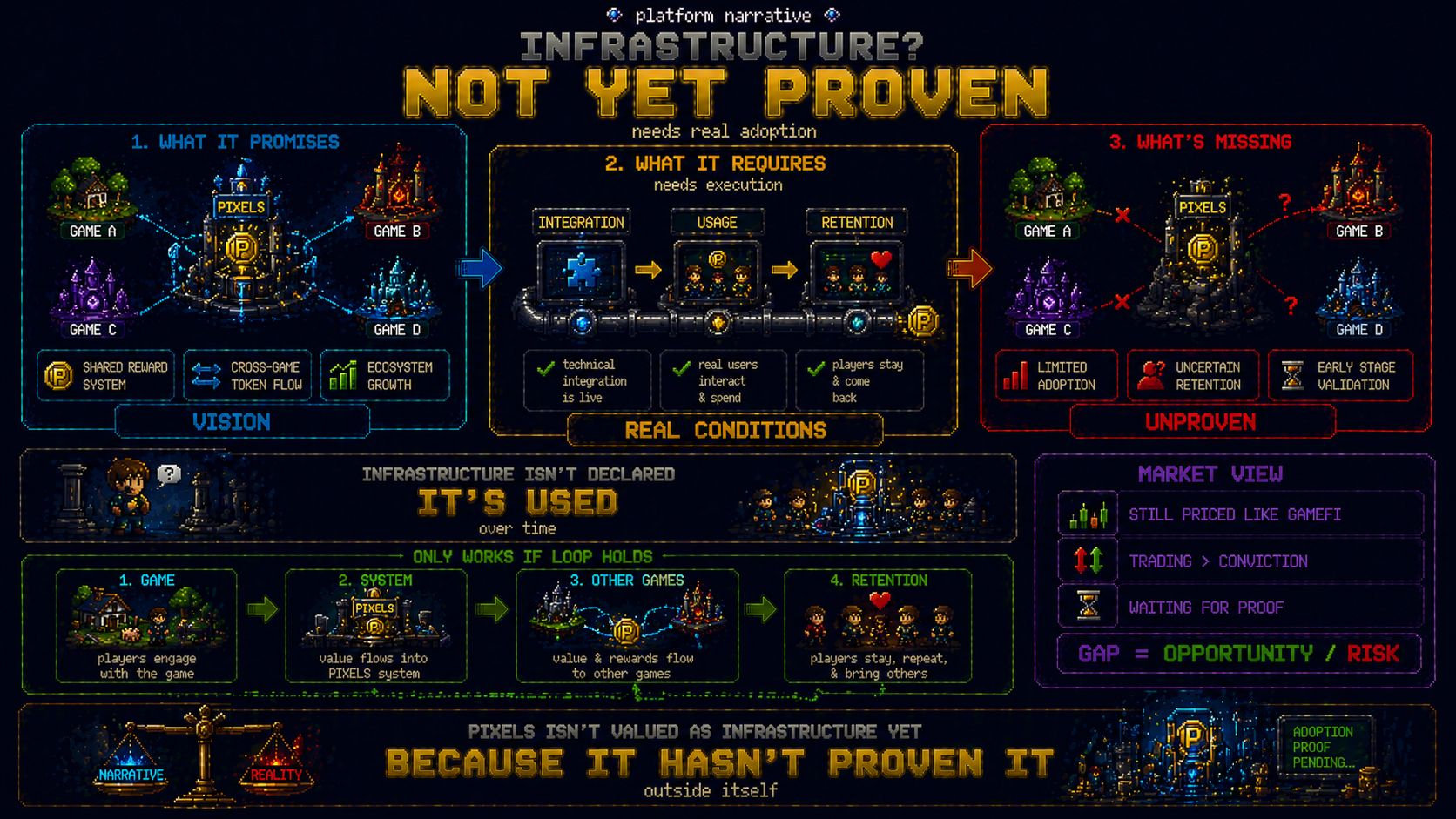
But the market doesn’t fully buy that yet.
Right now it still trades like a small GameFi token. There’s volume, sometimes even a lot relative to its size, but it feels more like active trading than strong conviction. The market cap is still low compared to what an actual “infrastructure layer” narrative would suggest.
And that gap is where things get interesting, but also risky.
Because talking about infrastructure is easy. Proving it is slow. You need other games to actually use it, not just announce integrations. You need those games to keep users, not just attract them for a campaign. And you need the token to be part of that loop in a way that creates real demand, not just temporary spikes.
That’s where everything comes back to retention again.
If Pixels can help other games keep players around longer, if it can turn reward systems into something that builds habits instead of just attracting farmers, then the whole story starts to change. Not overnight, but gradually.
If not, then it stays what a lot of GameFi projects became. A strong idea that works for a while, but doesn’t hold once incentives get weaker.
I don’t think it’s clear yet which way this goes.
But I do think Pixels is at least aiming at the right problem. Not just how to attract users, but how to keep them. And if they can turn that into something reusable across multiple games, then it stops being just one successful title and starts becoming something closer to infrastructure.
Still early though. I’d watch what actually gets built on top of it, not just what gets announced.