

I want to be careful with this one because Tier 5 is the kind of update that generates a lot of heat in community discussions and heat is not the same as clarity.
When Pixels rolled out the Tier 5 upgrade system, the immediate community reaction split along predictable lines. Players who were positioned to benefit talked about expanded progression and deeper gameplay. Players who weren't positioned to benefit talked about widening gaps and pay to win dynamics. Both reactions contained real information. Neither told the whole story.
Here's what Tier 5 actually introduced. A new ceiling on tool and equipment upgrades, pushing the progression system beyond what had previously been the maximum level. Getting to Tier 5 required significant resource investment. Not just time, though time was part of it. Real token expenditure, specific crafting materials, and in some cases assets that weren't accessible to players without existing holdings. The barrier to reaching the new ceiling was meaningfully higher than anything the game had asked for before.
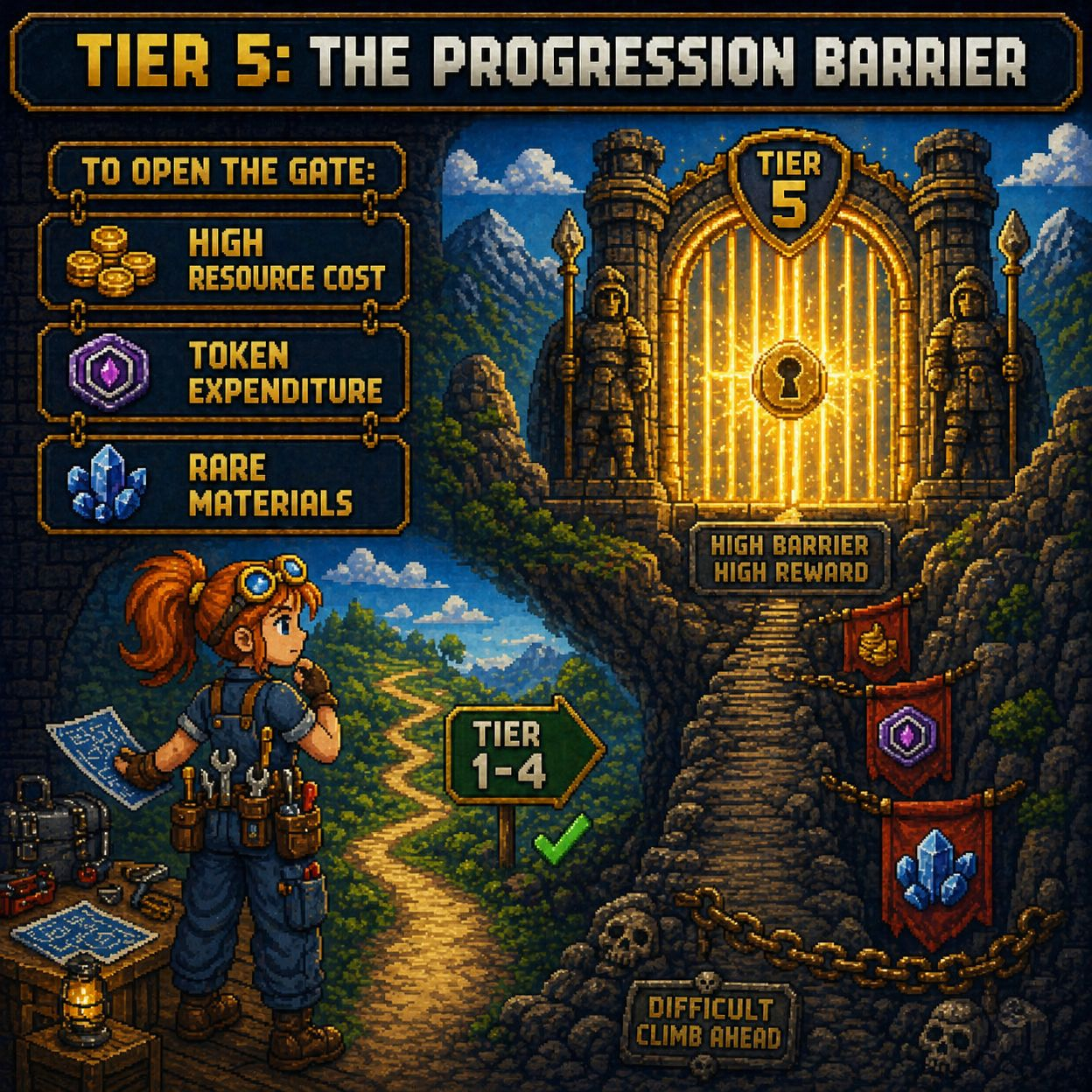
The economic impact started showing up in resource markets almost immediately. Materials required for Tier 5 upgrades saw demand spikes. Players who had been sitting on stockpiles of relevant resources found their holdings suddenly worth considerably more. Players who hadn't anticipated the update and hadn't stockpiled found themselves either paying elevated market prices or accepting that the new content tier wasn't accessible to them yet. That kind of information asymmetry, where well-connected players knew what was coming and positioned accordingly, is one of the persistent tensions in any live game economy.
I'm not suggesting the Pixels team deliberately leaked information to favored players. I don't have evidence of that. What I am saying is that in any community where update speculation is active and some players have deeper relationships with developers than others, the gap between informed and uninformed positioning is real and its consequences show up in market data.
What Tier 5 did to the power structure of the economy is more interesting than what it did to individual resource prices. Before the update, the gap between a well-equipped player and an average player was meaningful but navigable. After Tier 5, players at the ceiling had efficiency advantages that compounded over time. Better tools mean faster farming. Faster farming means more resources. More resources mean more upgrade capacity. The top tier pulling away from the middle is a dynamic that most live game economies struggle with and Pixels is not immune.
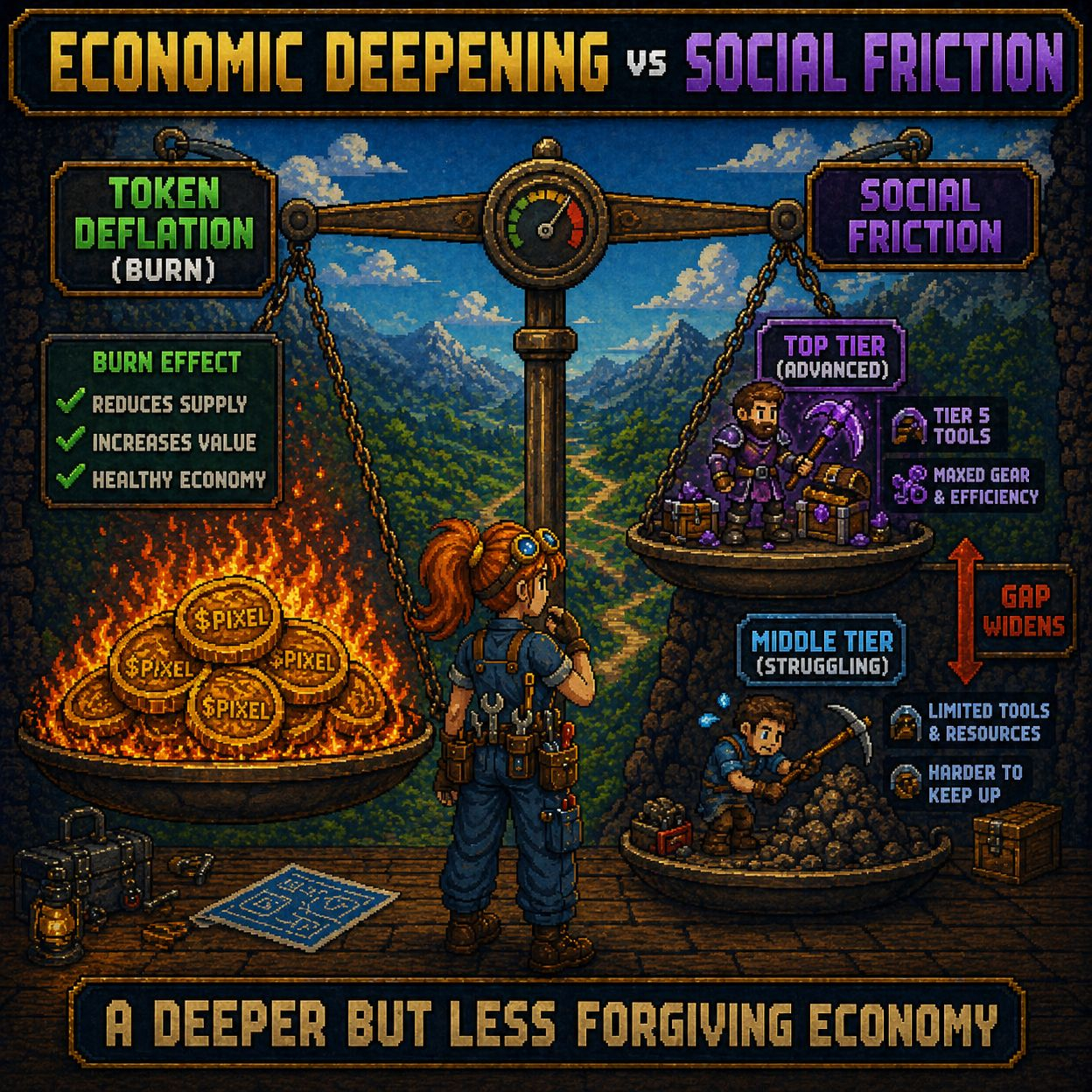
The burn mechanism built into Tier 5 upgrades is the counterargument worth taking seriously. Reaching Tier 5 required destroying significant amounts of PIXEL and other resources. That deflationary pressure was real and measurable. The update pulled substantial value out of circulation at a moment when the additional utility created by new content was also pulling players back into active engagement. From a pure tokenomics perspective the timing was considered.
Whether the gameplay justifies the economic barriers is a question I can't answer cleanly because it depends too much on individual circumstances. For players with deep enough holdings to reach Tier 5 without straining their resources, the new content layer genuinely extended the game in meaningful ways. For players who hit the new ceiling and found it financially out of reach, the update drew a more visible line between the game's tiers of citizenship than had previously existed.
That line was always there in some form. Tier 5 just made it harder to pretend otherwise.
I think the update was well designed in its mechanics and underexamined in its social consequences. Those two things can both be true and I think in this case they are.
The economy got deeper. It also got less forgiving. Whether you see that as progress depends almost entirely on where you were standing when the update dropped.