
It was 11:40 p.m and I was still staring at a small patch of soil in @Pixels my laptop fan buzzing like it had something to prove. I wasn’t there for excitement or rewards. I was waiting. Somewhere along the way, I had stopped thinking like someone chasing quick gains and started thinking like someone responsible for a field. That quiet shift changed how the game felt.
The farming loop itself is simple. You plant, you water, you wait and eventually you harvest. Crops move through visible stages, and if you ignore them or let the soil dry out, they stop progressing or disappear entirely. It sounds like a system you’ve seen before. But the familiarity makes it easy to miss what it’s really doing.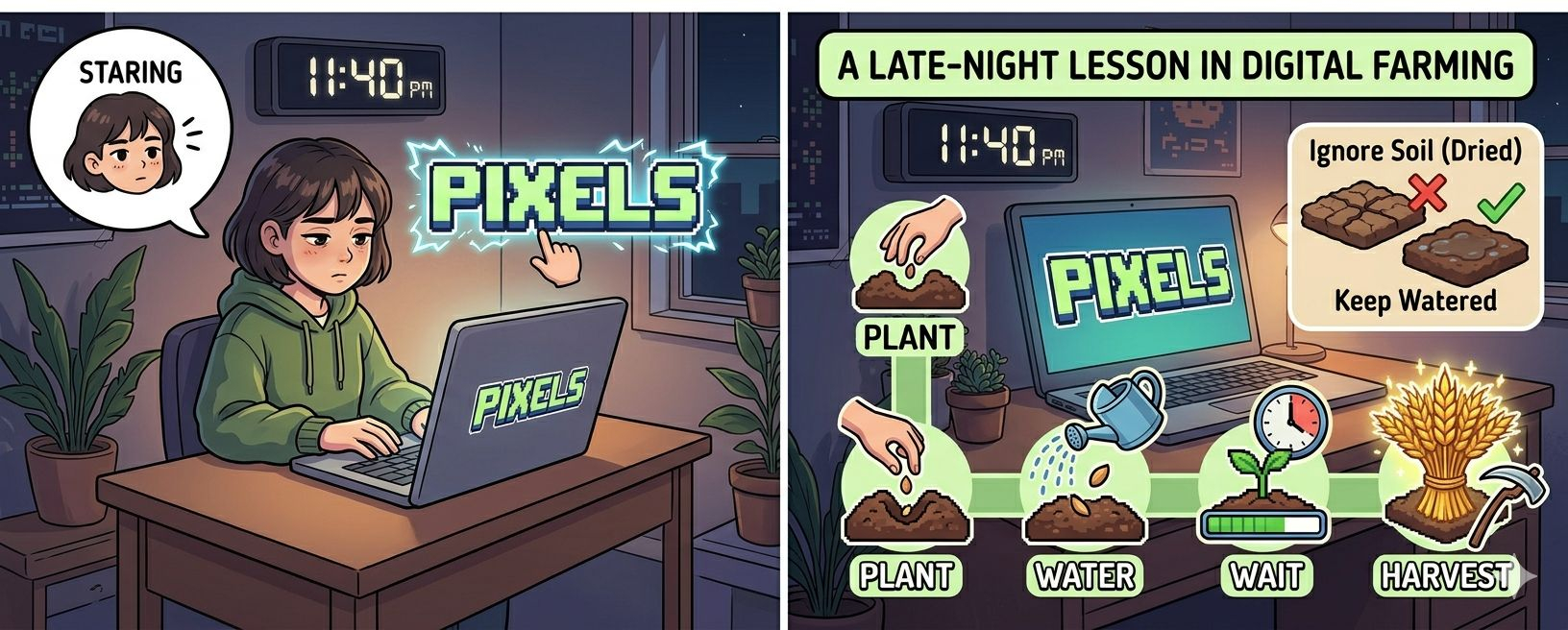
What stands out is the timing. You don’t gain anything when you plant. The reward only comes at the end. That delay forces you to commit. It pushes you to finish what you started instead of jumping between actions. In a space full of instant feedback that kind of design quietly asks for patience.
Energy sits behind all of this, shaping your choices whether you notice it or not. It refills slowly which makes every action feel like a small investment. You can’t do everything, so you have to decide what matters now and what can wait. Expand too fast and you stall. Act without purpose and you create more work than progress.
Because of that, crops stop feeling like simple outputs. They become part of a larger chain. You start thinking about what they lead to. Some connect to recipes or progression while others lose value when everyone produces the same thing. Over time, you realize the system rewards intention more than activity.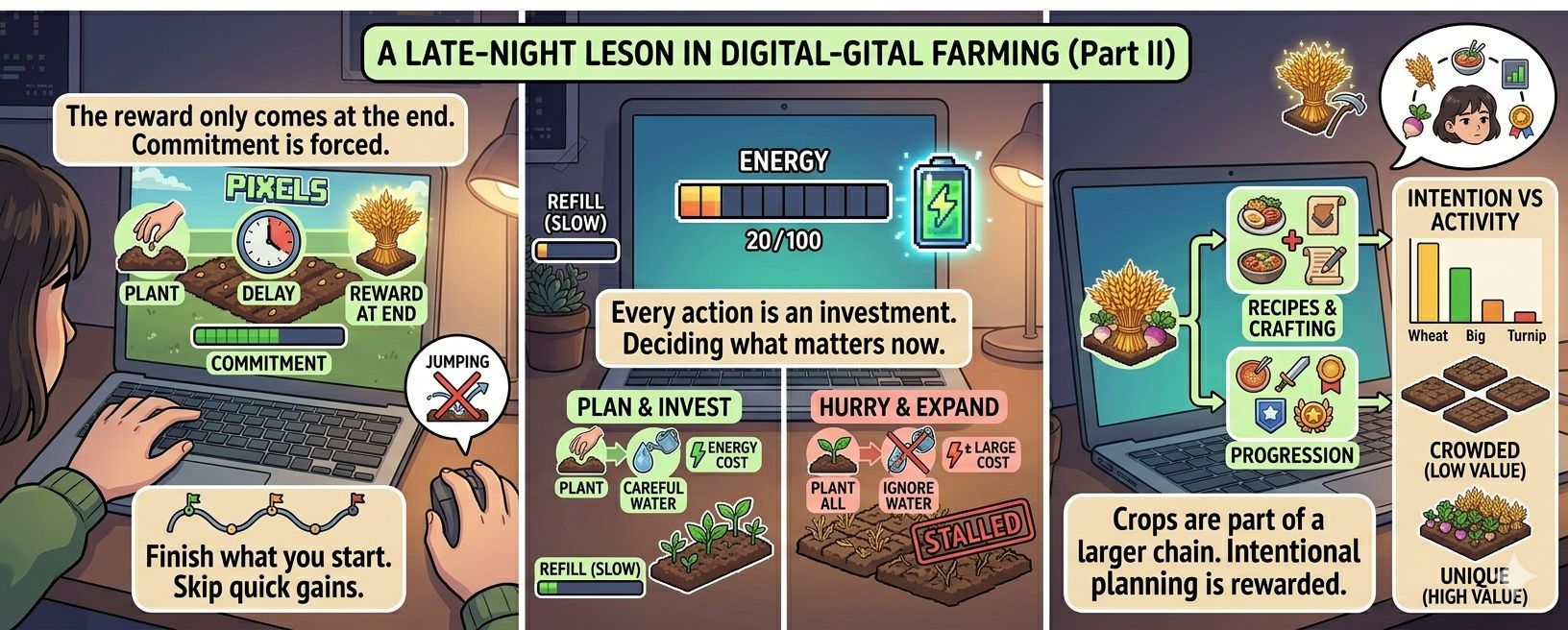
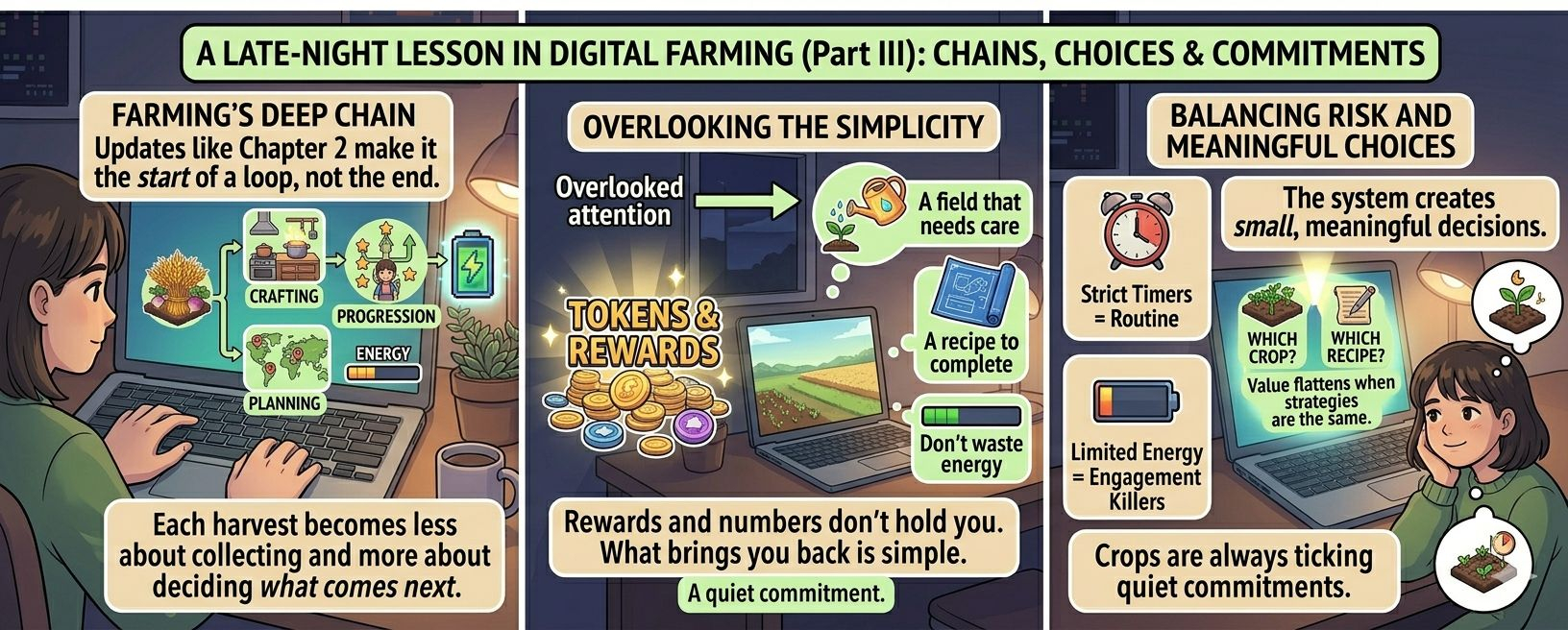
With updates like Chapter 2, that idea grows stronger. Farming doesn’t feel like the end of a loop anymore. It feels like the start of one. Crops feed into crafting, progression and planning. Each harvest becomes less about collecting and more about deciding what comes next.
What’s interesting is how easy it is to overlook this. Most of the attention goes to rewards, tokens or player numbers. But those don’t hold you on their own. What brings you back is simpler. A field that needs care a recipe waiting to be completed or energy that shouldn’t be wasted.
There are risks, of course. If timers feel too strict or energy too limited it turns into routine instead of engagement. If everyone follows the same strategy, value flattens. But when it works the system creates small meaningful decisions. That’s why I don’t see crops as background detail anymore. They feel like quiet commitments always ticking asking me to think before I act.