At first, $PIXEL feels exactly like what you’d expect.
You log in, complete tasks, earn rewards, and repeat. It’s the familiar Web3 loop: farm, craft, sell, earn. Simple. Predictable. Almost comforting in how clearly effort translates into results.
That’s what pulls people in.
But the longer I stayed, the more something started to feel… off.
Not in a bad way — just different. Subtle.
At the beginning, everything behaves like a standard system. You do X, you get Y. But after a while, that clarity starts to blur. I noticed I could repeat the same activity on different days and get slightly different outcomes. Not wildly different — just enough to make me question things.
Rewards didn’t feel fixed.
Market prices shifted in ways that weren’t always obvious.
Some players progressed faster — and not just because they were grinding more.
That’s when it clicked:
PIXEL doesn’t feel like a static game system.
It feels like an environment.
### A Game That Reacts — or Evolves?
In most games, rules are stable. Predictable. You optimize once, and you’re set.
Here, that doesn’t quite work.
The “best” strategy doesn’t stay best for long. Farming, crafting, trading, land ownership — all of them work, but none feel permanently dominant. It’s as if the system is constantly adjusting based on how players behave.
Not forcing change… just nudging it.
And that creates a different kind of experience.
You’re not just playing — you’re adapting.
### Decisions Actually Feel Like Decisions
One thing $PIXEL gets very right: weight.
Spending doesn’t feel trivial. Items aren’t just forgettable assets. Every purchase has a small moment of hesitation behind it — *“Will this still be worth it later?”*
That kind of thinking is rare in games.
It adds tension. And strangely, it makes the experience more meaningful.
### Effort vs Awareness
This is where my doubts start.
Is pixel really about effort?
Or is it about awareness?
Because some players clearly move ahead faster — not through sheer grinding, but through timing, positioning, and understanding the system better.
If that’s the case, newer players may always be a step behind, no matter how much effort they put in.
That doesn’t make the system unfair.
But it does make it… unequal.
And that’s an important distinction.
### A Fragile but Fascinating Economy
The in-game economy feels alive — but also sensitive.
Small shifts in player behavior can ripple across everything:
* Prices fluctuate
* Demand changes
* Strategies stop working
It keeps things dynamic and interesting.
But it also introduces instability.
Whether that’s intentional design or just early-stage chaos is hard to say.
### The Hidden Power of Coordination
Another layer becomes visible over time: groups.
Guilds and coordinated players have a clear edge. Not through pay-to-win mechanics, but through shared knowledge, timing, and collective action.
They don’t break the system.
They understand it better.
And that alone is enough to create an advantage.
### So What Is $PIXEL, Really?
Most people log in and see a game.
I don’t think that’s the full picture.
There’s something deeper happening beneath the surface — a system that subtly shapes behavior, influences decisions, and evolves with its players.
It doesn’t control you.
But it nudges you.
And once you notice that, it’s hard to ignore.
### Final Thought
PIXEL isn’t just “play to earn.”
It’s closer to:
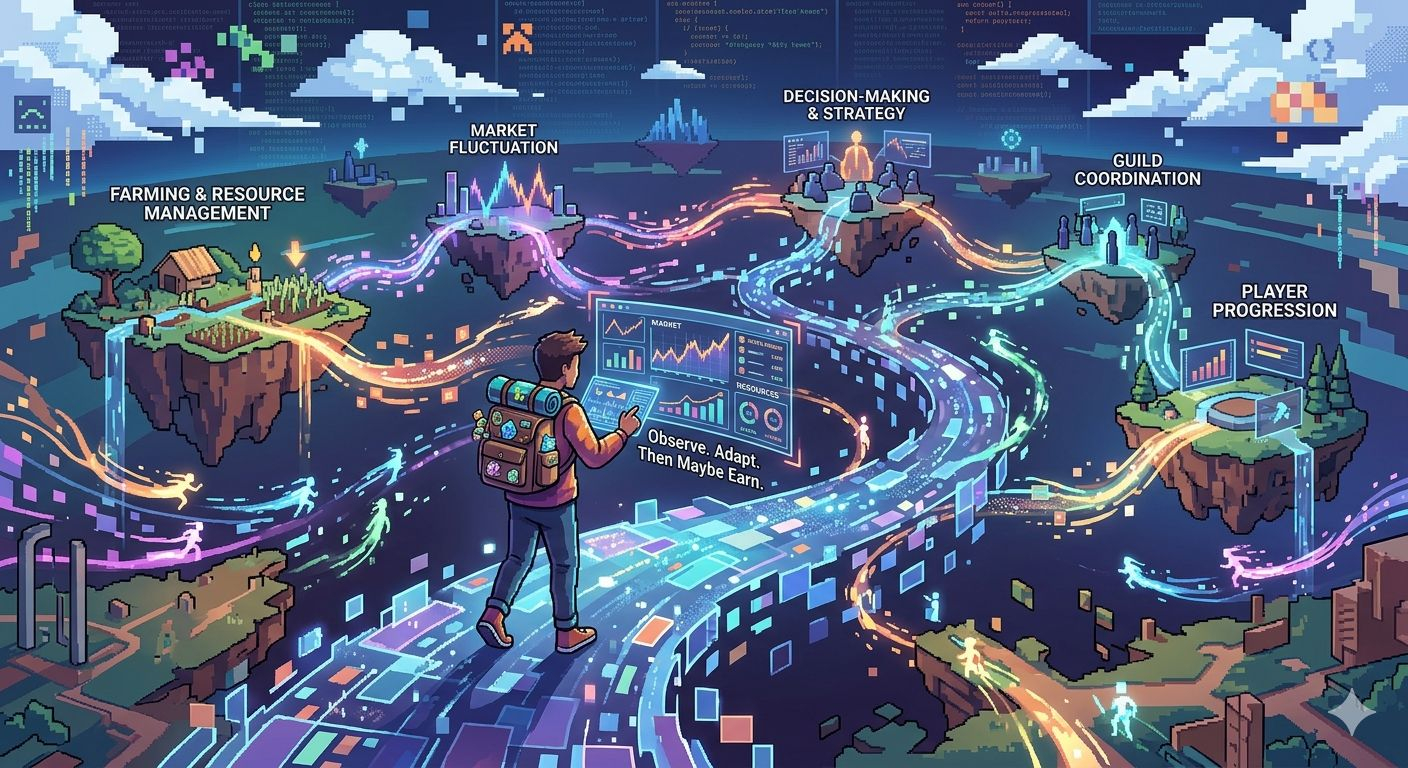
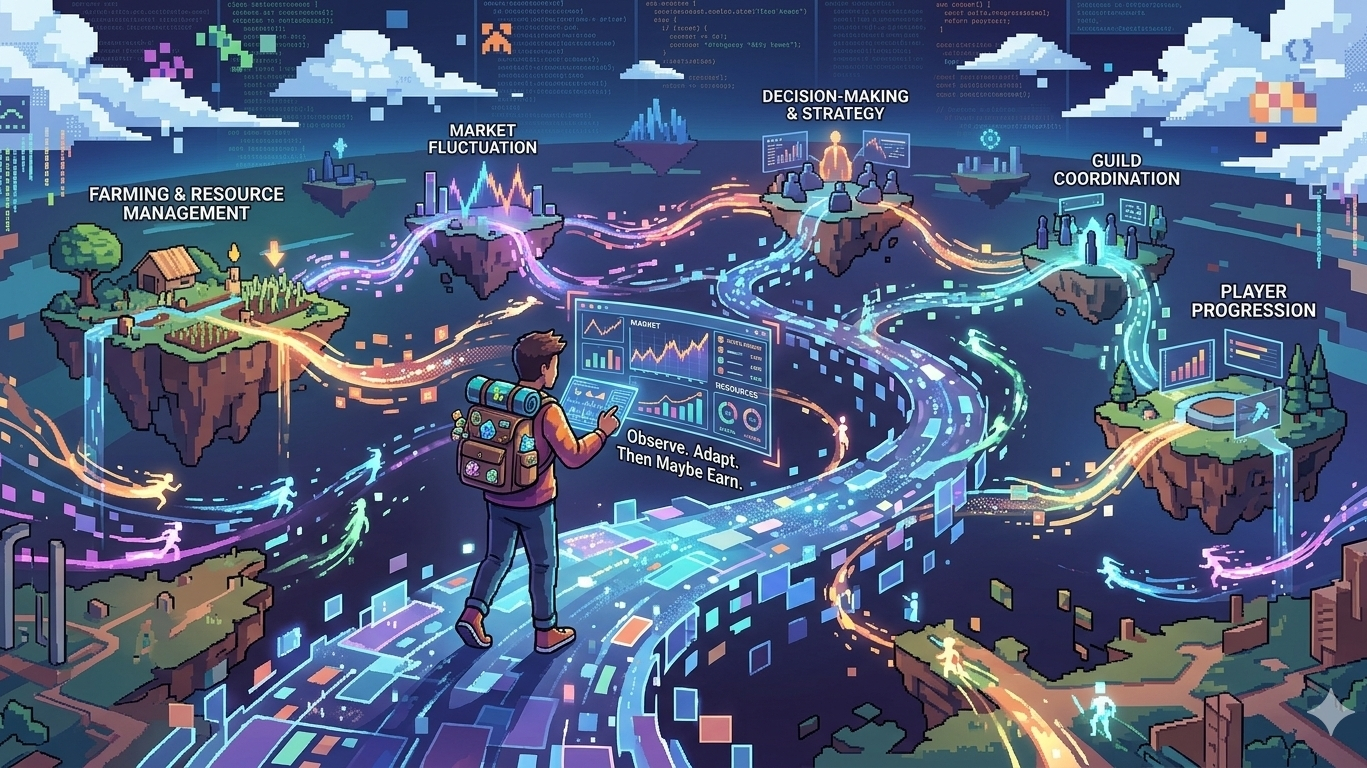
**Observe. Adapt. Then maybe earn.**
And that shift — from playing a system to navigating an environment — is what makes it both fascinating… and a little uncomfortable.
Because if the system is shaping how we play,
how much of it is really our choice?
I don’t have a clear answer yet.
But I know one thing:
I can’t see
PIXEL the same way I did on day one.