
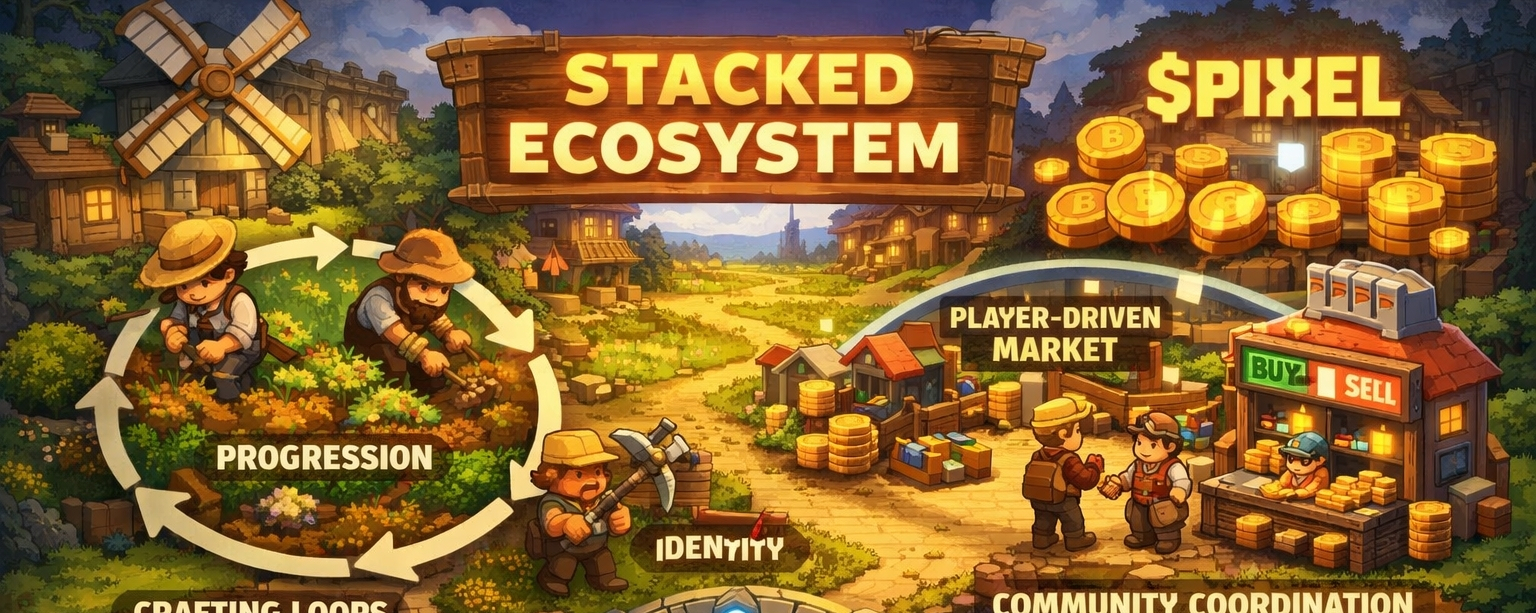
If you’ve been following @Pixels, you’ve probably noticed the community has matured past the “is this fun?” stage into a more interesting question: can this world keep compounding value for players over time? That’s where the Stacked ecosystem matters.
Stacked isn’t just “more content.” It’s a design direction: a way to stack progress, identity, resources, and coordination into a loop that feels persistent. In most game economies, value is fragile—rewards inflate, attention moves on, and the market resets. In a stacked ecosystem, the goal is different: create systems where effort translates into meaningful, reusable advantages (without breaking balance). That’s how you get retention that doesn’t rely on constant giveaways.
For anyone watching $PIXEL, the signal isn’t a single update or a short-term price move. The deeper signal is whether Pixels keeps improving the plumbing of its world: smart sinks to offset sources, reasons to specialize, and player-driven markets that feel alive rather than scripted. When the economy has friction in the right places, communities form strategies, roles emerge, and gameplay becomes social infrastructure—not just a grind.
What I’m most bullish on with Pixels is the possibility that Stacked becomes a platform for composable progression: new features that don’t replace the old ones, but connect to them. That’s how an onchain game stops feeling like seasons of hype and starts feeling like a place people actually live in.
What part of the Stacked ecosystem do you think will drive the next wave of growth for @Pixels: crafting loops, market depth, or community coordination? #pixel