

The first thing most people miss about Pixels is that it’s not competing with traditional games it’s competing with yield opportunities. When you watch player behavior on-chain and in-game, the decision to log in isn’t driven by “fun” in the conventional sense; it’s driven by relative return per unit of attention. That reframes everything. When farming output drops below what a user can earn rotating into a low-risk DeFi pool or another play-to-earn loop, engagement decays almost immediately. This makes PIXEL less of a gaming token and more of a variable-yield instrument tied to user activity velocity.
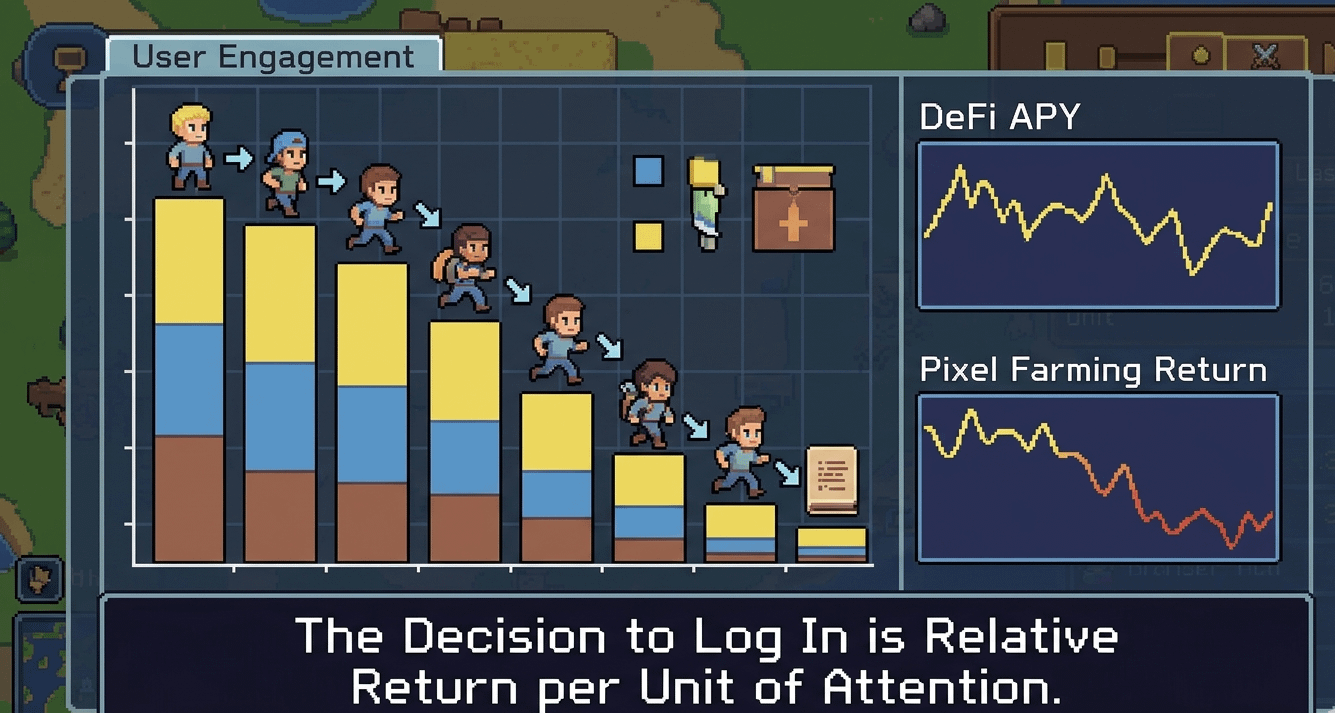
On Ronin Network, this dynamic becomes even clearer because of how capital clusters. Ronin users are already conditioned by prior ecosystems (Axie-era capital behavior) to aggressively optimize yield extraction. That means Pixels inherits a user base that is hypersensitive to emission changes. When token rewards are adjusted even slightly you can see wallet clustering shift within days, not weeks. This isn’t a slow feedback loop like Web2 gaming; it’s reflexive capital rotation at blockchain speed.
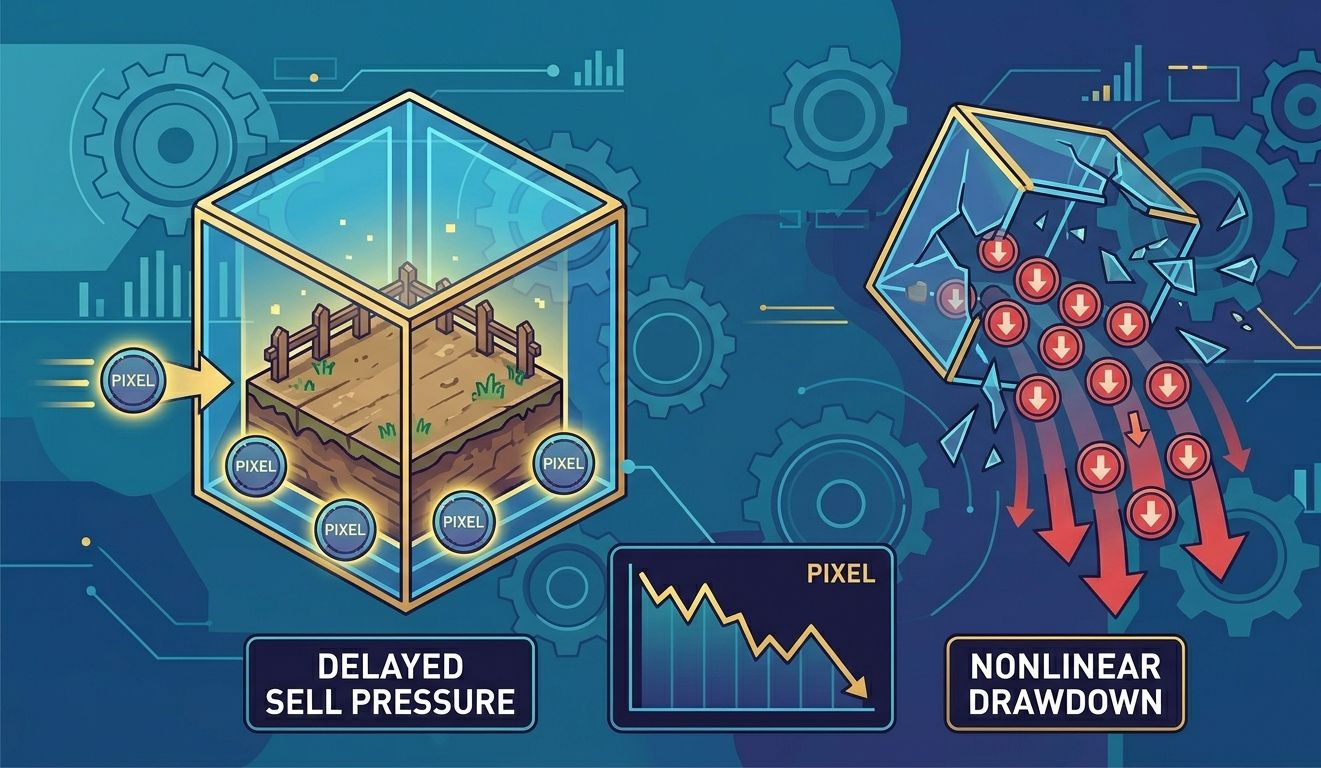
Another overlooked layer is how land ownership inside Pixels acts as a soft liquidity sink. Land isn’t just cosmetic it’s a yield amplifier. But unlike LP positions, it’s illiquid, meaning capital gets semi-locked in a non-fungible structure. When PIXEL price drops, landholders don’t instantly exit; they hold and continue farming to offset losses. That delays sell pressure in the short term but amplifies it later, because once profitability flips negative even with boosted yields, exits happen in clusters. This creates sharp, nonlinear drawdowns rather than smooth corrections.
From a token flow perspective, PIXEL emissions behave more like a continuously compounding inflation schedule than a standard reward system. Most players don’t hold they cycle. Earn → sell → reallocate. That creates a constant baseline sell pressure that must be absorbed either by new entrants or speculative positioning. If you track DEX liquidity depth on Ronin and bridges to external chains, you’ll notice that price stability only holds when inflows from outside the ecosystem exceed internal emissions. The moment that balance flips, price starts drifting regardless of user growth.
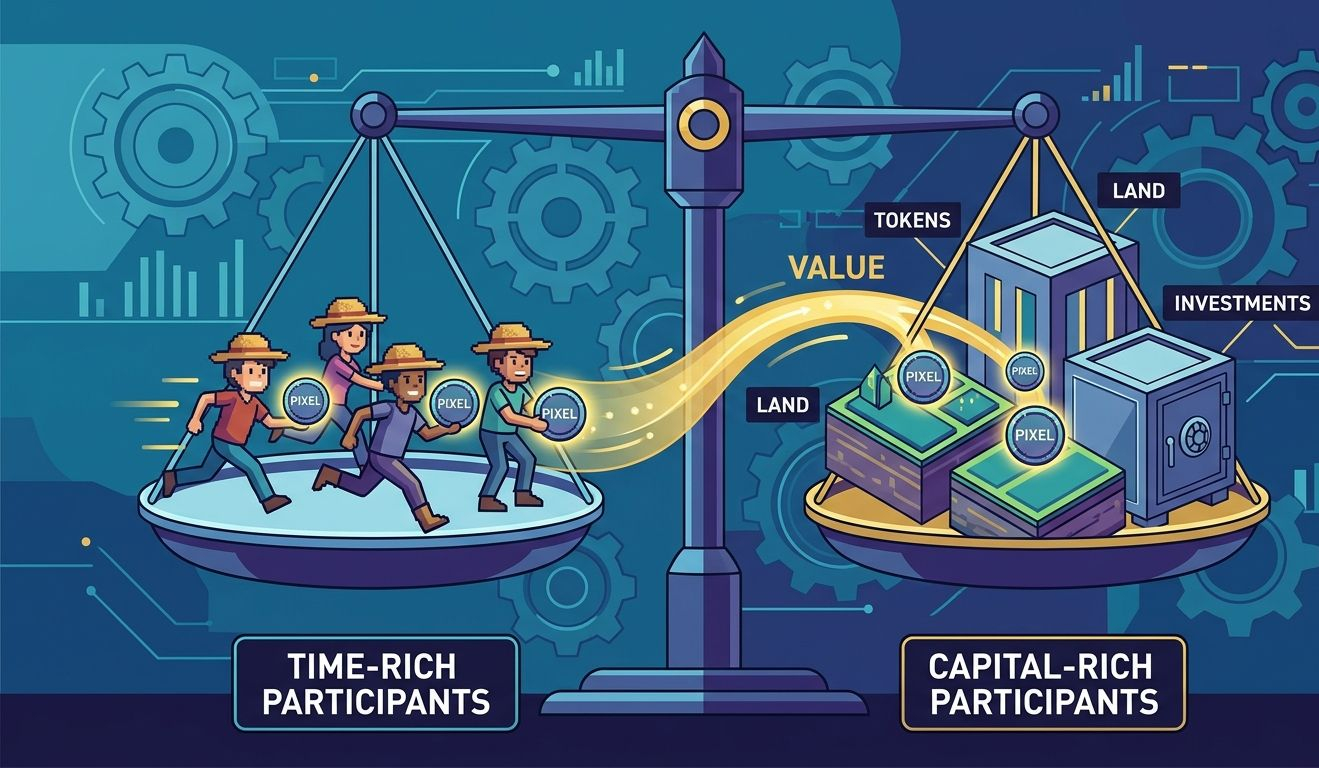
What’s interesting is how Pixels indirectly creates arbitrage between time-rich and capital-rich participants. Players with time optimize farming loops and dump tokens, while capital-heavy players accumulate land or speculate on PIXEL during drawdowns. This creates a structural transfer of value from active users to passive investors similar to liquidity mining cycles in DeFi. But unlike DeFi, the “work” here is gamified, which delays user fatigue… until it doesn’t. When fatigue hits, it’s sudden, and on-chain activity drops sharply rather than gradually.
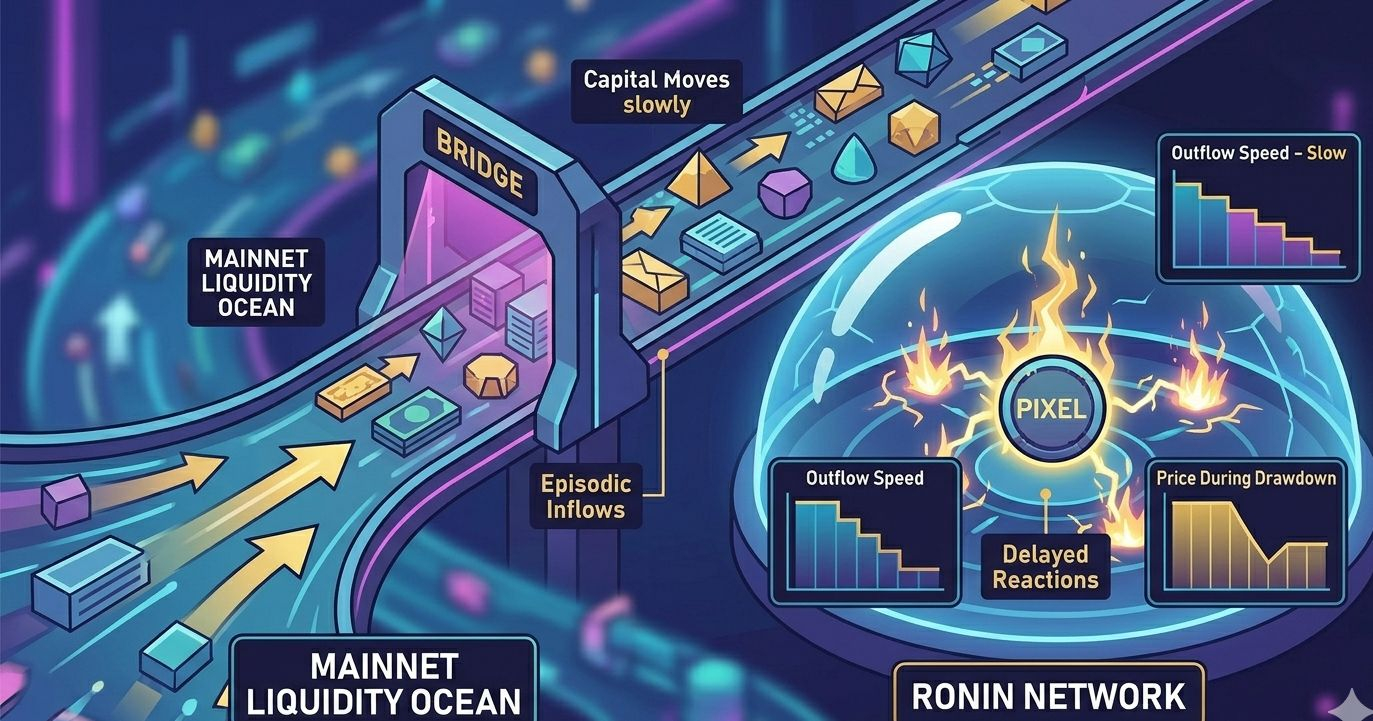
The Ronin ecosystem itself adds another layer of complexity. Because it’s somewhat siloed compared to Ethereum mainnet, liquidity inflows are episodic rather than continuous. Bridges act as friction points. When market-wide risk appetite increases, capital doesn’t automatically flow into PIXEL it has to deliberately bridge in. That delay creates lagging price reactions compared to tokens on more liquid chains. But the flip side is that outflows are also delayed, which can temporarily stabilize price during broader market drawdowns.
One of the more subtle signals to watch is wallet concentration in reward harvesting contracts. When a small number of wallets begin capturing a disproportionate share of emissions, it usually precedes a decline in retail participation. That’s because optimization strategies (multi-accounting, scripting, routing efficiency) start dominating the ecosystem. At that point, Pixels shifts from a broad participation model to an extraction model, where only the most efficient actors remain profitable. Historically, that phase doesn’t sustain long-term price appreciation.
There’s also a behavioral layer tied to narrative cycles. Pixels gained traction partly because it felt like a “lighter” version of previous GameFi models less upfront cost, more accessibility. But narratives don’t hold without economic reinforcement. If returns compress while other sectors (AI tokens, memecoins, or L2 ecosystems) outperform, attention rotates fast. In crypto, attention is liquidity. Once attention leaves, even a functional economy struggles to maintain token demand.
From a forward-looking standpoint, the key variable isn’t user growth it’s retention under declining emissions. Anyone can bootstrap users with incentives. The real test is whether players stay when rewards normalize. Early data suggests retention is tightly coupled to profitability, not gameplay depth. That’s a fragile foundation. Unless Pixels introduces sinks that meaningfully recycle value back into the ecosystem (not just delay selling), the long-term equilibrium trends toward lower token valuation.
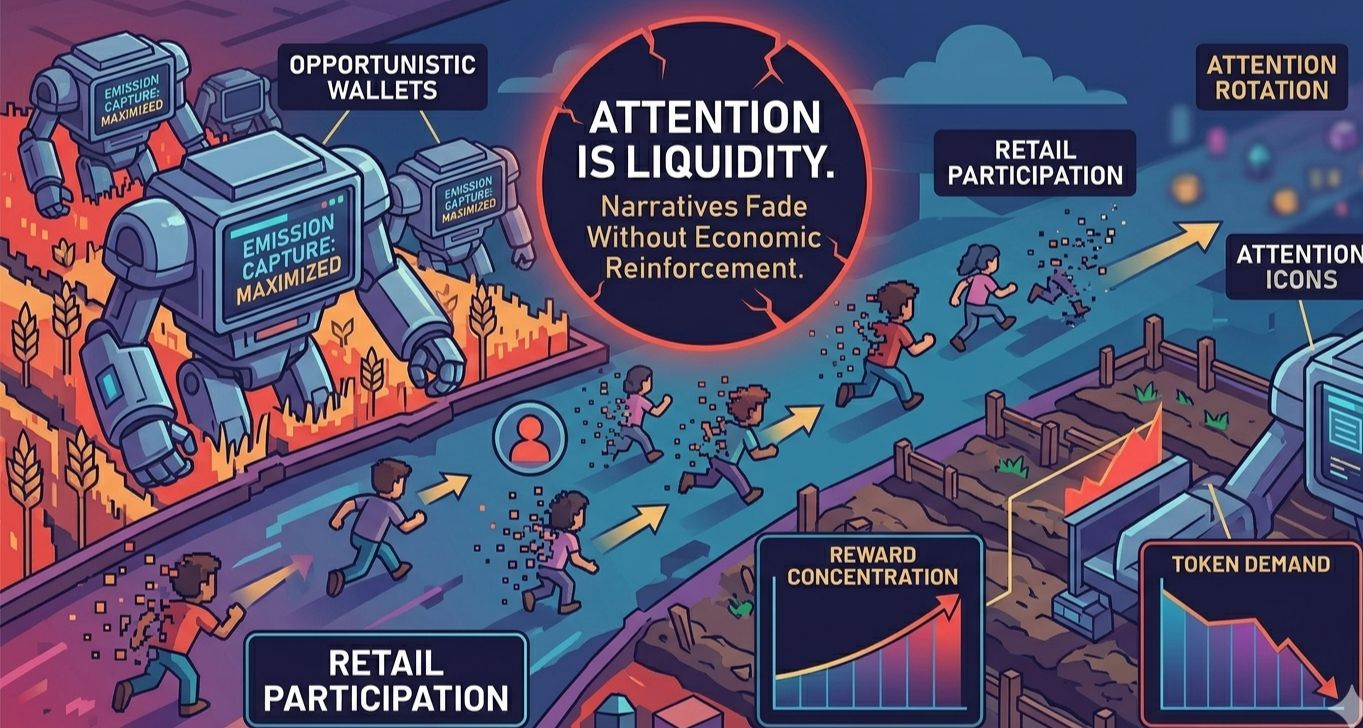
Finally, the most important insight: PIXEL trades less like a gaming asset and more like a reflexive loop between emissions, user activity, and external liquidity. If you’re approaching it like a traditional altcoin, you’ll misread it. The edge comes from tracking behavior wallet flows, bridge activity, reward concentration not announcements or updates. Because in this system, fundamentals don’t lead price. Participant behavior does.
