
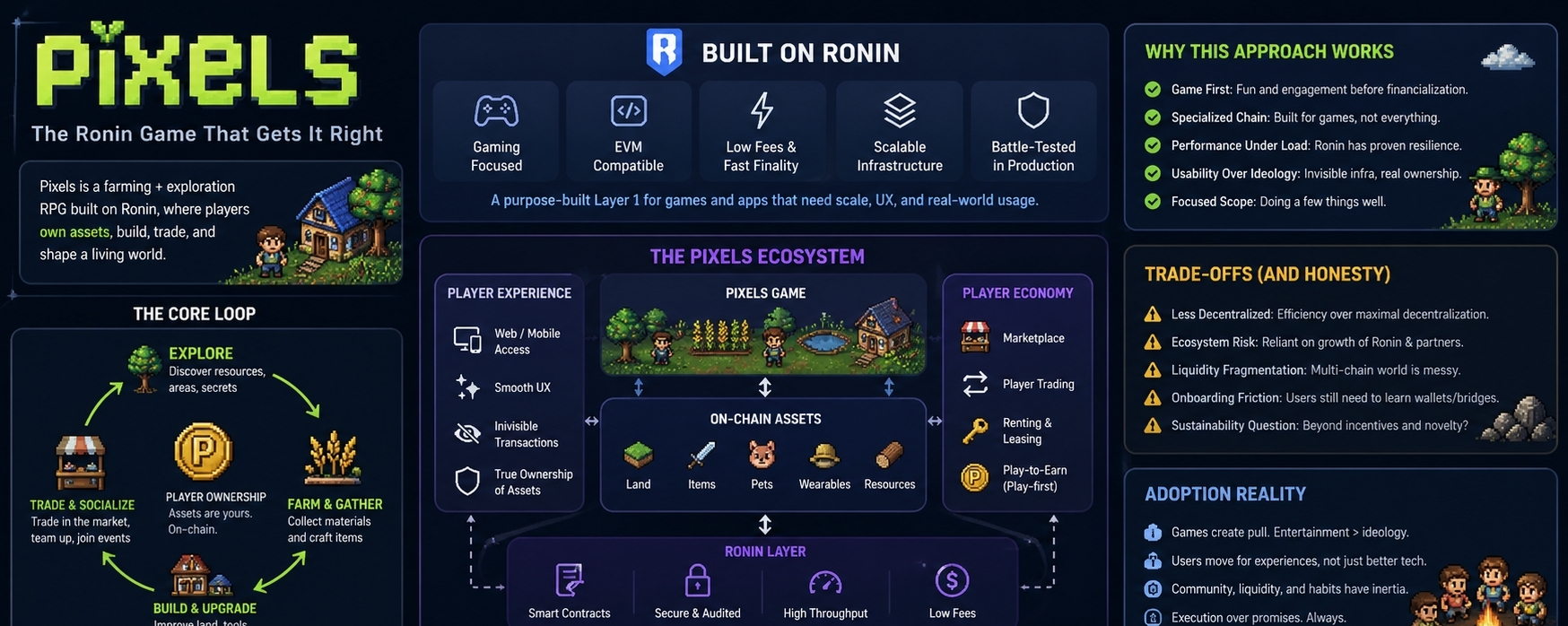
Pixels is one of those projects that doesn't immediately trigger the usual alarms. That's already something. The first time I looked at it, it felt less like a whitepaper exercise and more like an actual product. A place people might spend time in, not just park capital and wait for someone else to buy higher. That alone separates it from a lot of crypto. It's built around farming, exploration, ownership, all the usual ingredients, sure, but the thing that stands out is that it actually seems interested in being a game first. That's rare. Crypto has spent years trying to convince itself that financial incentives can replace fun. They can't.
Of course, Pixels sits on Ronin, and Ronin has effectively become its own kind of Layer 1 ecosystem. Specialized, focused, not trying to be everything to everyone. Which honestly might be the smartest decision a blockchain can make right now. We've seen enough "general purpose" chains launch with massive valuations and very little reason to exist. Every cycle, there's another one. Faster, cheaper, more decentralized, more AI-enabled, apparently capable of curing boredom and fixing global finance before lunch. After a while, it all blends together.
And the truth is, most chains look great when nobody is using them.
That's always the part people forget. Throughput numbers in ideal conditions don't mean much. A blockchain isn't really tested until real people start hammering it at the same time, doing dumb things, spamming transactions, minting nonsense, chasing yield, liquidating each other. That's when architecture stops being theory and starts becoming a problem. Traffic reveals everything. It exposes shortcuts. It punishes assumptions.
Solana is a good example. When it's working well, it feels fantastic. Almost suspiciously smooth. You click, things happen, and you start wondering why the rest of crypto feels stuck in 2017. But heavy demand has shown where the edges are. Not catastrophic, not fatal, just real. That's what maturity looks like, honestly. Systems bend. Sometimes they creak.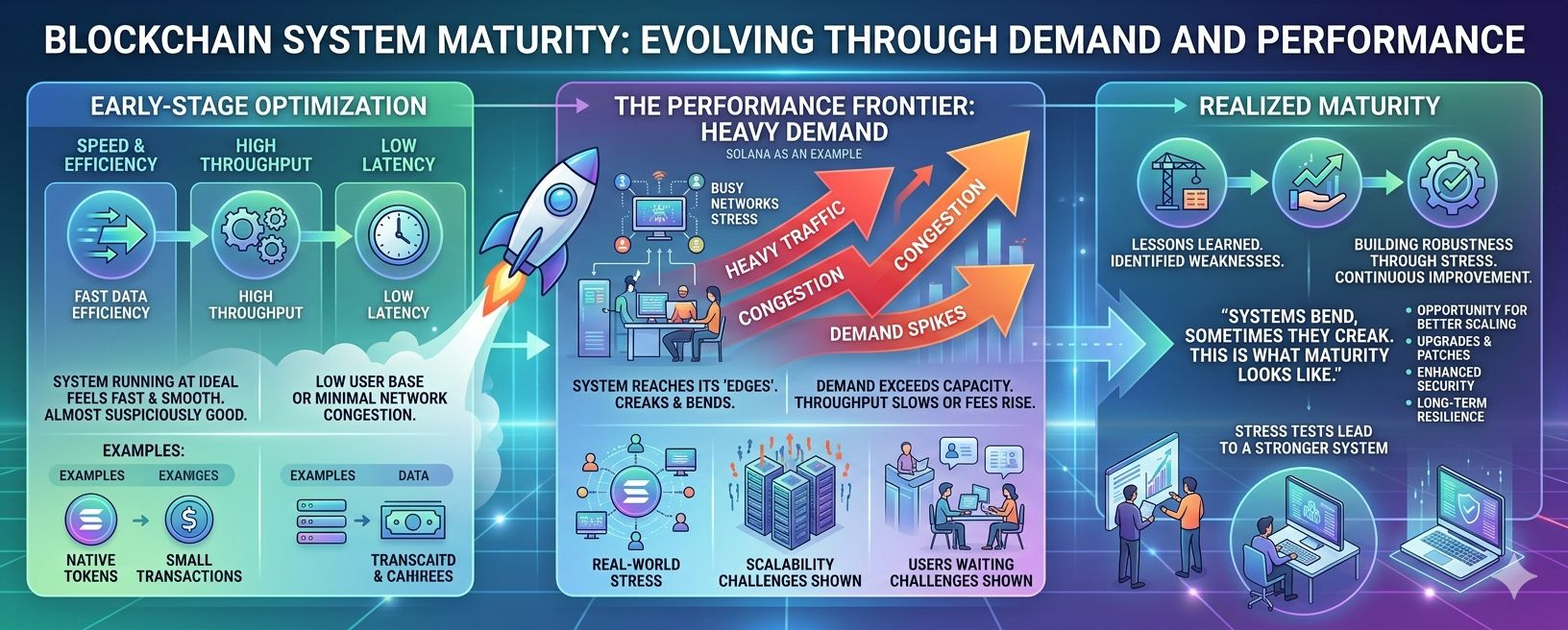
Ronin, and by extension Pixels, seems to understand something simple that a lot of Layer 1s still resist: specialization matters. Maybe the future isn't one chain swallowing the world. Maybe that's just a story investors like because it's easier to model. In reality, people use different systems for different reasons. Games probably shouldn't compete for block space with meme coin stampedes and perpetual futures traders. That arrangement has always felt a little ridiculous.
Whether a multi-chain world is elegant is another question. It probably isn't. Bridges remain awkward. Liquidity fragments. Users get confused. Half the industry still struggles to explain what network they're on. But practical systems are often messy. The internet certainly is.
What Pixels seems to notice, quietly, is that users don't care about consensus mechanisms. They care about whether the game loads, whether transactions feel invisible, whether assets actually belong to them without turning every interaction into a tax event. That's a much more grounded starting point than most crypto projects ever have.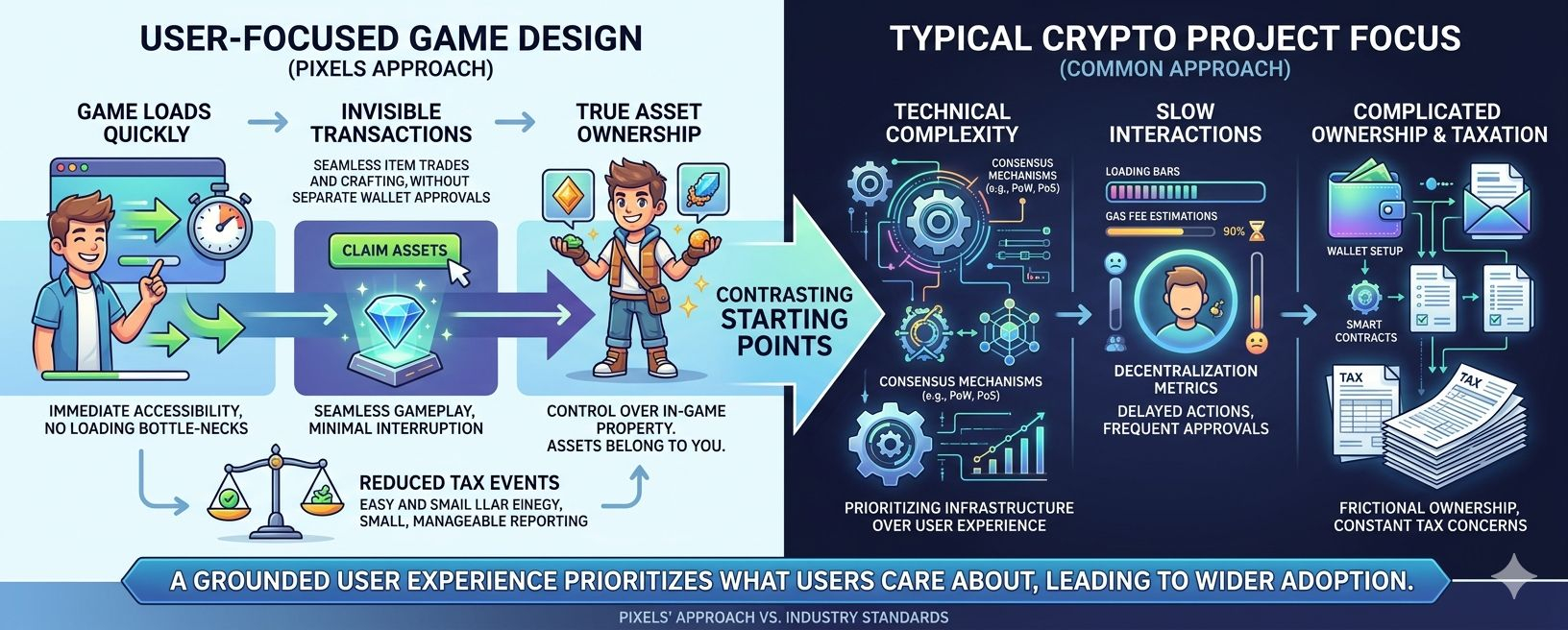
There are trade-offs, obviously. Ronin leans toward efficiency and usability over maximal decentralization. Purists will complain. They always do. But there is a point where ideological perfection becomes a product flaw. If nobody can use the thing comfortably, the philosophy doesn't matter much. Pixels seems willing to accept that compromise.
And it ignores a lot too, intentionally. It isn't trying to become a universal settlement layer. It isn't pretending to host every application category under the sun. There's discipline in that. Limitation can be healthy. Crypto doesn't reward restraint very often, but users usually do.
Adoption is where things get difficult. Always. It's one thing to build a solid ecosystem. It's another to pull people away from where their assets, friends, and habits already live. Liquidity has inertia. Communities have inertia. Most users don't migrate because a chain is technically better. They move because there's something there they genuinely want.
Pixels has a better shot than most because games can create that pull. Entertainment is stronger than ideology. Stronger than APY, usually. People will learn wallets and bridges if they're having fun. We've seen that before. Not often, but enough times to know it's possible.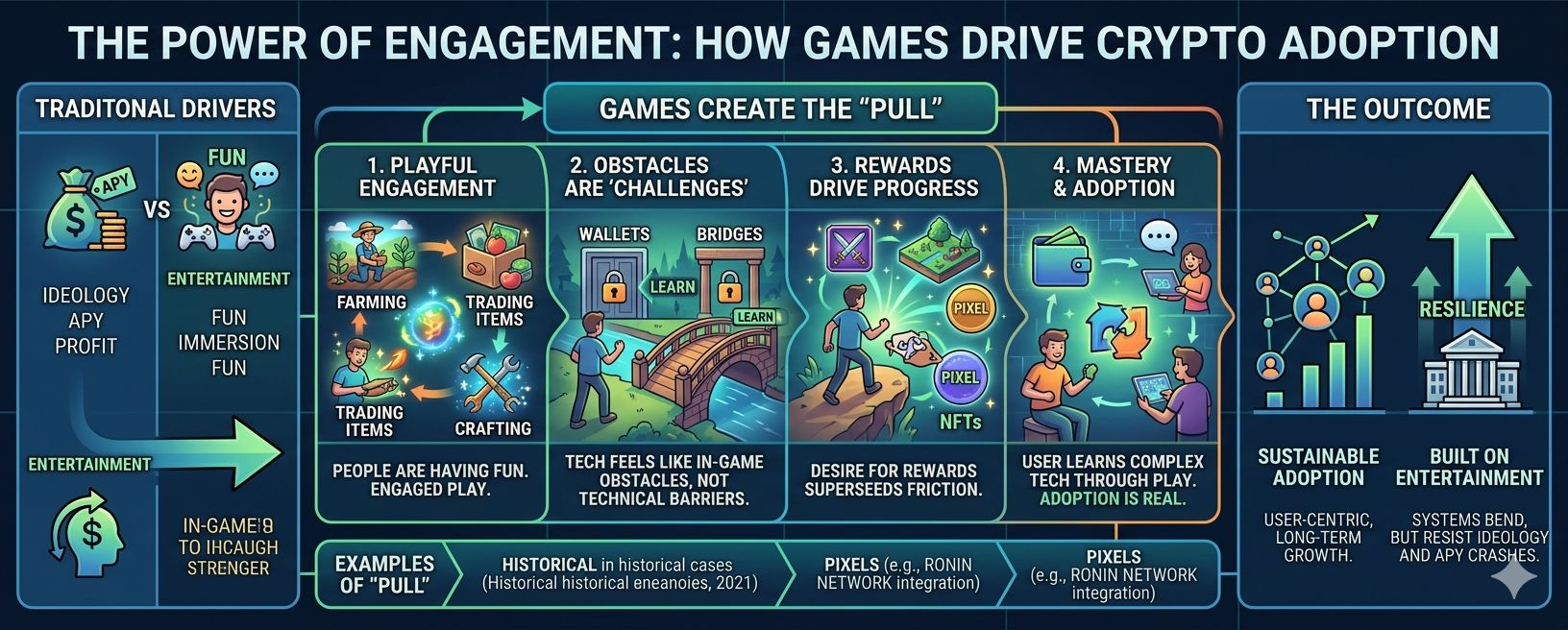
Still, the doubts are obvious. Can it maintain engagement once the novelty wears off? Can it survive beyond token incentives? Can the broader Ronin ecosystem grow without relying too heavily on a handful of flagship applications? Those aren't small questions. They're the whole game.
The AI buzz has infected everything lately, and thankfully Pixels mostly avoids leaning on that crutch. That's refreshing. Not every project needs an artificial intelligence layer stapled onto it like an afterthought. Sometimes a game can just be a game. Sometimes infrastructure can just work.
And maybe that's the real appeal here. Pixels doesn't feel like it's trying to reinvent civilization. It feels like it's trying to build something people will actually use. That sounds obvious, but in crypto, it really isn't.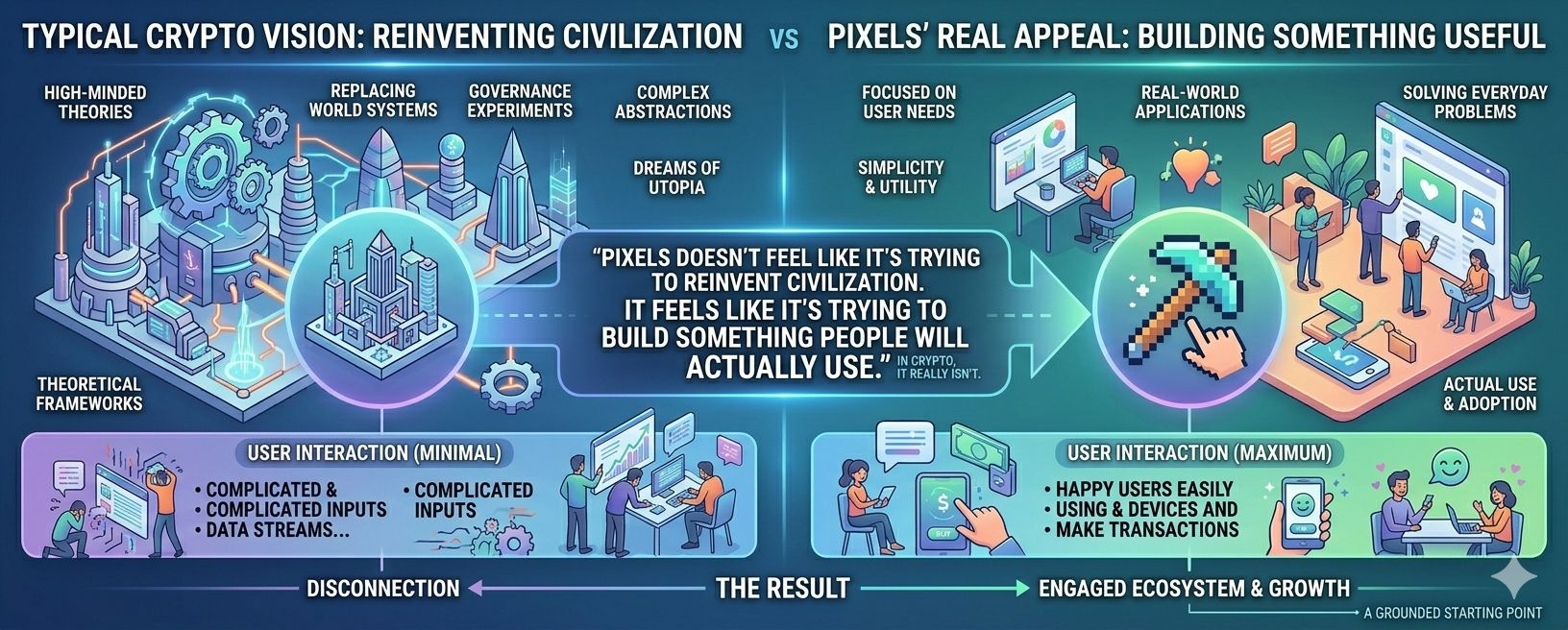
I'm not ready to declare anything inevitable. I've been around too long for that. Good products fail. Mediocre ones explode. Markets are not especially rational, despite what everyone on Twitter claims. But there is something sensible here. A chain built for a purpose. A game built for players. A model that at least acknowledges the real constraints of blockchain instead of pretending they don't exist.
That's enough to pay attention.
It might work. Or nobody shows up.
