
Crypto gaming has a trust problem, and Pixels has to deal with that before anything else. People have seen too many Web3 games come in with big promises, tokens, land, rewards, and “future of gaming” talk, only to end up feeling empty. The game looks good on paper, sure, but players are tired of games that feel more like investment dashboards than actual games.
Pixels is a social casual Web3 game built on the Ronin Network. It focuses on farming, exploration, creation, and player interaction. That sounds simple, and honestly, that is probably its biggest strength. You plant crops, gather resources, craft items, explore the world, and spend time around other players. It is not trying to be some massive complicated battle game. It is closer to a cozy farming world with crypto features added on top.
That can work.
But only if the game stays fun.
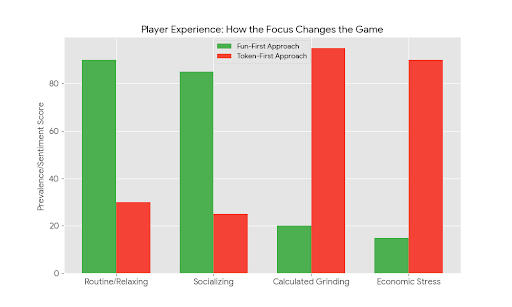
The problem with many Web3 games is that the token becomes the main character. People stop asking, “Is this fun?” and start asking, “How much can I earn?” Once that happens, the whole mood changes. Farming stops feeling relaxing. Crafting becomes a calculation. Playing turns into grinding. And when a game starts feeling like a job, most normal players leave.
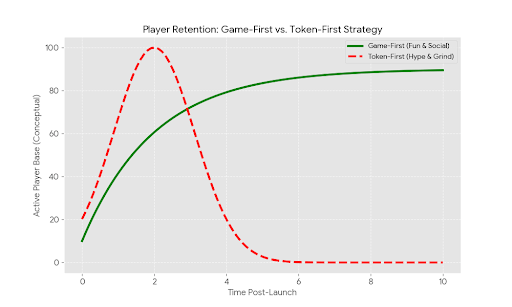
Pixels has to avoid that trap.
The PIXEL token gives the game an economy. It can be used for rewards, in-game systems, and player activity. That part is important, but it should not take over everything. A token is useful only if the game itself is worth playing. Nobody wants another project where the only reason to log in is because rewards are active or the chart is moving.
The farming side gives Pixels a decent foundation. Farming games work because they are built on small progress. You plant something, wait, harvest it, use it, and slowly improve your space. It is simple, but people like that. It gives a routine. It gives players a reason to return without needing constant action or stress.
The social part may be even more important. If Pixels becomes a place where players actually talk, trade, help each other, and build small routines together, it has a real chance. Social worlds survive because people care about more than just mechanics. They care about their friends, their space, their progress, and the little habits they build inside the game.
Ronin also gives Pixels a stronger base than many random Web3 projects. Ronin already has a history in blockchain gaming, so Pixels is not starting from zero. But that also means people will judge it harder. Players remember the old hype around crypto games. Some made money. Some lost trust. Many just got tired.
So Pixels needs to prove itself in a simple way.
It needs to work.
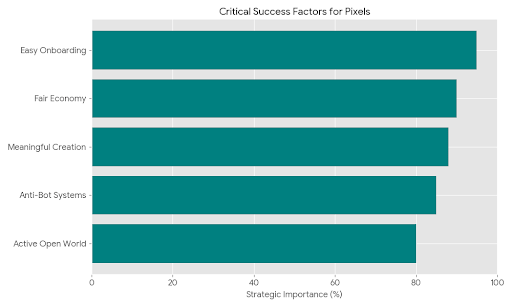
The onboarding should be easy. New players should not feel lost in wallets, tokens, and confusing systems. The economy should feel fair. Bots should not ruin the game. Rewards should not make the world feel like a grind farm. The open world should have real things to do, not just empty space. Creation should let players build something personal, not just something they can sell.
That is the real test for Pixels. Not the hype. Not the token price. Not the big claims.
The test is whether people still want to play when the crypto noise gets quiet.
If players log in because they enjoy farming, crafting, exploring, and hanging out, then Pixels has something real. If they only show up when rewards are high, then it is just another Web3 project with nicer art.
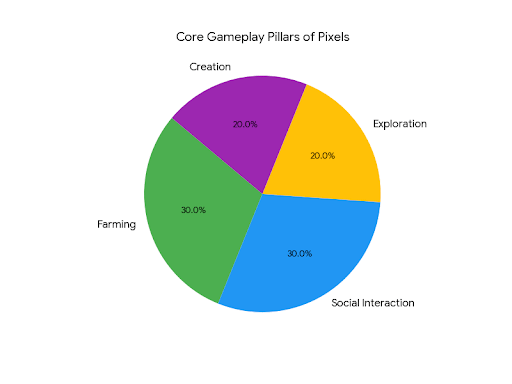
Pixels has a good idea. A casual farming game with social features and Web3 ownership can be interesting. But it has to keep the game first and the token second. That is the line. If it respects players’ time, keeps things simple, and builds a world people actually care about, it can stand out.
No big speech needed.
Just make the game fun. Then the rest has a reason to exist.