
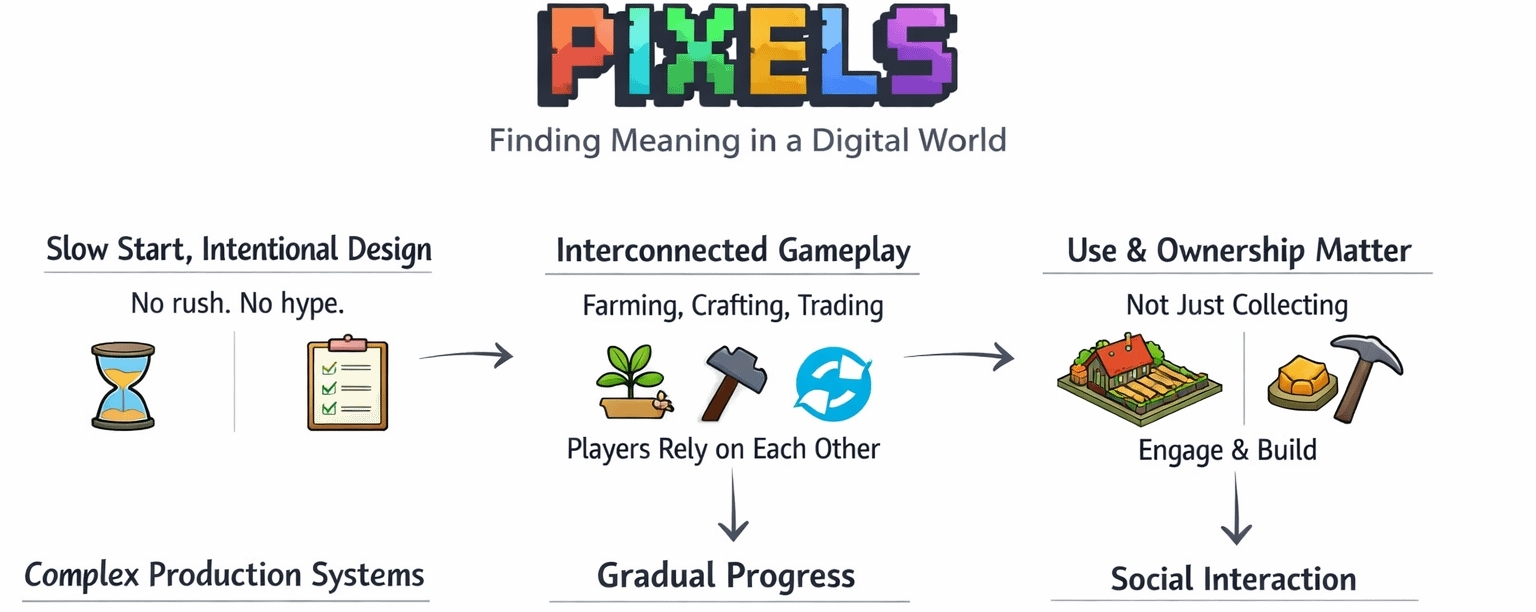
I’m waiting inside it, and that already feels like part of the experience. I’m looking at PIXELS the way I might look at a small room before I decide whether to sit down in it, and the first thing I notice is that it does not rush to impress me. It opens slowly. It gives me space to stand still for a moment and let my eyes settle. There is a softness in that, but also a kind of quiet pressure, because in Web3 nothing stays soft for long. Even the calm places usually have numbers behind them, and I can feel that here without having to be told. I focus on the surface first, on the open world, on the farm, on the small repeated actions that seem ordinary until they begin to collect meaning. A crop grows. A path opens. A task returns. The game lets these things feel simple, and that simplicity is part of what makes it strange.
I’ve noticed that the first minutes in a world like this matter more than they should. At the start, I am not thinking about rewards. I am just moving through it, checking edges, learning the pace, watching how the game wants to be handled. The world feels inviting in a careful way, not loud or crowded, not demanding that I become someone else right away. It offers me a rhythm before it offers me a strategy. That rhythm matters. It tells me whether I am here to play or to extract, and in Web3 those two things often begin to blur before I even notice the shift. At first I am curious. I want to know what the land does, what the systems allow, what kind of attention the game returns if I give it mine. Then, almost without warning, curiosity starts to meet calculation. I begin to ask whether one action is better than another, whether one routine is cleaner, whether one minute spent here is more useful than a minute spent somewhere else. The feeling changes quietly. Nothing breaks. Nothing announces itself. I just start to optimize.
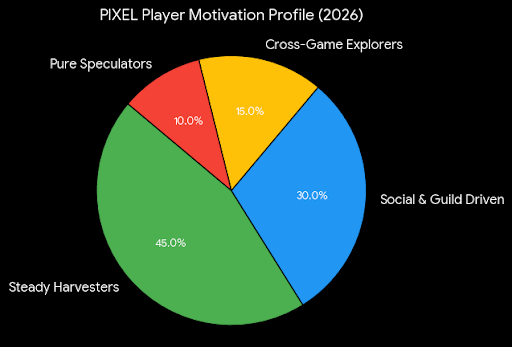
That shift is easy to miss because it arrives dressed as common sense. I tell myself I am only learning the game, only making better choices, only understanding the world as it is meant to be understood. But behind that, another layer is forming. The farm is no longer just a farm. The open world is no longer only a place to wander. Every action begins to carry a second shadow. I am still planting, still exploring, still creating, but I can feel the presence of value following me at a distance. It sits just outside the center of the screen. It does not need to shout. It only needs to remain there, patient and quiet, until I start to adjust myself around it. That is one of the most interesting things about a project like PIXELS. The economy does not need to dominate the experience to shape it. It only needs to be there in the background, steady enough to affect the way I move, the way I repeat, the way I measure time.
And repetition feels different here. In some games, repetition becomes pure habit, a kind of trance where the mind leaves and the hands continue. In PIXELS it feels more complicated. The repeated actions are still familiar, but they are never completely empty, because I keep sensing that each small cycle might matter in a way that is not fully visible yet. That can be comforting, and it can also be tiring. Comfort comes from the fact that the game rewards patience and continuity. Tiredness comes from the fact that patience itself can become a kind of labor, and continuity can begin to feel like discipline. I find myself returning to the same motions, but with a different feeling attached each time. One day the loop feels peaceful. Another day it feels like maintenance. Another day it feels like I am feeding a system that only partly belongs to me. I do not think that is a flaw on its own. It is simply the truth of a Web3 game trying to hold both play and earning in the same hand without letting either one drop.
I keep thinking about the presence of other players, because in a world like this they are not always encountered in the direct way we expect from games. Sometimes I do not meet them so much as sense them. I see signs of them in the economy, in the pace of the world, in the way resources seem to circulate even when no one is speaking. Their existence becomes atmospheric. It is less about conversation and more about implication. I know someone else is tending something somewhere. I know another player has likely made a choice that affects the surface I am standing on. That creates a strange social feeling, one that is quieter than competition and less intimate than friendship, but still real. We are near each other without always being together. We are shaping the same environment without always touching. That kind of distance changes the mood. It makes the world feel shared without feeling crowded. It makes me aware that value is not only personal here. It moves between people, and that movement stays partly hidden, which somehow makes it feel more alive.
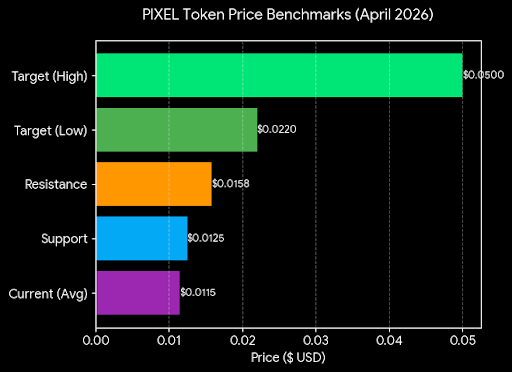
There is something almost tender in the way PIXELS asks for attention. It does not demand a performance from me. It asks for return visits, for familiarity, for a willingness to notice small changes. I find that more human than spectacle. I’m watching the way this kind of world earns its hold on me, not by overwhelming me, but by becoming legible in fragments. A field after I’ve worked it a few times starts to carry memory. A route I have taken before begins to feel owned by my own habits. A tool becomes less like an object and more like an extension of a repeated intention. And because the game is tied to Web3, I never completely forget that these gestures may have weight outside the moment itself. That is where the tension lives. I can be present in the world, but I can also feel myself being trained to think about what can be accumulated, what can be improved, what can be turned into something measurable. The moment never fully loses its shape, but it does acquire an edge.
I’ve noticed that this edge is what makes the experience interesting rather than easy. If the earning were too loud, the game would feel cold. If the play were too sealed off from the economy, the Web3 layer would feel ornamental. PIXELS seems to live in the uneasy middle, where both sides keep touching the same action. I plant because it is part of the world, and because it may also be part of a wider system. I explore because I want to see what is there, and because discovery itself can become a form of positioning. I create because creation feels good in the moment, and because created things take on another meaning once they exist in a network of value. That double life is not always comfortable. Sometimes it makes me suspicious of my own motives. Sometimes I wonder whether I am still playing or already arranging. But then I return to the scene in front of me, and the scene is still there, patient and unbothered, asking only that I continue long enough to understand it.
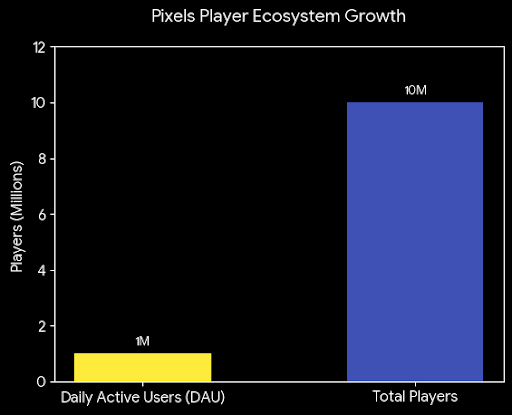
The world feels most honest when I stop trying to solve it. Then I can see the small emotional weather of it. I can feel the mild satisfaction of routine without pretending it is pure freedom. I can feel the pull of progress without pretending it is only financial. I can feel how the design quietly encourages me to come back, and how that return is never just mechanical. It is a choice shaped by mood, by memory, by the strange comfort of a place that does not demand too much but still asks enough to keep me thinking. There is a human scale to that, even when the underlying systems are not human at all. I think that is why the project lingers in my mind after I stop looking at it. It is not because it shouts. It is because it leaves me with the feeling that attention itself has become part of the landscape, and that once I step into it, I am never quite sure where the play ends and the earning begins, or whether that line was ever stable enough to begin with.