
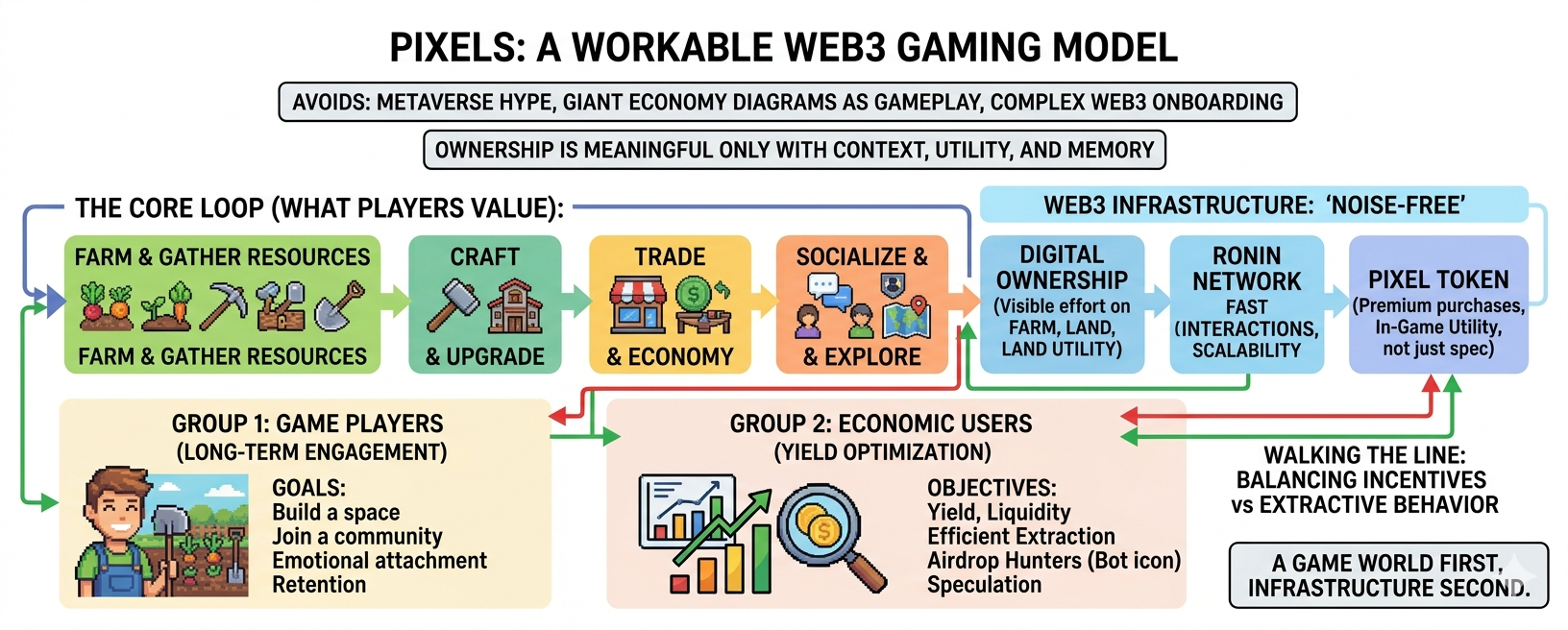

I’ve been looking at Pixels, and I think it is one of the more useful Web3 gaming projects to study precisely because it does not start with the usual noise.
No cinematic promise of a metaverse that will supposedly replace everything. No giant economy diagram pretending to be gameplay. No opening pitch that sounds like it was assembled from exchange listings and Discord announcements. Pixels starts with a farm, an avatar, some resources, and a loop that most players can understand in a few minutes.
That matters.
A lot of blockchain games have failed at the first interaction. I’ve seen this fail more times than I can count. The user lands on the product and immediately has to deal with wallets, bridges, token approvals, gas, marketplaces, staking mechanics, and a community that speaks almost entirely in acronyms. It’s a mess. Somewhere inside that mess there may be a game, but the player has already been asked to behave like an investor, a sysadmin, and a liquidity provider before they have had any reason to care.
Pixels takes a better route. At least on the surface.
It is a social farming game built on the Ronin Network. Players farm, gather, craft, trade, explore, decorate land, join communities, and move through a shared online world. That description sounds ordinary, and that is part of the point. Ordinary is useful. Ordinary is how infrastructure disappears into behavior.
The best infrastructure does not constantly announce itself. It supports the thing people are actually trying to do. In this case, the thing people are trying to do is not “interact with blockchain primitives.” They are trying to play a game, make progress, own a space, meet other players, and maybe participate in an economy that feels alive rather than bolted on.
That is where Pixels becomes interesting.
Farming games already have the right shape for digital ownership. You begin with very little. You put in time. You improve land. You gather inputs, produce outputs, upgrade tools, decorate spaces, and create a record of effort. A player can point at a farm and say, “That is mine,” not because a protocol says so, but because the work is visible.
Blockchain can support that. It does not automatically improve it.
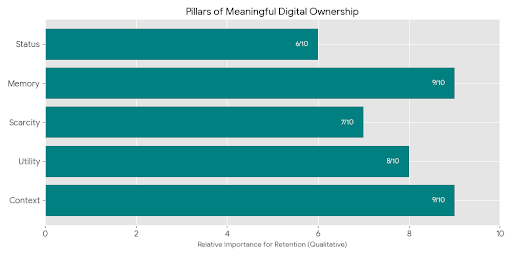
That distinction gets lost too often. A game does not become better because an asset is on-chain. Ownership is only meaningful when the thing being owned has context, utility, scarcity, memory, or status inside a world people care about. Otherwise, it is just a database entry with better marketing.
Pixels has a plausible reason to use Web3 because its world is social and economic. A single-player farming game does not need a token. A closed casual game can run perfectly well on a traditional backend. But once you introduce trade, land, avatars, guilds, scarce resources, and player-driven markets, blockchain starts to look less like decoration and more like infrastructure that might justify its complexity.
Might.
The reality is messier.
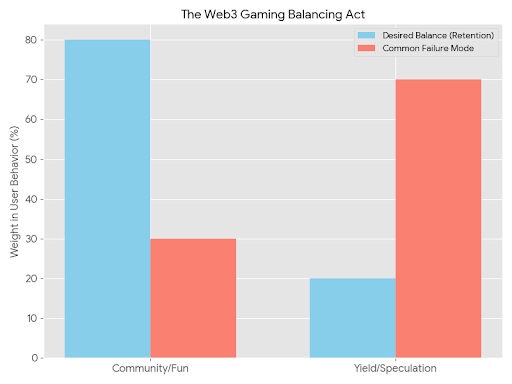
Every Web3 game has two products whether it admits it or not. There is the game players experience, and there is the economic system users optimize. Sometimes those audiences overlap. Often they do not. One group wants a place to return to. The other wants yield, liquidity, airdrops, and efficient extraction.
Pixels has to serve both without being captured by the second.
That is hard. I’ve seen this fail. The token launches, attention spikes, the community grows, and suddenly every design decision is interpreted through price action. A new item is not just a new item. It is a sink. A quest is not just content. It is emissions. A guild feature is not just social design. It is access control, market structure, and future speculation.
This is what happens when a game has a liquid token attached to it. The feedback loops get louder.
The PIXEL token gives the game an economic layer. It can support premium purchases, in-game utility, access systems, and broader ecosystem mechanics. That can be useful if it stays tied to actual gameplay. If the token becomes the main reason people show up, the design starts to rot from the inside.
A token should not be the game’s personality.
Good game economies create reasons to spend, save, trade, and cooperate. Bad ones create spreadsheets. Pixels has to walk that line carefully. Too many rewards, and it attracts extractive behavior. Too few, and the Web3-native audience loses interest. Too many sinks, and casual players feel punished. Too few, and inflation eats the system. Add bots, multi-accounting, and airdrop hunters, and the whole thing becomes a live operations problem with financial consequences.
This is infrastructure work wearing a game costume.
The move to Ronin makes sense in that context. Ronin is a gaming-focused blockchain with history, users, wallets, and hard-earned lessons from Axie Infinity. That history is useful but not clean. Axie proved that blockchain games could scale. It also proved that token-driven economies can become brittle when earning carries too much of the experience.
Pixels benefits from Ronin because it does not have to educate every user from scratch. The network already has a gaming audience familiar with digital assets and Web3 flows. It also offers an ecosystem where small, frequent game interactions make more sense than they would on a general-purpose chain not optimized for this kind of use case.
For Ronin, Pixels is useful too. It gives the network another identity beyond Axie. That matters. A chain built for games cannot depend forever on one flagship title. It needs different genres, different communities, and different economic patterns. Pixels brings a slower, more social, more approachable experience into that ecosystem.
That is healthy.
But infrastructure fit is not product-market fit. A better chain does not guarantee a better game. It only removes some friction. The rest still comes down to design, retention, content cadence, economic balance, bot control, and whether people actually want to return when the market is quiet.
That last part is the real test.
Wallet activity can be misleading. I do not ignore it, but I do not worship it either. A wallet is not always a person. One person can operate many wallets. Bots can simulate activity. Incentive campaigns can create short bursts of engagement that look impressive on dashboards and mean very little six months later.
I care more about behavior. Are players staying after rewards cool down? Are they forming social ties? Are they improving land because they care about the space, or because they are calculating extraction? Are guilds creating belonging, or just financial gates? Are players spending for utility and identity, or only because they expect future upside?
Those are harder questions. They are also better ones.
Land is one of the stronger parts of Pixels because it gives the game an emotional anchor. Digital land is usually an abused concept. Plenty of projects sold land before they had anything resembling a world. Pixels has a better argument because land is operational. It is where production happens. It is where customization happens. It is where a player’s time becomes visible.
That matters more than a lot of token mechanics.
People return to games when progress feels legible. A farm shows progress. A decorated space shows intent. A resource chain shows planning. A guild project shows coordination. These things create memory. Memory creates attachment. Attachment creates retention.
No protocol can fake that.
The farming loop is also useful because it creates cadence. Plant, wait, harvest, craft, upgrade. Repeat. On paper, it sounds dull. In practice, these loops work because they create small obligations and small rewards. Something is always almost ready. Something can always be improved. Something is waiting when the player comes back.
That is not hype. That is basic retention design.
The social layer is where Pixels can become more than a farming loop. Multiplayer alone is not enough. A map with other avatars is not a community. Players need reasons to cooperate, trade, specialize, compete, and recognize each other over time.
Guilds could help.
They could also make everything worse.
Guilds in a Web3 game are not just social groups. They can become economic entities. They can control access, coordinate production, accumulate resources, set internal norms, and create status. Done well, that gives the game depth. Done badly, it creates entrenched hierarchies and turns new players into labor for early groups.
I’ve seen both versions.
Pixels needs guilds to feel like communities first and markets second. That means the details matter: permissions, resource allocation, membership pricing, contribution tracking, dispute handling, incentives, and how much power early capital has over later participation. These are not side features. They are governance problems.
And yes, governance is messy.
The broader challenge is that Pixels must avoid becoming another “play-to-earn” machine with nicer art. The first wave of blockchain gaming leaned heavily on earning. It brought users quickly, but many of those users were there for income, not for the world. When rewards weakened, the communities weakened too. The game had not built enough non-financial attachment.
Pixels has a better chance because its core activity can still make sense without constant earning pressure. Farming can be relaxing. Land can be personal. Guilds can be social. Markets can be useful. The game can still have a pulse when the token is not the center of attention.
That is the version worth building.
The industry should probably stop treating tokens as content. A token is not content. A marketplace is not content. An NFT collection is not content. These things are infrastructure, and infrastructure only matters when it supports behavior people already value.
Pixels seems to understand that better than many projects. Not perfectly. No live Web3 game does. But better.
Its visual style helps too. Pixel art lowers the temperature. It does not overpromise. It does not invite comparison with AAA production budgets. It feels closer to an online world that can grow slowly, system by system. That restraint is underrated. Web3 has had too many projects trying to look enormous before they were useful.
Pixels still has plenty of ways to fail. The economy can become unbalanced. The token can lose relevance. Bots can distort rewards. Guilds can become exclusionary. New content can arrive too slowly. Casual users can bounce off crypto friction. Web3 users can leave if incentives fade. Ronin can struggle to maintain broader ecosystem momentum.
None of that is theoretical. These are common failure modes.
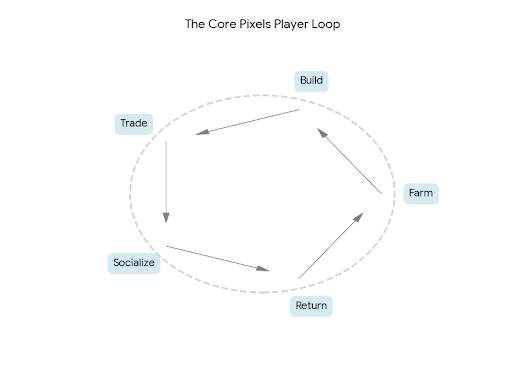
But Pixels has one thing many Web3 games never had: a clear, understandable player loop. Farm. Build. Trade. Socialize. Return. That is not revolutionary, but it is solid. And solid is rare in a sector that often mistakes complexity for depth.
I am skeptical of the hype around any blockchain game by default. Too many have confused ownership with fun, liquidity with community, and token activity with retention. But I am still optimistic about the infrastructure when it is used with restraint.
Pixels is interesting because it might be using the infrastructure for the right reasons. Not because every crop needs to be financialized. Not because every player interaction needs to become an asset. But because a persistent social world with land, identity, guilds, and markets can benefit from ownership rails if those rails stay out of the way until they are needed.
That is the practical version of Web3 gaming I can take seriously.
Not a revolution announced in a whitepaper. Not a token looking for a product. A game world first, infrastructure second.
Pixels is not proof that blockchain gaming has solved its problems. It is more like a working question. Can a casual social game use crypto rails without being consumed by them? Can ownership improve retention instead of replacing fun? Can a token support a world rather than become the whole reason the world exists
Those are the right questions
Hard questions. Messy questions. Worth asking
