

I’ve spent a few late nights wandering through Pixels and it’s the kind of game that makes you pause not because it shouts for your attention but because it quietly invites you to explore. At first glance it’s a farming-and-creation game, familiar in structure to a lot of casual open-world experiences. But then there’s this subtle layer underneath: ownership scarcity and a blockchain that hums along in the background. It’s almost invisible until you stop to consider it and that’s what makes it interesting.
What fascinates me about Pixels isn’t the concept of play-to-earn or collectible assets those narratives are already well-trodden but the way it situates players in a world where creation and exploration are encoded on a decentralized ledger. Each plant grown, structure built or space claimed carries a digital signature that can’t be erased. In practice, this doesn’t immediately alter your gameplay experience your farm still grows day by day but it reframes the notion of value in a way that’s subtle and honestly a bit philosophical. What does it mean to invest your time in something that exists simultaneously as a game and as a verifiable digital asset?
The Ronin Network as the underlying protocol is an interesting choice. Its design leans toward efficiency and low-cost transactions which feels necessary for a game with frequent micro-interactions. Watching my little in-game actions ripple through a blockchain that’s designed for speed rather than general purpose computation makes me think about the trade-offs between decentralization and usability. It’s easy to say more nodes more security but if that means each seed planted costs a dollar in gas fees the casual experience crumbles. Pixels in this sense, feels like a case study in compromise what can the infrastructure support without breaking the magic of play?
There’s also the social dimension. When you start seeing other players creations the network effect becomes tangible. A shared world isn’t just aesthetically pleasing; it’s economically interesting, even if the mechanics are still simple. You can speculate on which areas will become valuable or which items might carry scarcity-driven significance later. But that brings another question to mind: how much of this is genuine community-driven creativity, and how much is subtle financial incentive nudging behavior? That tension is alive in Web3 games more broadly and Pixels seems to balance it in a way that feels more observational than directive letting players lean into one aspect or the other.
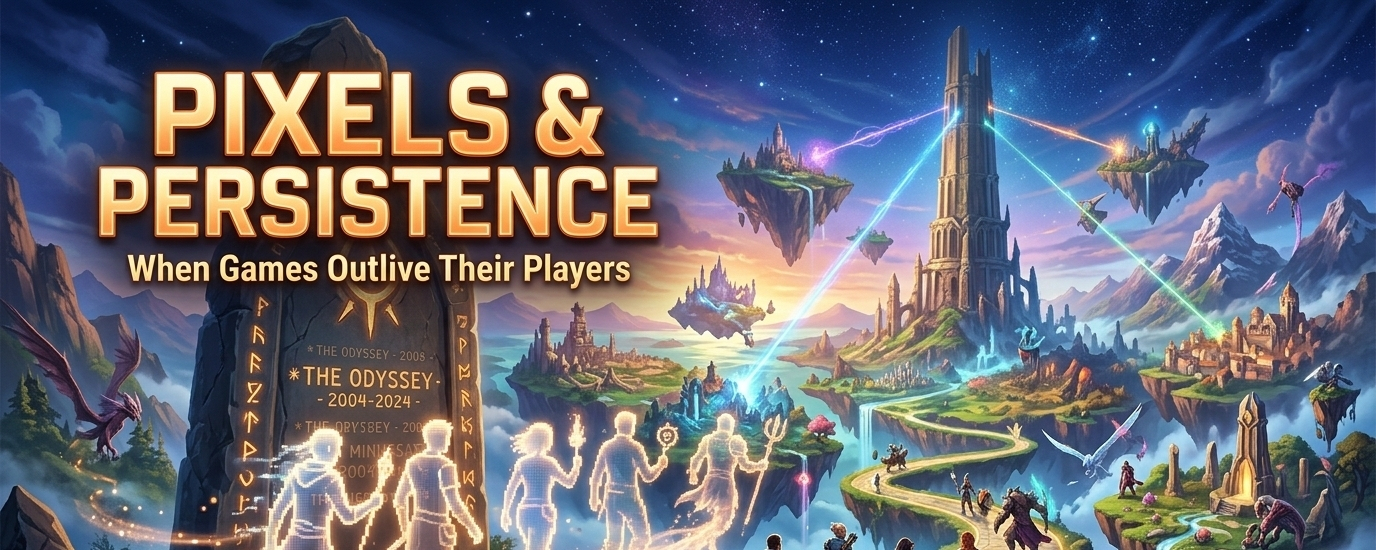
The game also nudges at a deeper question about permanence in digital spaces. Traditional games are ephemeral servers shut down worlds disappear progress is lost. In a blockchain-backed world like Pixels the persistence of actions and assets becomes more tangible. But permanence has its own weird weight. Does knowing that your digital garden might exist long after you log off change how you play? Maybe. Maybe not. It’s hard to say, but the possibility alone shifts how you perceive the environment.
At the end of the day Pixels doesn’t give any radical answers about Web3; it offers a sandbox to see the questions in motion. It makes you think about value, permanence, and community without forcing a moral or economic conclusion. And that’s a rare thing in a space that often feels like it’s either evangelizing or speculating. There’s a quiet curiosity to it, an experiment in what casual, social play looks like when layered with decentralized infrastructure, and it’s precisely that open-endedness that keeps me checking back in.
