
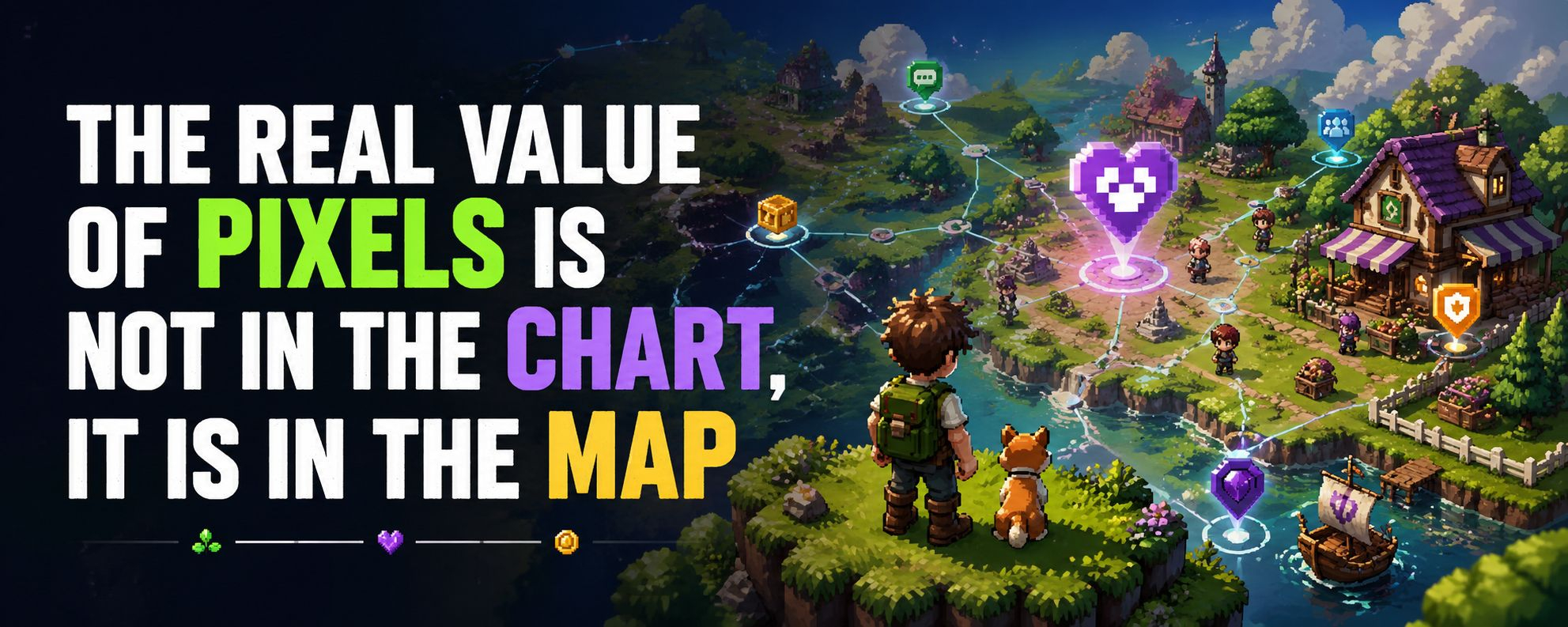
The more time I spend around Pixels, the harder it becomes to take the token chart seriously as the main story. It is there, it moves, people react to it, but it feels like a side effect of something else that is quietly getting stronger. What actually stands out is how the game keeps pulling people back into the same spaces, the same loops, and increasingly, the same social circles.
Pixels is starting to feel less like a game you play in isolation and more like a place you pass through with other people. Land is not just a resource, it becomes a meeting point. Guilds are not just tags, they shape how you spend your time. Even small things like creator codes or shared routines turn into subtle ways of staying connected. Over time, you begin to notice that progress is not only about what you earn, but about where you spend your attention and who you keep running into.
That is why the staking design is more interesting than it looks at first glance. When staking inside the game happens almost automatically for active players, it quietly ties rewards to presence. And when on-chain staking asks you to choose which part of the ecosystem to support, it turns the token into a kind of vote about where activity should concentrate. It stops being just a number to watch and becomes a way to reinforce certain parts of the map.
The same pattern shows up in how the game is evolving. Recent updates did not try to manufacture hype. They added more layers to everyday play. New systems around animals, crafting, and land do not scream for attention, but they give players more reasons to return and more ways to overlap with each other. It is slow, almost unremarkable progress, but it builds something that is harder to fake, which is habit.
That matters even more right now, because most of the Web3 gaming space is still struggling to hold onto players. Activity spikes come and go, funding has cooled, and a lot of projects fade once the initial excitement disappears. Pixels is not immune to that pressure, but it is responding differently. Instead of trying to outshine the market, it is trying to outlast it by making itself part of people’s routines.
So the real signal is not whether the token is up or down this week. It is whether players keep finding their way back, whether they keep interacting, and whether the map keeps getting denser with relationships. If that continues, the chart will eventually reflect it. But by the time it does, the important part of the story will already have happened somewhere else.