

I remember the first time I ran a small campaign for a game. We paid for clicks. We paid for impressions. Numbers looked good on the surface. But after a few days most users disappeared. It felt like pouring water into a leaking bucket. That was the moment I started questioning how games actually buy growth.
The problem is simple but often ignored. Most games do not buy real engagement. They rent attention. Ads bring users in. Rewards push them to act. But very few systems track if that action creates lasting value. Players come. They collect. They leave. The cycle repeats. It looks like growth. But it rarely holds.
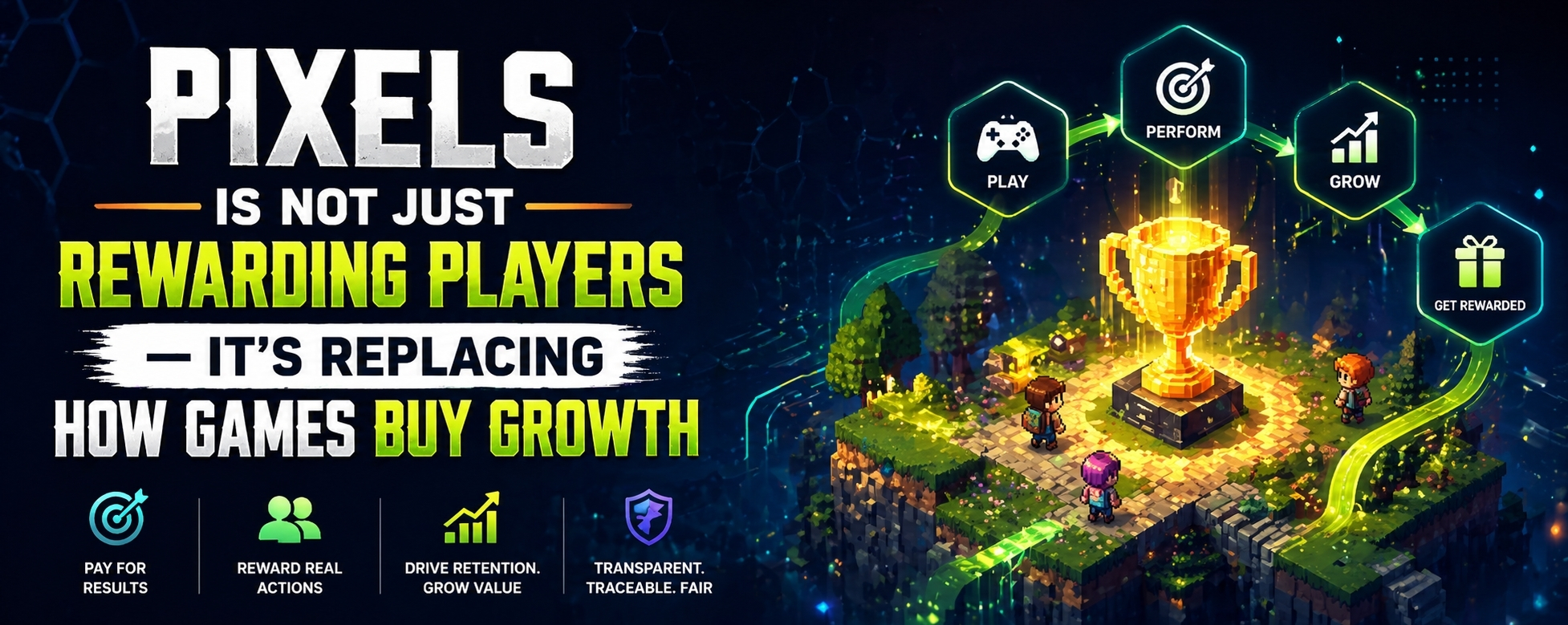
That is why Pixels caught my attention. Not because it promises more rewards. But because it changes what a reward actually means. In Pixels a reward is not just an incentive. It is closer to a payment for a verified action. Finish a task. Return for several days. Invite someone. Make a purchase. Each action is tracked. Each reward is tied to something that moves the system forward.
I started looking at it differently after that. Instead of asking how much players earn. I asked what the system gets back. That shift matters. Because now growth is not based on hope. It is based on measurable behavior. Studios are not guessing anymore. They are paying for outcomes.
The interesting part is how this changes the flow of value. In a normal system a big part of the budget goes to ad platforms. Here that same budget goes directly to players. The user who actually creates value receives the reward. It feels more direct. More traceable. And honestly more fair.
I also find the data layer important. Pixels is not working with one game only. It collects signals from multiple games. Player behavior. Retention patterns. Spending habits. All of this builds a shared understanding of what works. Over time that data makes the reward system smarter. It learns who is likely to stay. Who is likely to spend. And where rewards should go.
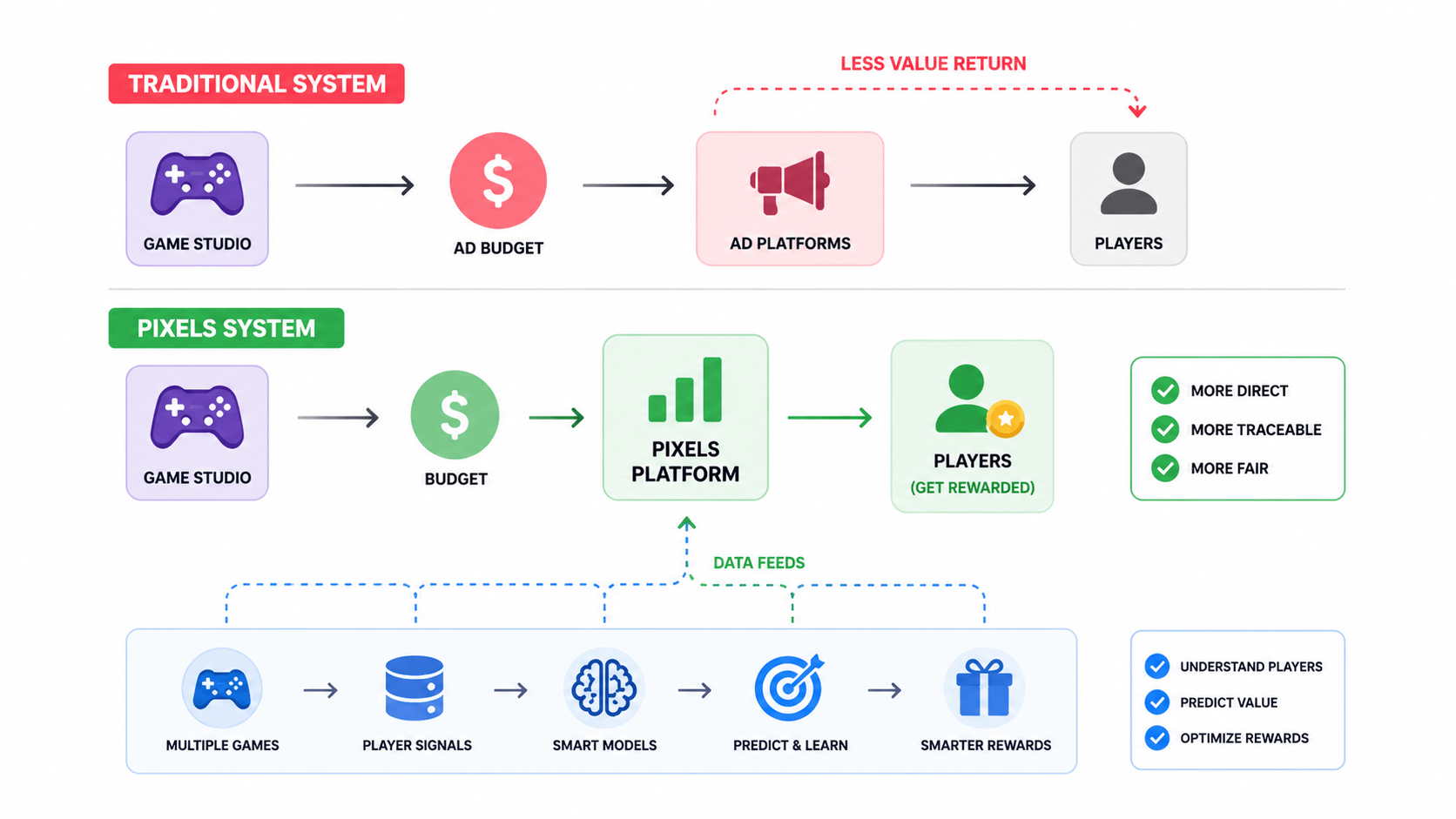
That creates a different kind of loop. Data improves rewards. Rewards shape behavior. Behavior feeds more data. It is not perfect. But it is structured. And structure is something most GameFi models never had.
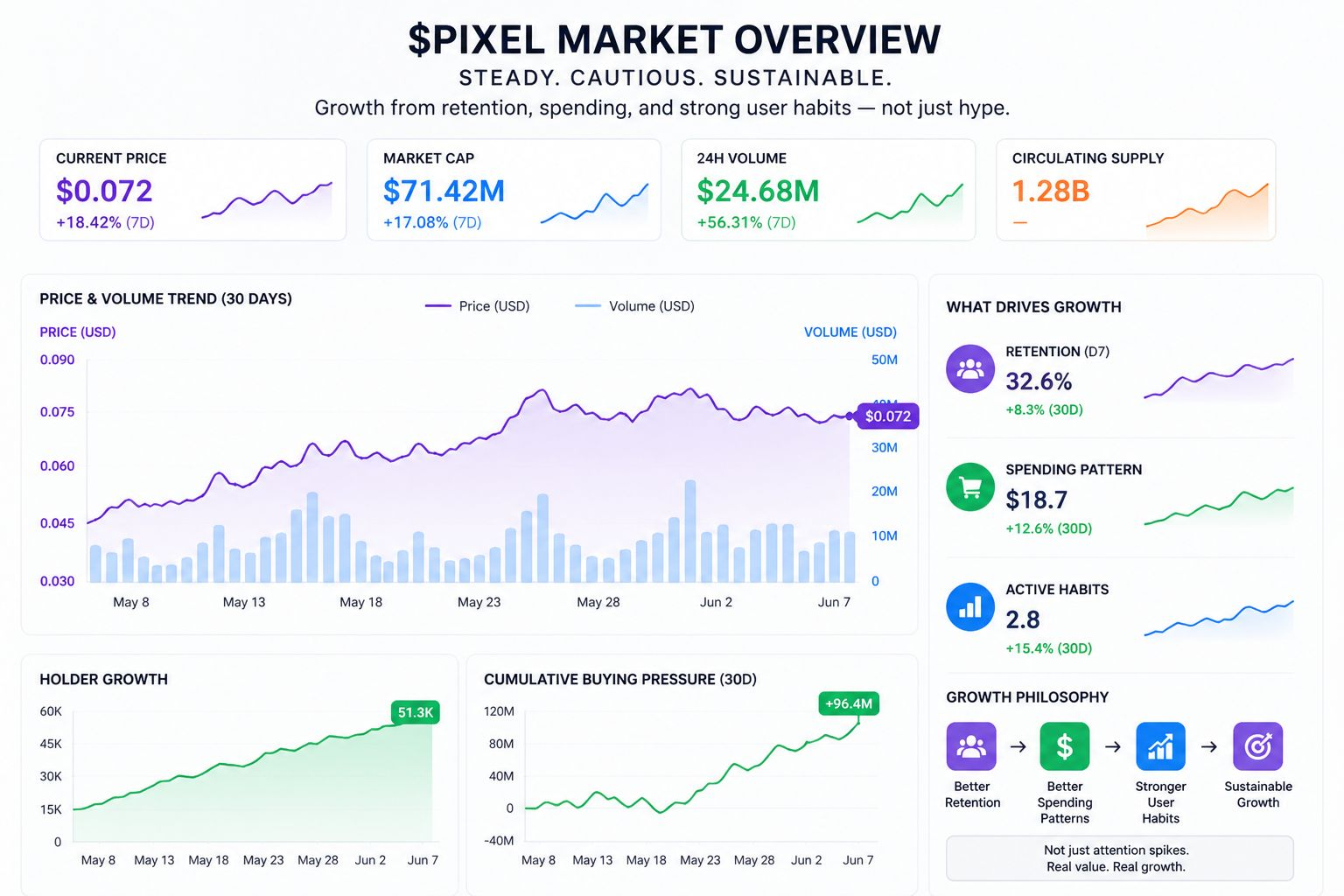
When I look at $PIXEL today the market feels steady but cautious. There is movement but not explosive hype. That makes sense to me. Systems like this do not grow overnight. If it works then growth will come from better retention. Better spending patterns. And stronger user habits. Not just attention spikes.
I do not think this model is risk free. It depends heavily on execution. If the data is wrong then rewards go to the wrong places. If players try to game the system then efficiency drops. And if studios do not see clear returns they will not stay. These are real challenges.
But I also think this is one of the few approaches that tries to fix the core issue. Not just attract users. But understand them. Not just reward activity. But reward useful activity.
For me this changes how I look at Pixels. I do not see it as just another game anymore. I see it as an attempt to rebuild how growth is bought and measured inside games.
I am still watching carefully. I am not rushing to conclusions. But if this system holds and improves over time then it could shift more than just one game. It could change how value moves between players and developers.
And honestly that is what keeps me interested. Not the rewards. Not the short term moves. But whether this idea can actually hold when real pressure comes.