
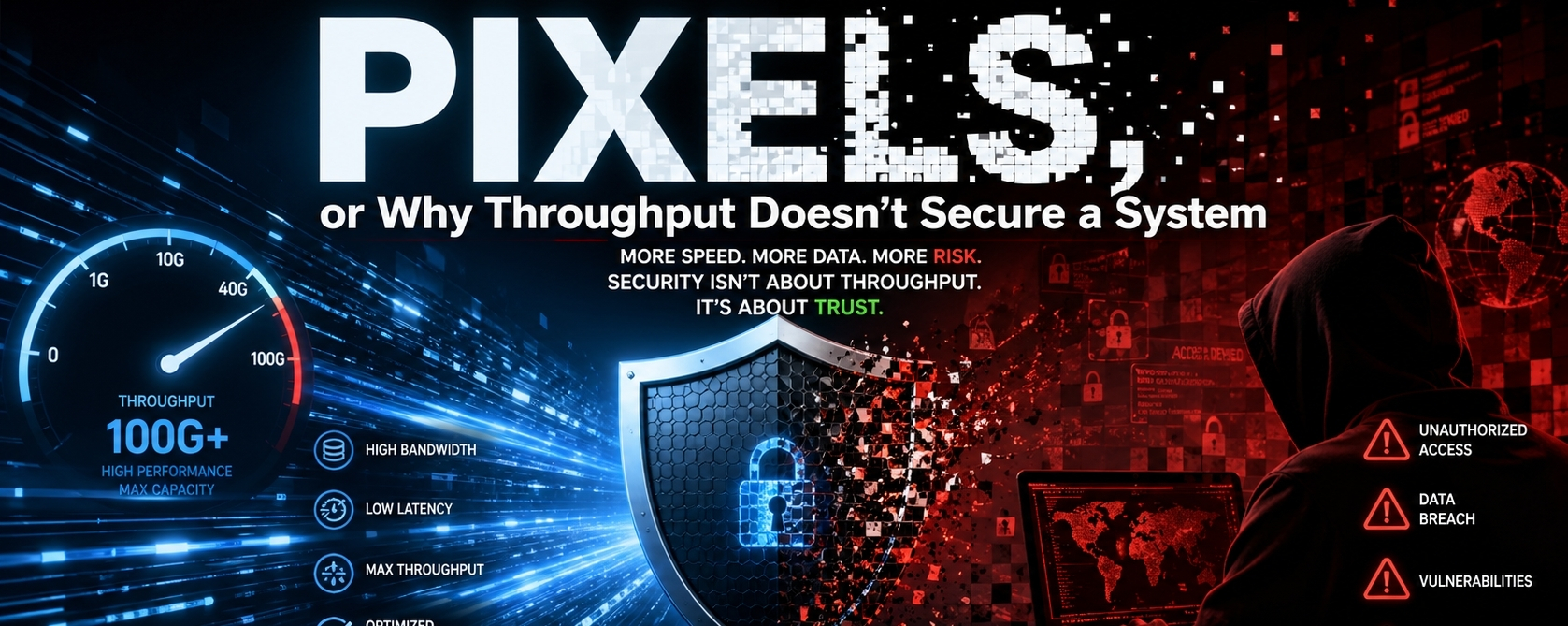
i’m writing this like an internal report because that’s how it felt at 2:07 a.m.—not like a launch, not like a celebration, but like a system being observed under pressure. No alarms yet, just the quiet expectation that something, somewhere, would eventually ask to be explained.
PIXELS didn’t fail that night. Nothing obvious broke. Blocks kept finalizing, actions cleared, players planted and harvested as if time itself had been flattened into something predictable. On paper, performance targets were met. Throughput was not the issue.
It rarely is.
The risk committee had already moved past TPS weeks before. That conversation—the one about how many transactions per second a system can push—tends to dominate early narratives because it’s measurable and easy to compare. But inside audit rooms, TPS becomes background noise. What matters instead is who can sign, what they can approve, and how often they’re asked to do it.
Because failure doesn’t arrive as congestion. It arrives as permission.
PIXELS, built as a high-performance L1 using an SVM-style execution model, was designed with that assumption in mind. Fast, yes—but more importantly, constrained. Guardrails weren’t treated as optional features; they were structural. Execution was modular, sitting above a conservative settlement layer that behaved less like an accelerator and more like a brake. Not glamorous, but reliable.
And reliability, in this context, meant fewer assumptions about human behavior.
The audit logs tell a consistent story: most critical incidents don’t come from slow blocks or delayed confirmations. They come from keys—misused, overexposed, or simply misunderstood. Wallet approval flows, especially in consumer-facing environments like games, introduce a subtle but persistent risk surface. Every signature is a decision point. Every decision point is an opportunity for error.
The internal debates reflected that. Not about speed, but about signatures.
How many approvals should a player be asked to make before friction becomes a liability? How many can be safely abstracted without turning delegation into blind trust? Where does convenience end and exposure begin?
That’s where Fabric Sessions entered the design.
They weren’t framed as a feature. They were framed as a constraint system—enforced, time-bound, scope-bound delegation. A session could do exactly what it was allowed to do, for exactly as long as it was allowed to exist. Nothing more. No hidden escalation paths, no silent persistence.
From a user perspective, it felt like less friction. From a systems perspective, it was a reduction in attack surface.
Scoped delegation + fewer signatures is the next wave of on-chain UX.
Not because it’s elegant, but because it acknowledges a basic truth: users are not security experts, and they shouldn’t have to be. If a system depends on perfect decision-making at every interaction point, it’s already compromised.
PIXELS leaned into that reality. By separating execution from settlement, it allowed high-frequency in-game actions to occur within a controlled environment, while anchoring finality to a layer that prioritized correctness over speed. The modularity wasn’t just architectural—it was philosophical. Fast where it could be, strict where it had to be.
There was some discussion about EVM compatibility early on. It was included, but not celebrated. Its role was practical: reduce tooling friction, make integration easier, avoid reinventing workflows developers already understood. But it was never positioned as a security model. Compatibility is not protection.
That distinction mattered.
Because at scale, the system doesn’t break where it’s fastest. It breaks where it’s most trusted.
The native token appears in the documentation exactly once in this report, described as security fuel. That phrasing wasn’t accidental. It reframes value away from speculation and toward responsibility. Staking, in this context, isn’t a yield strategy—it’s a commitment to the integrity of the system. Validators aren’t just participants; they’re accountable entities.
And accountability is the only real counterweight to speed.
By the time the 2 a.m. window closed, nothing had escalated. No incident to file, no rollback to consider. Just a set of systems that behaved as expected under quiet scrutiny.
Which, in a way, is the point.
Safety doesn’t announce itself. It doesn’t trend or benchmark well. It shows up as absence—the absence of exploits, the absence of confusion, the absence of decisions users were never equipped to make.
PIXELS didn’t try to win the race for speed. It tried to redefine what winning meant.
Because speed is easy to measure.
Safety is what’s left when everything else is stripped away—and still holds.
