
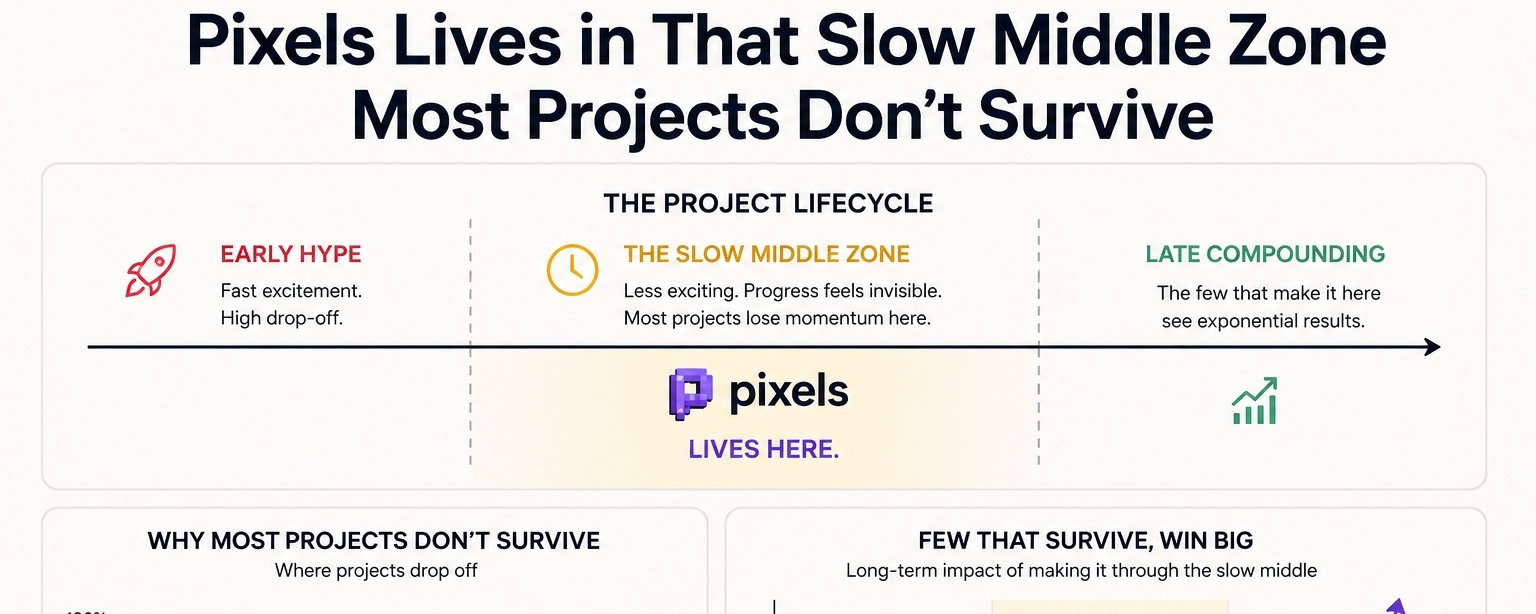

Pixels is one of those projects I didn’t plan to pay attention to. I’ve been around this space long enough to feel that early fatigue when I hear “Web3 game” again. It usually means the same loop dressed in new language. A token, a basic mechanic, a short burst of activity, then people move on. I don’t even get curious right away anymore. I just watch from a distance and wait for the cracks to show.
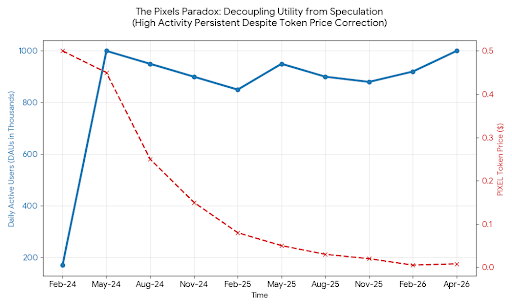
But Pixels didn’t rush to prove itself, and that’s probably why I didn’t ignore it completely.
At first glance, it’s simple to the point where you almost question why it’s getting any attention at all. Farming, moving around, building small things, interacting in a world that doesn’t try too hard to impress you. No heavy promises, no aggressive push to convince you it’s the future of gaming. It feels small. Almost too small for a space that usually overstates everything.
Still, I kept noticing it in the background. Not loud hype. Not constant price talk. Just people actually spending time in it. That’s the part that caught me off guard. Because in most Web3 games, you don’t really see that. You see users optimizing, calculating, extracting. You don’t see them settling in.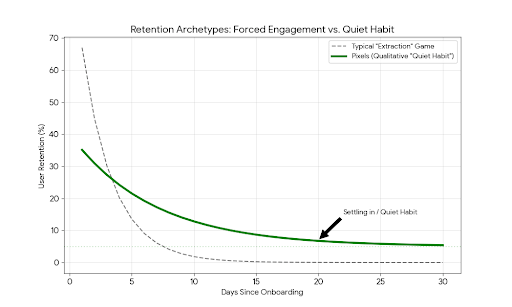
Here, it felt a bit different. Not dramatically different, but enough to make me pause.
People weren’t just showing up for a quick reward cycle. They were coming back. Doing repetitive things, sure, but not in a way that felt purely transactional. It’s hard to explain, but there’s a difference between forced engagement and quiet habit. Pixels leans closer to that second one, at least for now.
That “for now” matters more than anything.
Because I’ve seen how quickly this kind of balance breaks. The moment incentives shift, behavior changes. The moment rewards tighten, attention drops. And if the system isn’t carefully held together, it doesn’t take long before it turns into just another farm where people are trying to get out more than they put in.
The Ronin ecosystem gives it a certain advantage. There’s already a built-in audience that understands how these systems work. But that also means the players aren’t naive. They know how to push limits, how to optimize loops, how to drain value if there’s an opening. That’s not a criticism, it’s just reality in this space.
So the real question sits there quietly.
Are people here because they enjoy it, or because it still makes sense to be here?
Right now, it feels like a mix of both. And that’s a fragile place to be. If it leans too far into incentives, it becomes another extraction game. If it leans too far away, it risks losing the very crowd that showed up in the first place. Finding that balance isn’t easy, and most projects don’t manage it for long.
I’m not convinced Pixels has solved that. I don’t think anyone has.
But there’s something about it that doesn’t feel completely hollow. It doesn’t feel like it was built only to capture attention and disappear. There’s a slower rhythm to it. Less urgency. Less noise. And strangely, that might be the only reason it’s still holding on to people.
I’m not looking at it with excitement. More like cautious attention. The kind you give something that hasn’t proven itself but hasn’t failed either.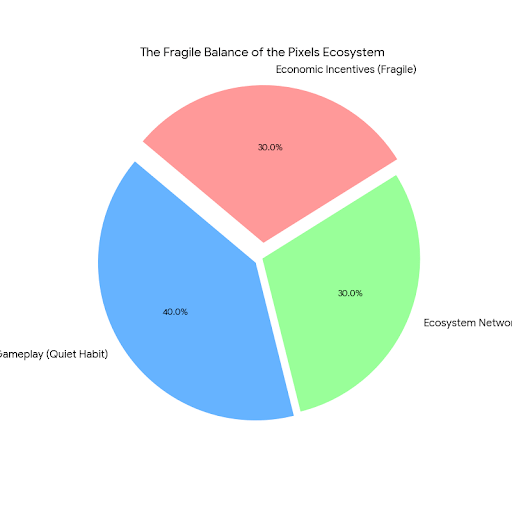
So I keep checking in, not expecting much, just watching to see if people are still there when the easy phase is over. Because that’s usually where the real story begins… or quietly ends.