
Pixels (PIXEL) is a social casual Web3 game built on the , and on the surface it looks almost too simple to take seriously. Farming, wandering around, gathering things, building small pieces of a world that doesn’t try to overwhelm you. It doesn’t arrive with that usual weight most projects carry, where everything feels like it’s trying to prove something immediately. Instead, it just exists, and that alone feels a little unusual here.
After spending time around this space, you start to notice how loud everything has become. Every project wants to be the next shift, the next evolution, the next proof that something big is happening. But when you actually step into most of them, the experience feels thin, like you’re interacting with a structure instead of a place. Pixels doesn’t completely escape that feeling, but it softens it. It slows things down. It gives you small, repeatable actions that don’t pretend to be more than they are.
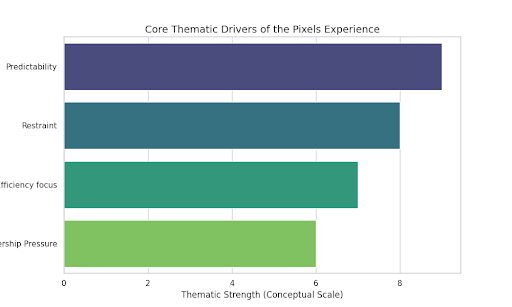
There’s something about farming loops that keeps coming back in games, and maybe it’s because they don’t lie. You plant something, you wait, you come back, you see what changed. It’s predictable, but in a way that feels grounding rather than boring—at least at first. In Web3, that kind of predictability is almost rare. Most systems are constantly shifting, adjusting, reacting to speculation or player behavior. Here, the loop stays mostly intact, and that stability becomes part of the appeal.
But that’s also where a quiet tension starts to build.
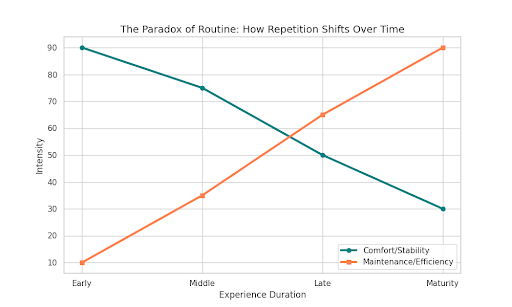
Because repetition can either feel like comfort or like maintenance, depending on how long you sit with it. Early on, it feels easy to log in, check your crops, move things around, maybe interact with someone nearby. It doesn’t demand too much from you. But over time, you start to notice how thin the line is between choosing to return and feeling like you should return. That shift is subtle, but it matters more than most design decisions.
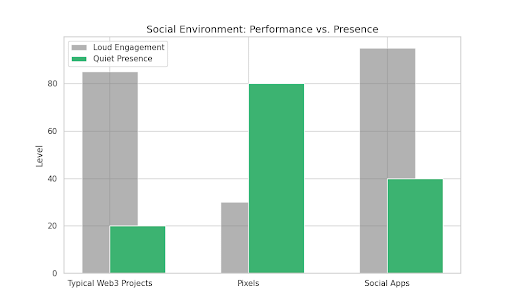
The social side is interesting in a quiet way. It’s not forced, not overly structured. People exist in the same space, doing their own routines, occasionally crossing paths. It feels closer to background presence than active interaction, which might actually be more honest than the loud “community-first” claims most projects make. Not everyone wants to constantly engage. Sometimes just knowing others are there is enough.
Still, the Web3 layer never fully disappears. Even when it’s not front and center, it sits underneath everything. Ownership, assets, progression—they carry a kind of invisible pressure. The moment something has value beyond the game itself, behavior starts to shift. Some players begin optimizing without even realizing it. Others lose interest once things start to feel calculated. It’s not dramatic. It just slowly changes the atmosphere.
That’s the part this kind of project can’t fully escape.
It’s trying to hold onto a softer experience in a system that naturally hardens over time. The more people arrive, the more patterns form. The more patterns form, the more efficiency takes over. And once efficiency becomes the focus, the original feeling—the quiet, almost aimless enjoyment—starts to fade a little.
At the same time, there’s something honest about what Pixels is doing. It’s not pretending to reinvent gaming. It’s not trying to turn every action into something revolutionary. It leans into familiar ideas and lets them exist without too much decoration. That restraint stands out, especially in a space that usually confuses complexity with depth.
But restraint also makes things fragile.
Because when you build something around simplicity, there’s less to hide behind when people start asking for more. More depth, more variation, more reasons to stay. And that’s where many projects begin to stretch themselves too thin, adding layers that don’t quite fit just to keep attention from drifting away.
You can almost feel that future pressure sitting ahead of it.
Not in a dramatic way, just quietly waiting. The moment when routine isn’t enough anymore. When players who once enjoyed the calm start looking for something deeper, or something different. And the project has to decide whether to remain what it is or change into something else entirely.
That’s not a problem unique to Pixels. It’s something most persistent worlds run into eventually. The difference is that here, the simplicity makes that moment easier to notice. There’s no distraction, no heavy narrative to hide behind. Just the loop, the space, and the people moving through it.
And maybe that’s why it keeps drawing attention back.
Not because it’s doing everything right, but because it’s sitting in a place the industry hasn’t figured out yet. Somewhere between play and system, between routine and value, between staying because you want to and staying because it feels like it matters.
It doesn’t resolve that tension. It just lives inside it. And for now, that seems to be enough to keep people watching, even if they’re not entirely sure what they’re waiting to see.