
I didn’t go into @Pixels expecting much.
At first, it feels exactly how it looks. You farm a bit, collect resources, craft some items, and log off. No pressure, no complexity, nothing overwhelming. Honestly, that’s what pulls you in. In a space where most Web3 games try too hard to impress early, Pixels just lets you play.
But the longer you stay, the more something starts to feel different.
Your effort doesn’t always match your progress the way you expect. You can be active, doing all the right things, but the outcome feels… controlled. Not random, just not purely based on how much time you put in.
That’s when it starts to click.
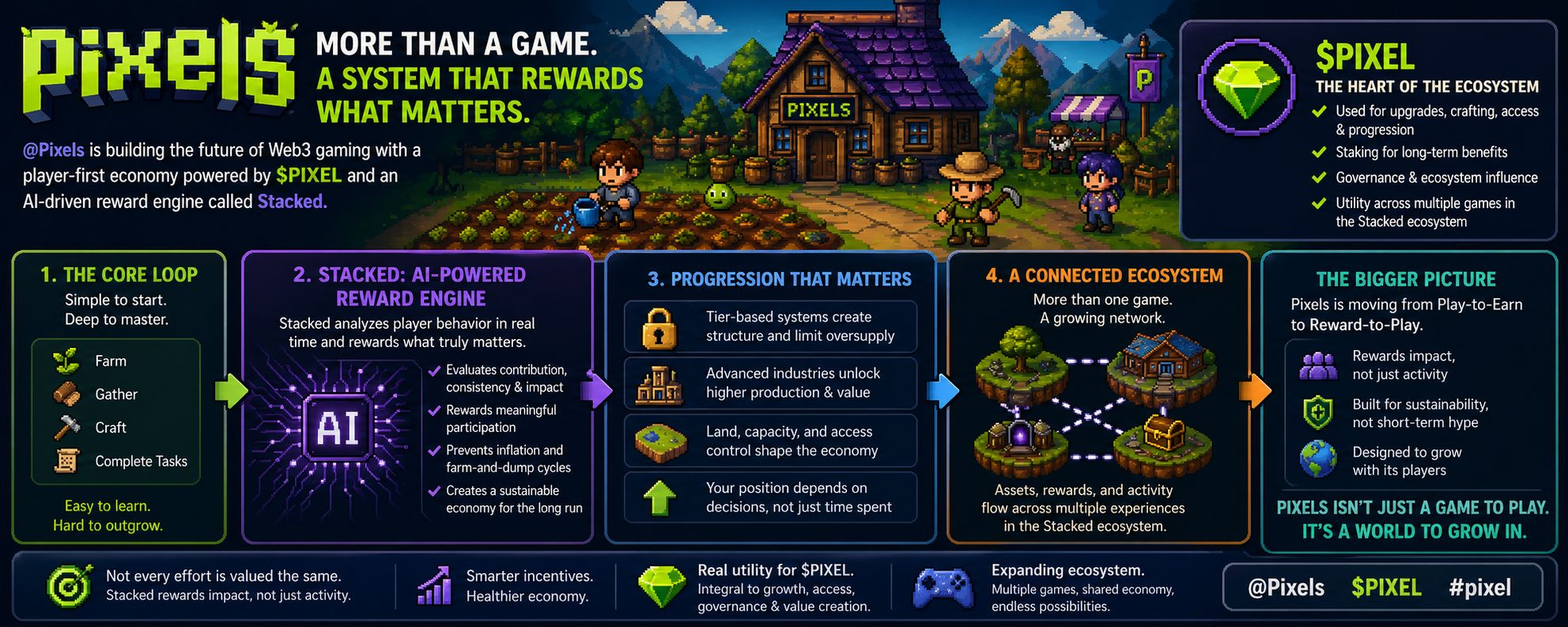
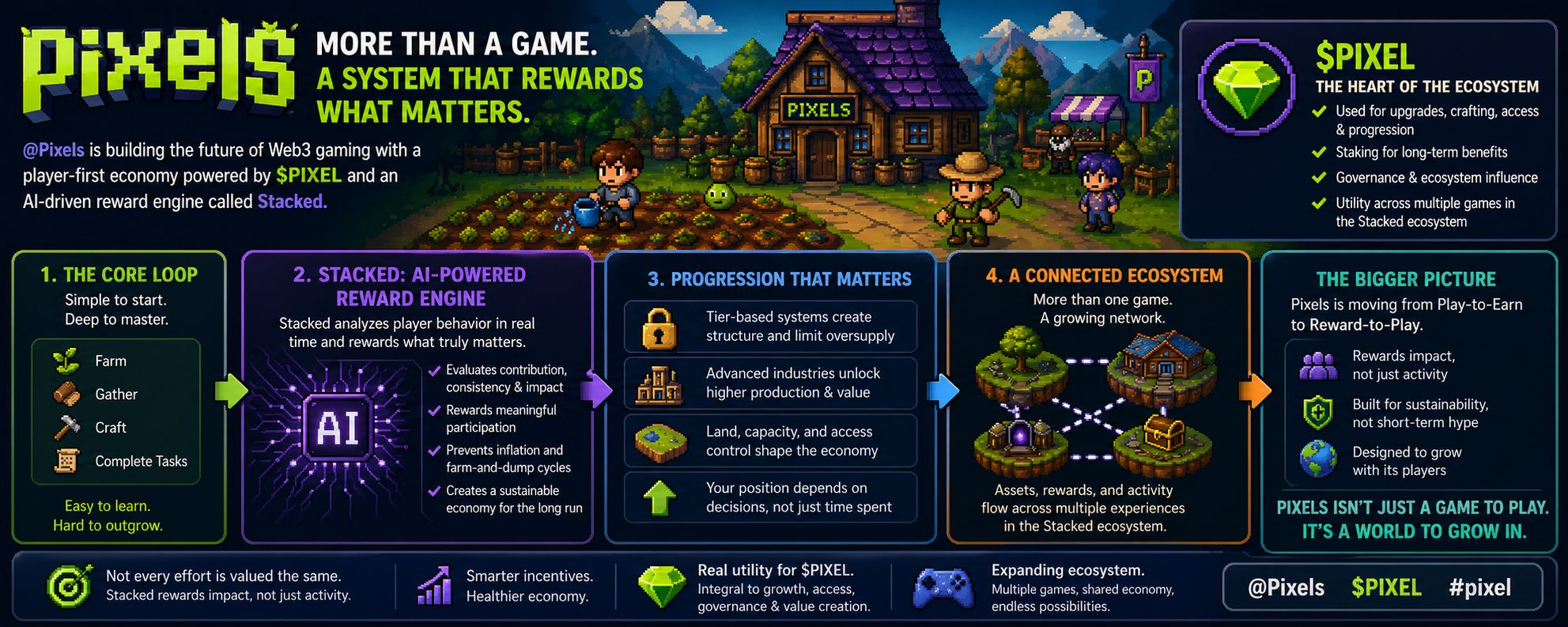
Pixels isn’t really rewarding activity the way most GameFi projects do. It’s filtering it.
There’s a clear difference between just playing the game and actually moving forward in it. The basic loop keeps you engaged, but real progression almost always leads back to $PIXEL. And that’s where things shift.
$PIXEL doesn’t feel like something you just farm and dump. You actually need it. For upgrades, for access, for staying competitive as the game evolves. It becomes part of how you grow, not just something you earn.
That alone already changes the mindset.
But then you start noticing the deeper layer… Stacked.
This is where Pixels stops feeling like a normal game.
Stacked isn’t something you directly see all the time, but you feel it in how rewards work. It’s like the game is paying attention. Not just to what you do, but how you do it.
Two players can spend the same amount of time, but not get the same outcome. And that’s intentional.
It’s not about grinding more. It’s about understanding what actually matters inside the system.
That’s a big shift from how most Web3 games work.
Before, it was simple. More time = more rewards. But that model always breaks because everyone extracts value the same way. Eventually, the system can’t handle it.
Pixels is trying something different.
It slows things down. It adds friction. It makes progression feel a bit more selective. At first, that can feel confusing. But over time, you realize it’s what keeps the system from collapsing.
You also start thinking differently.
Where you spend time matters. What you produce matters. Even timing starts to matter. Some actions push you forward, others just keep you busy.
That’s when it stops feeling like a simple farming game.
It starts feeling like an economy.
And this becomes even more obvious as you move into higher-level systems. Access isn’t equal. Not everyone can do everything at the same time. Land, production slots, and positioning all start playing a role.
So it’s no longer just about playing more. It’s about playing smarter.
That’s probably the biggest change Pixels brings.
It doesn’t reward noise. It rewards direction.
And the interesting part is, it doesn’t force you into it. The game still feels simple on the surface. But underneath, it keeps adjusting, shaping how value flows through everything.
Most people won’t notice it right away.
They’ll just play.
But if you stay long enough, you start seeing the pattern. And once you see it, you can’t unsee it.
Pixels isn’t trying to be loud. It’s not chasing hype like most GameFi projects did.
It’s quietly building something more structured.
Something that can actually last.
And if they get this balance right between players, rewards, and $PIXEL… this could end up being one of the few systems in Web3 gaming that doesn’t break under its own weight.