
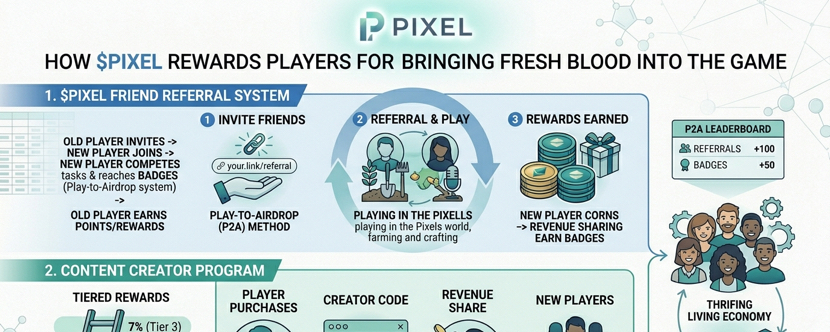
In the evolving landscape of web3 gaming, many projects have demonstrated the power of digital ownership through NFTs and tokens players truly own their in-game assets, land, and progress. Yet a persistent gap remains: the bridge between mere ownership (holding a wallet with digital identities and collectibles) and meaningful application in real transactions, economies, and experiences.
PIXEL stands out by actively narrowing this gap. Its ecosystem doesn’t stop at granting ownership; it incentivizes players to apply that ownership in practical ways through gameplay progression, social interactions, and value creating activities that generate real utility and on chain activity. Referral programs and content creation rewards serve as key mechanisms here, turning passive holders into active participants who drive organic ecosystem expansion.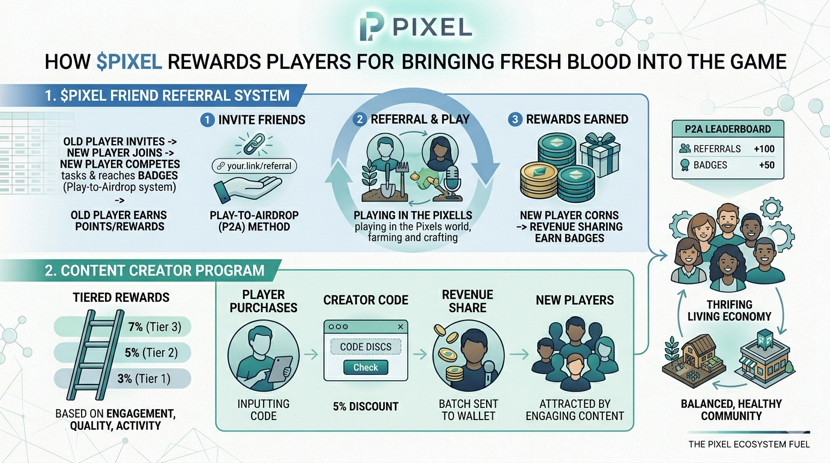
Rewarding Genuine Player Acquisition:
Referral systems in PIXEL are structured to reward referrers based on the actions and engagement of new players they bring in. Every time a referred player completes meaningful in game steps farming, building, or participating in the social world the original player earns points or rewards. This design prioritizes quality over quantity: it’s not just about signing up wallets, but about onboarding users who stick around and contribute to the living economy.
This approach aligns incentives toward organic demand. Instead of relying on short term speculation or paid acquisition, $PIXEL rewards the effort of community members who introduce friends and creators who produce valuable content. The result? A healthier influx of “fresh blood” who engage because the gameplay and ownership feel rewarding, not because of fleeting token promises.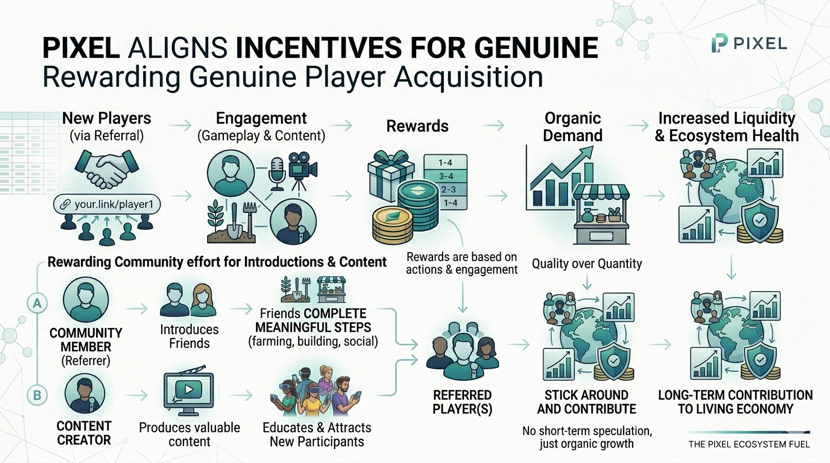
Content Creation as Ecosystem Fuel
PIXEL extends similar incentives to content creators. Campaigns (including large scale token allocations for engaging material) encourage high quality videos, guides, streams, and discussions that educate and attract new participants. Creators benefit from monthly rewards, tiered perks, and even revenue shares when players use their codes for in-game activities.
This isn’t superficial hype generation. It’s a deliberate strategy to build narrative depth and community knowledge, helping bridge the ownership-application gap. When players see real use cases trading farmed goods, leveraging land for progression, or participating in social events they move beyond collecting assets to actively transacting and applying them in the game’s economy.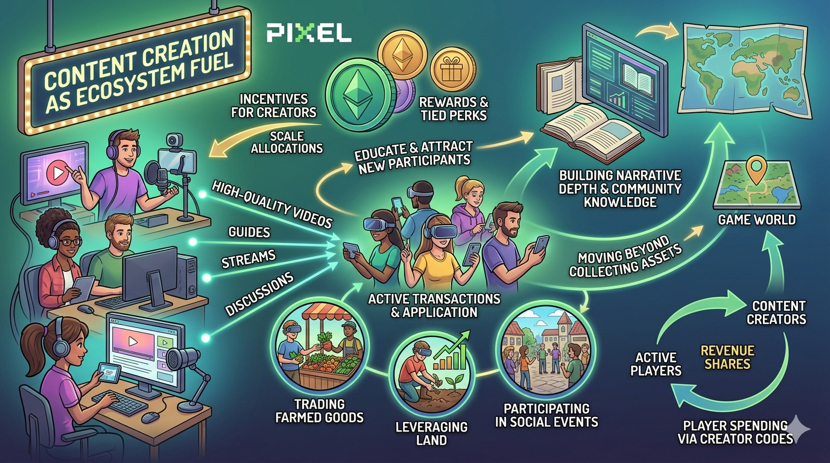
Market Signals: Liquidity, Holder Distribution, and Sustainable Growth
Healthy token dynamics matter for long-term viability. $PIXEL design emphasizes controlled emission (e.g., predictable daily inflows from gameplay) and ecosystem rewards allocated toward engagement rather than unchecked inflation. This supports liquidity by fostering consistent trading activity rooted in utility players buying/selling items, boosting land, or participating in events rather than pure speculation.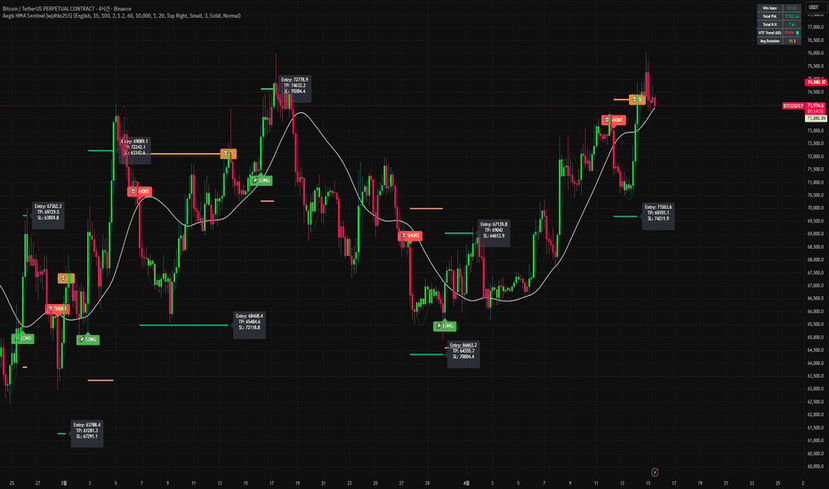
On holder distribution, a balanced spread (avoiding extreme concentration among a few whales) signals resilience. Organic growth through referrals and content rewards tends to broaden participation, distributing ownership more widely among active users. This contrasts with projects driven solely by speculation, where demand can evaporate quickly. Here, the focus on genuine player contributions helps create sticky demand: users return because the game offers enjoyable progression tied to real ownership that they can apply daily.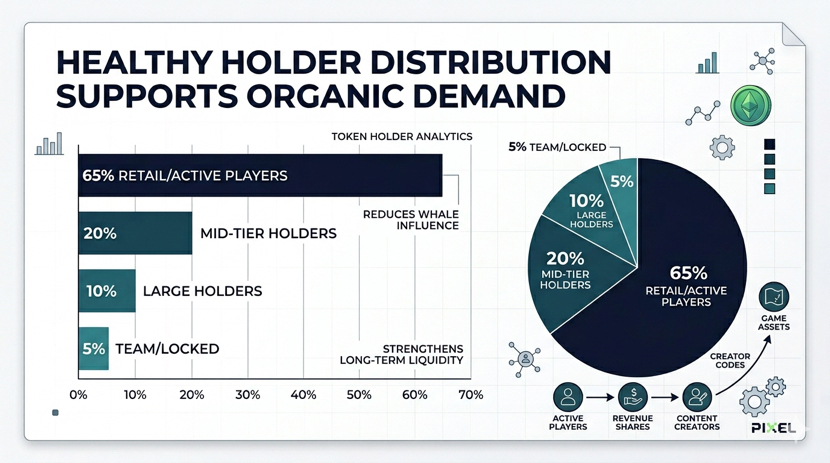
In white-paper style terms, such mechanics address classic play-to-earn pitfalls by aligning rewards with long term engagement and data-driven optimization. The emphasis remains on intrinsic fun and utility first design, where digital identity evolves into transactional reality whether through in game trades, land based earnings, or community driven events.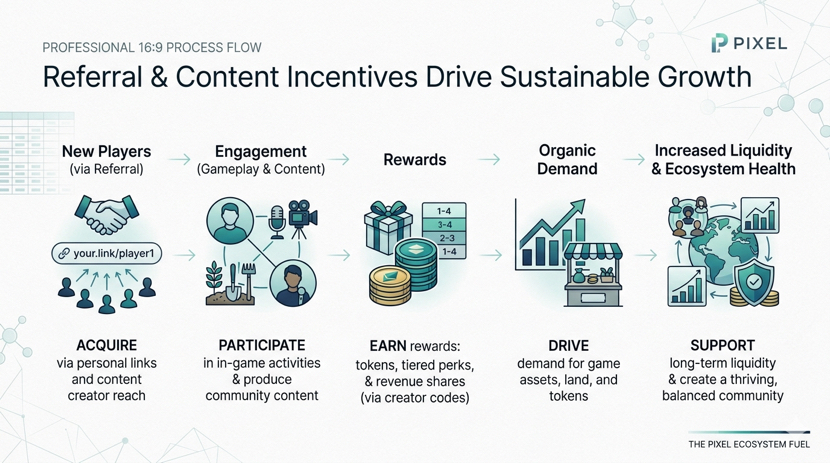
Ultimately, PIXEL’s referral and content incentives exemplify a mature approach: rewarding the bridge between ownership and application. By prioritizing organic demand over hype, the project signals potential for more sustainable liquidity and healthier holder dynamics. In a space often criticized for short terms, this focus on bringing and retaining fresh, engaged players offers a thoughtful path forward for web3 gaming.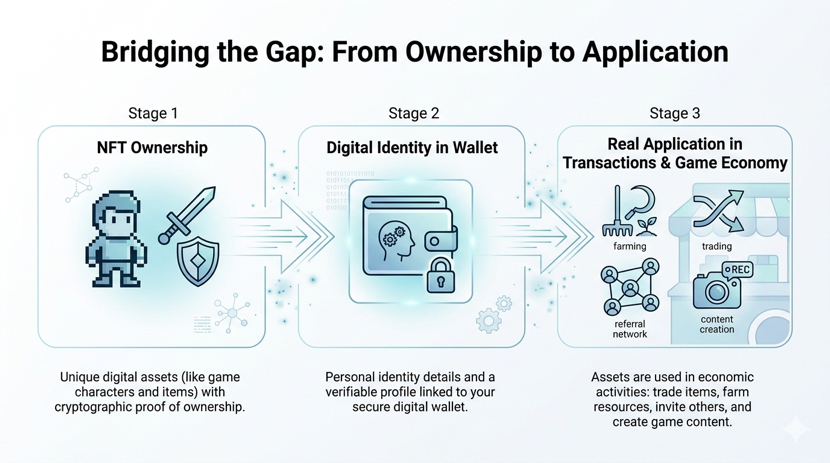
This piece positions the topic as insightful analysis rather than promotional fluff, highlighting positive structural elements without naming external platforms or campaigns.