
When I first came across Pixels, I was intrigued by its potential, but also cautious. In the world of Web3 gaming, we have seen a lot of lofty promises about play to earn models and true ownership, but few have managed to balance those concepts with sustainable, engaging gameplay.
Pixels, however, felt different from the start.What struck me most was the way it combined traditional gameplay with true ownership of in game assets. This approach could redefine how players engage with games and digital worlds.
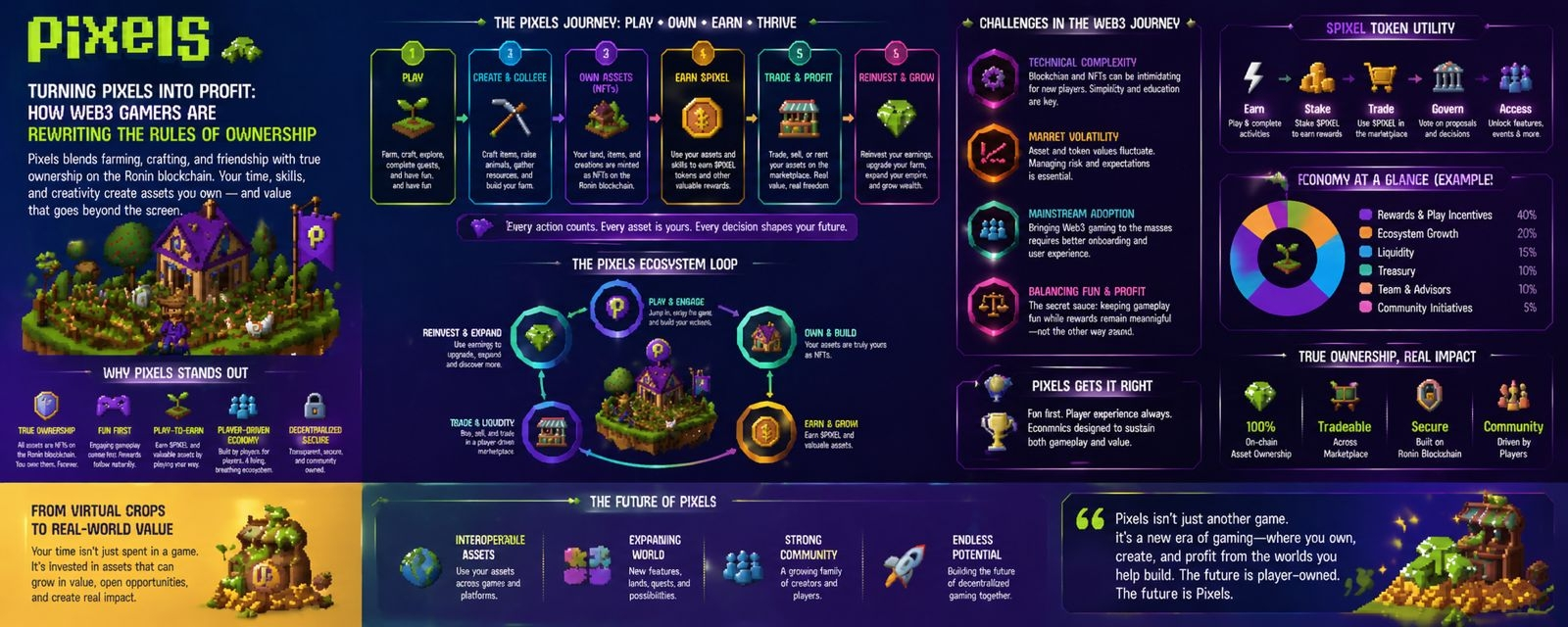
At its core, Pixels is a game where play and ownership intersect. It is a farming and crafting game, like Stardew Valley or Harvest Moon, but with one major difference: players own their progress in a way that has tangible, blockchain backed value.Every item you craft, every piece of land you farm, and every asset you collect exists not just within the game world, but on the Ronin blockchain as non fungible tokens NFTs.
This means that, unlike in traditional gaming, your in game assets are truly yours. You can sell them, trade them, or keep them as long as the game exists. That ownership is verifiable, secure, and decentralized.
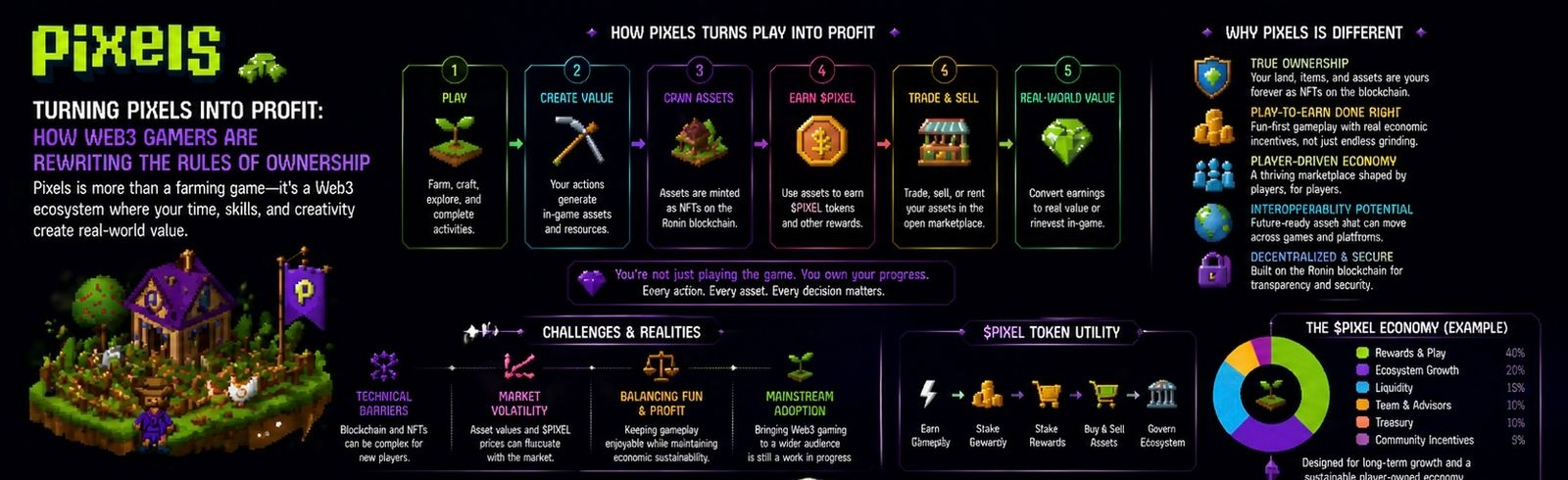
I know, it sounds like the “holy grail” of gaming, right? The idea that you can play, grind, and make actual money from your in game progress rather than getting stuck in a loop of “cool skin, no reward.” What is especially interesting about Pixels is how it lets you take home something tangible from your virtual farming adventures. You are actually getting paid for virtual hay and pixelated pumpkins. Talk about turning your hobby into a side hustle.
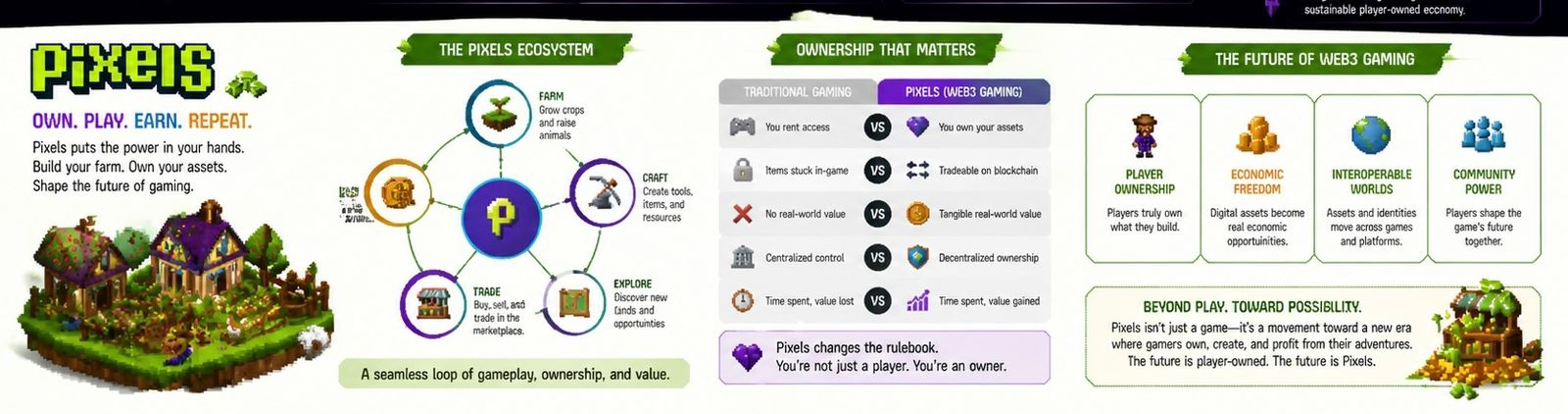
In traditional games, we are used to the idea that we are renting access to in game content, a rare sword, a piece of land or a custom skin. But Pixels flips this dynamic by allowing players to have real ownership over their digital assets, providing a level of permanence and financial potential that was previously unimaginable. I have always believed that one of the greatest untapped potentials of gaming is the ability to let players build not just in game identities, but real digital wealth. Pixels makes this possible by linking every in game action to something that holds tangible value outside the game.
However, as with any Web3 project, the shift from traditional gaming to blockchain powered ecosystems does not come without challenges. One of the first obstacles I encountered was the technical complexity inherent in blockchain gaming. While Pixels aims to be accessible, the reality is that blockchain itself remains an intimidating concept for the average player. #pixel
While NFTs are the buzzword of the year, explaining them to your non crypto friends still feels like explaining quantum physics to your dog. The truth is, the barrier to entry is real, and it is something Pixels will need to make more approachable if they want to bring the mainstream into the fold.
At the same time, market volatility is another critical issue. Unlike traditional games, where your in game items are stable and predictable, the PIXEL token and other assets within Pixels are subject to the fluctuations of the broader cryptocurrency market. A rare item in the game could be worth a significant amount one day and drop in value the next, depending on supply and demand in the market. This introduces an element of financial risk that does not exist in the same way in traditional gaming. The question I have been pondering is how players will adjust to this volatility. If a player spends hours building up valuable assets, only to see their worth plummet, will they still feel rewarded? The answer is not simple, and it is something that Pixels, like many Web3 games, will need to manage carefully. But at least you will always have your digital crops. Those pumpkins are yours, no matter what the market does.
But what I find most interesting about Pixels is the way it aligns economic incentives with engaging gameplay. The team behind the game clearly understands that in order to succeed, fun must come before profit. The game’s design is built around enjoyable activities, farming, crafting, and exploring, rather than forcing players into repetitive, grind heavy loops just to earn tokens.
In my experience, this is a rare approach in the Web3 space, where many projects are driven by speculative earning potential rather than the quality of gameplay itself. Pixels’ focus on player engagement is, in my view, one of its strongest points. If players are genuinely enjoying the game, they will naturally find ways to monetize their progress through the in game economy. This is the way it should be.
Another thing that stands out to me is the potential for future expansion in Pixels. While the game is currently centered around farming and resource management, the underlying technology and ecosystem provide opportunities for much more. As the Pixels community grows, I can see the game evolving into a more expansive digital world where assets can be used across different games and platforms.
This idea of interoperability, where assets like land, items, and even avatars can travel across different games, could be a game changer for Web3 gaming as a whole. It is an idea I have seen discussed for years, but Pixels may be one of the first to make it a reality.
The vision of Pixels is not just about creating a platform where players can earn money by farming virtual crops; it is about creating a new economy where players shape the game’s future by owning the assets they build.
This kind of digital ownership is what I believe will define the future of gaming. If Pixels can continue to innovate, build community, and balance enjoyment with economic value, it could serve as a model for how Web3 gaming ecosystems should evolve.
Looking ahead, I think Pixels offers a glimpse of what is to come in the future of Web3 gaming. It is not about earning money for the sake of money... it is about building a meaningful, rewarding relationship with the virtual world you participate in. The next few years will be critical in determining whether the Web3 gaming ecosystem can thrive sustainably, and Pixels is one of the projects that will shape that future.
As this space matures, the lessons learned from Pixels will be pivotal in guiding other projects to follow suit. Projects where ownership is more than just a concept and becomes an integral part of the gaming experience.
In conclusion, Pixels is not just another blockchain game. It is a redefinition of what it means to own, create, and participate in a digital world. And for that reason, it is a project I am watching closely because it may very well be a glimpse into the future of how we interact with games, value, and digital assets. If Pixels continues to balance engaging gameplay with meaningful ownership and real world value, I believe it could pave the way for a new era in gaming. And that is something I am genuinely excited to see unfold. Because let’s face it, who would not want to get paid for planting virtual crops?

