
Not all “reduced supply” is created equal.
Some tokens look scarce… but they’re just parked—waiting to re-enter circulation.
Others are removed permanently.
$JST is firmly in the second category.
📊 THE NUMBERS THAT MATTER
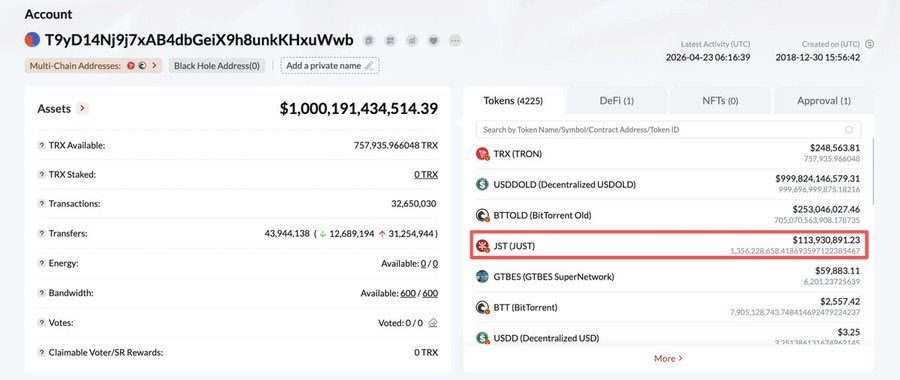
→ 🔥 1,356,228,658+ $JST burned
→ 💎 ~$113.93M in on-chain value removed
→ ⛔ No access. No recovery. No reversal.
Once burned, these tokens are mathematically unreachable—and fully verifiable on-chain.
⚙️ WHY PERMANENT BURNS CHANGE THE GAME
There’s a critical difference in tokenomics:
→ Locked tokens → can be unlocked
→ Vested tokens → can be released
→ Treasury tokens → can be moved
But burned tokens?
👉 They’re gone forever.
That distinction isn’t cosmetic—it’s structural.
It removes uncertainty, eliminates future dilution risk, and reinforces long-term supply discipline.
🔄 A SYSTEM THAT CONNECTS USAGE TO VALUE
What makes $JST stand out isn’t just the scale—it’s the mechanism behind it:
→ Ecosystem activity generates revenue
→ Revenue funds buybacks
→ Buybacks lead to permanent burns
→ Circulating supply continuously decreases
This creates a self-reinforcing economic loop:
✔️ More usage
✔️ More revenue
✔️ More buybacks
✔️ Less supply
Over time, that loop doesn’t just reduce tokens—it builds structural value.
🔍 FULL TRANSPARENCY, ZERO GUESSWORK
Every burn is:
→ Recorded on-chain
→ Publicly verifiable
→ Independently trackable
No assumptions. No hidden mechanics.
Just open, auditable execution.
🌐 THE BIGGER PICTURE
Within ecosystems like TRON DAO, supported by leaders such as Justin Sun, this approach reflects a broader shift:
👉 From “tokenomics on paper”
➡️ To real, enforceable economic design
✨ FINAL THOUGHT
In crypto, it’s easy to design scarcity.
It’s much harder to execute it consistently and transparently.
$JST is leaning into the latter:
→ Not temporary controls
→ Not narrative-driven scarcity
→ But permanent, on-chain supply reduction tied to real activity
Because in the long run:
Foundations outperform hype.
And systems with real economic loops…
are the ones that last.