
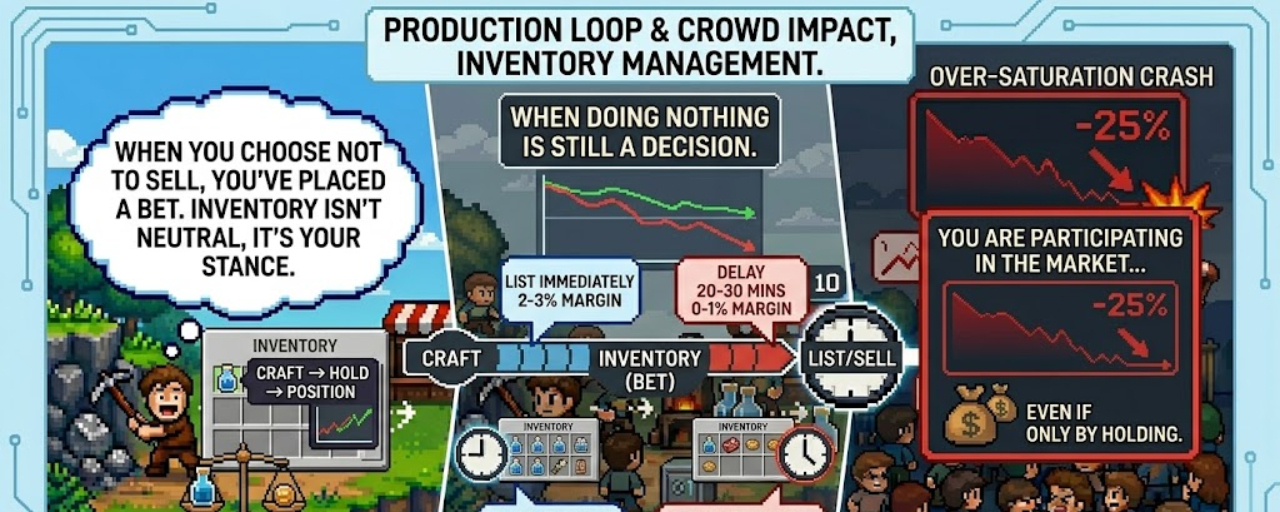
a few days ago, i opened my inventory and noticed i was holding more items than usual. nothing planned, just things i hadn’t listed yet… partly because prices felt “too low,” partly because i thought they might bounce back. To be honest, it didn’t feel like a real decision, just waiting for a better moment. but after a few sessions, it started to feel different.
because the market didn’t wait with me.
i tracked one item over a couple of hours. when i first crafted it, the market price was around X. i held it, thinking it might move up 2–3%. instead, within about 30–40 minutes, more listings came in and the price slipped by ~4–5%. nothing dramatic, just enough to turn a decent margin into something barely worth listing. in another case, i held a batch overnight and saw the opposite price moved up ~3–4%, but by the time i logged back in, new supply had already started pushing it back down.
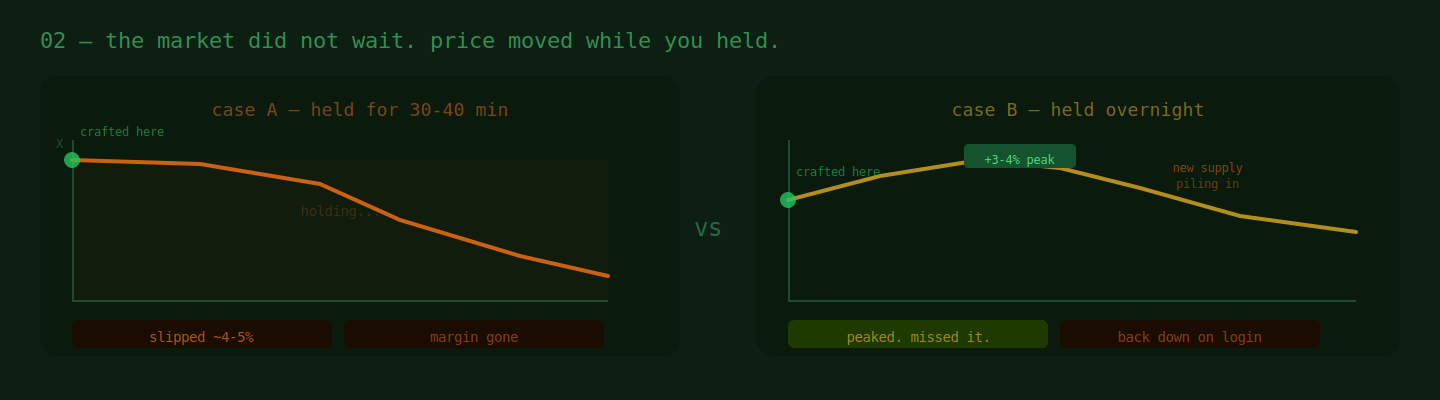
same items.
different outcomes.
and none of it came from what i did after crafting.
that’s when it clicked that inventory in Pixels isn’t just storage.
it’s a position.
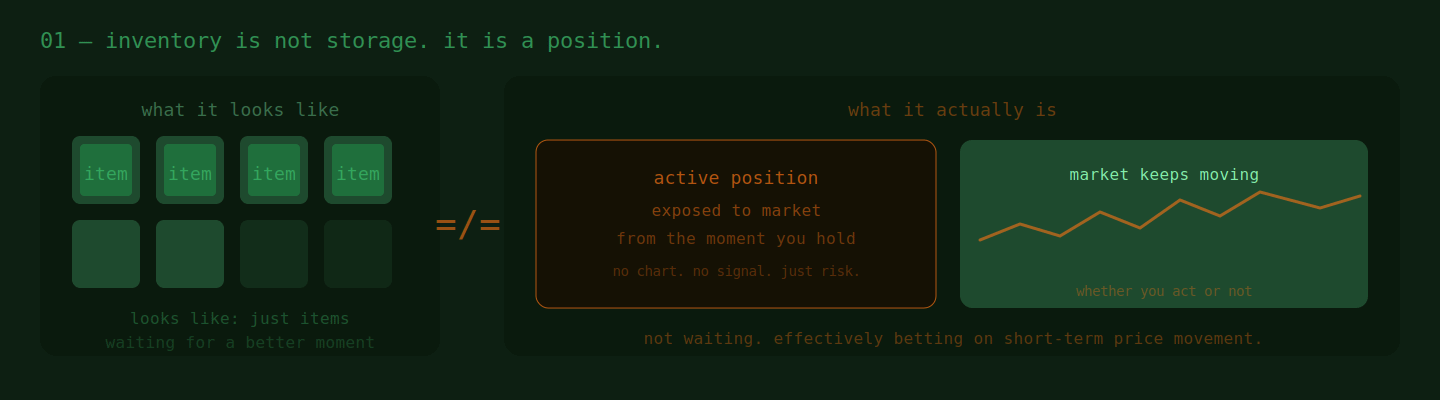
the moment you choose not to sell, you’re already exposed to whatever the market does next. you’re not “waiting,” you’re effectively betting on short-term price movement. and the tricky part is, it doesn’t feel like a bet. there’s no chart, no clear signal, no moment where the game tells you you’re taking on risk. it just sits there quietly, like unused items.
but the numbers move anyway.
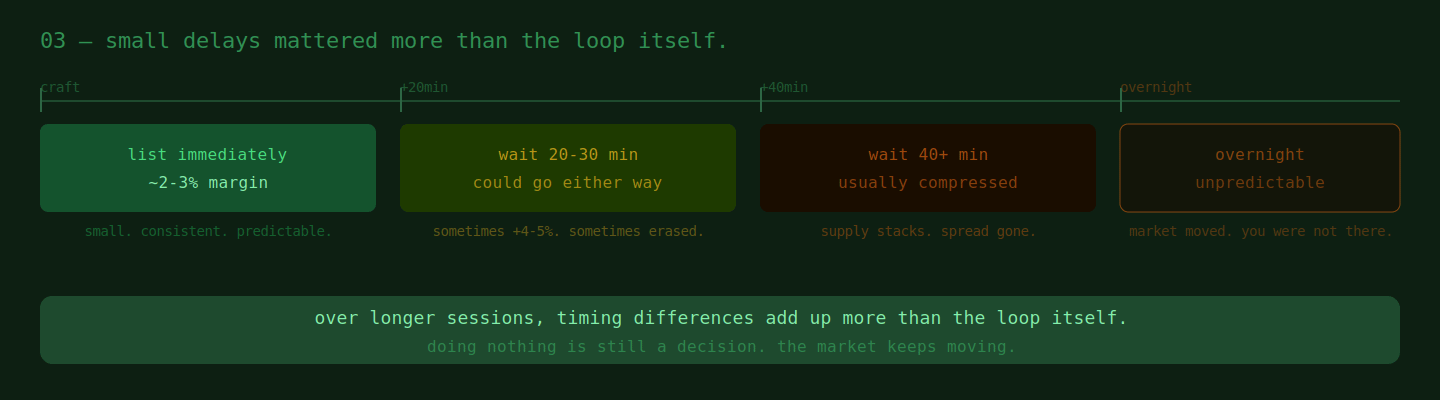
i started noticing that small delays mattered more than i expected. listing immediately after crafting might lock in a ~2–3% margin, nothing exciting but consistent. waiting even 20–30 minutes could shift that completely, sometimes up a bit, sometimes down enough to erase the profit. over longer sessions, those small differences add up more than the loop itself.
and that’s where two players can end up in very different places.
same route, same inputs, same output… but one treats inventory like something to clear, the other treats it like something to “optimize.” one takes smaller, more predictable returns. the other chases better prices, sometimes catching a +4–5% move, sometimes giving back even more when the market turns.
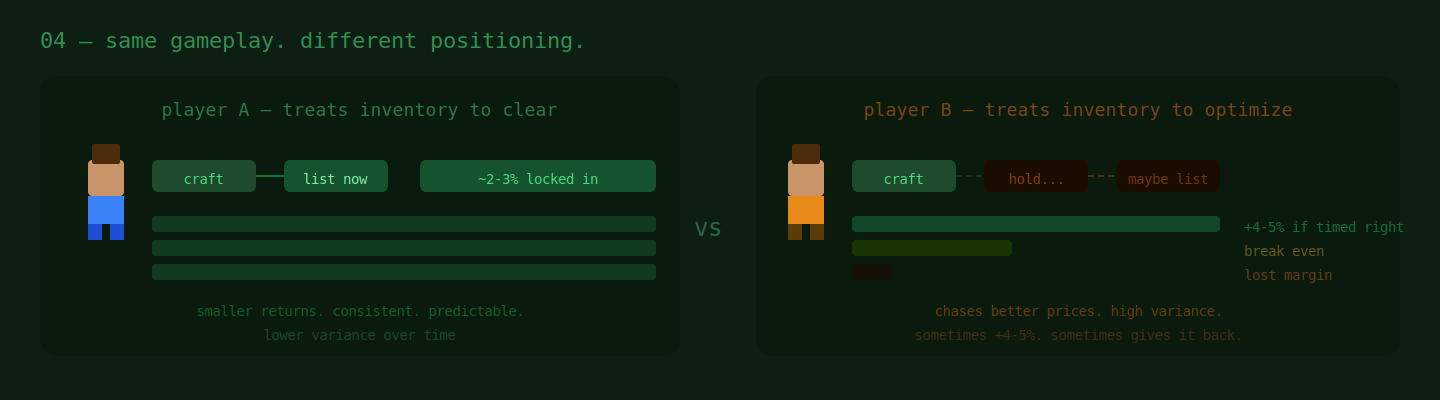
same gameplay.
different positioning.
because inventory isn’t neutral. it’s not just what you haven’t sold yet. it’s your current stance inside the market at that moment. and the longer you hold, the more that stance matters.
the part that’s easy to miss is that doing nothing is still a decision.
the market keeps moving, other players keep listing, supply keeps changing. you’re still in the system, whether you act or not.
so the marketplace isn’t just something you interact with when you buy or sell.
you’re already participating in it…
just by holding.