
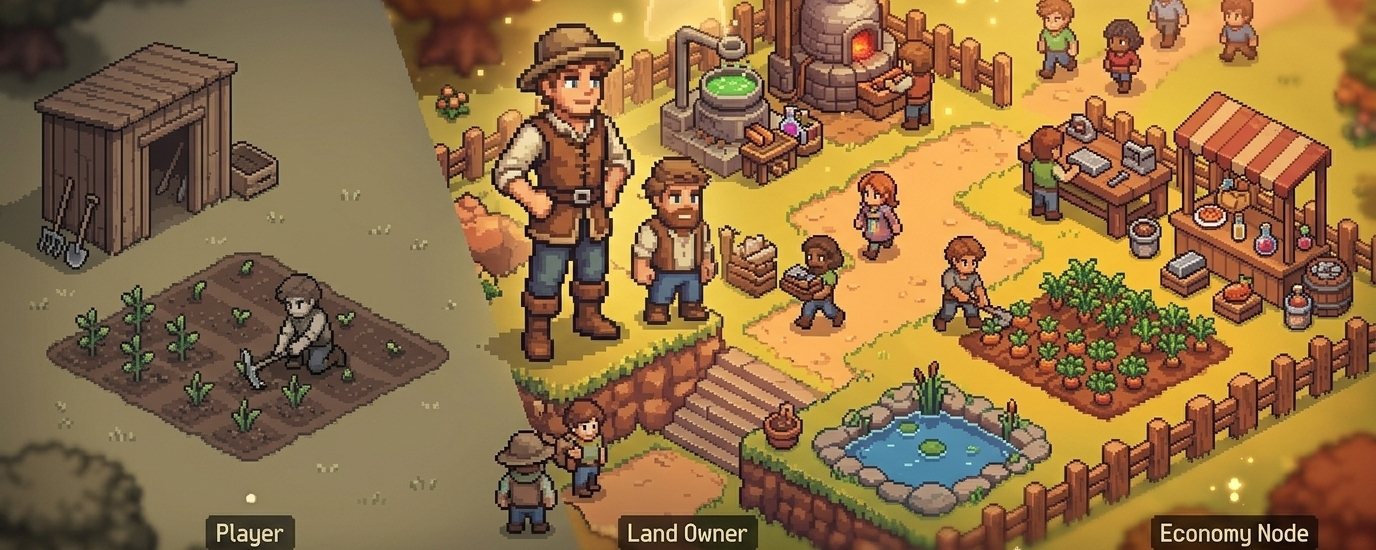

Here is what changed my view on land ownership in Pixels. It is not the financial angle that makes it interesting. It is the design angle. Land in Pixels does not just give you more production capacity. It changes what kind of player you become.
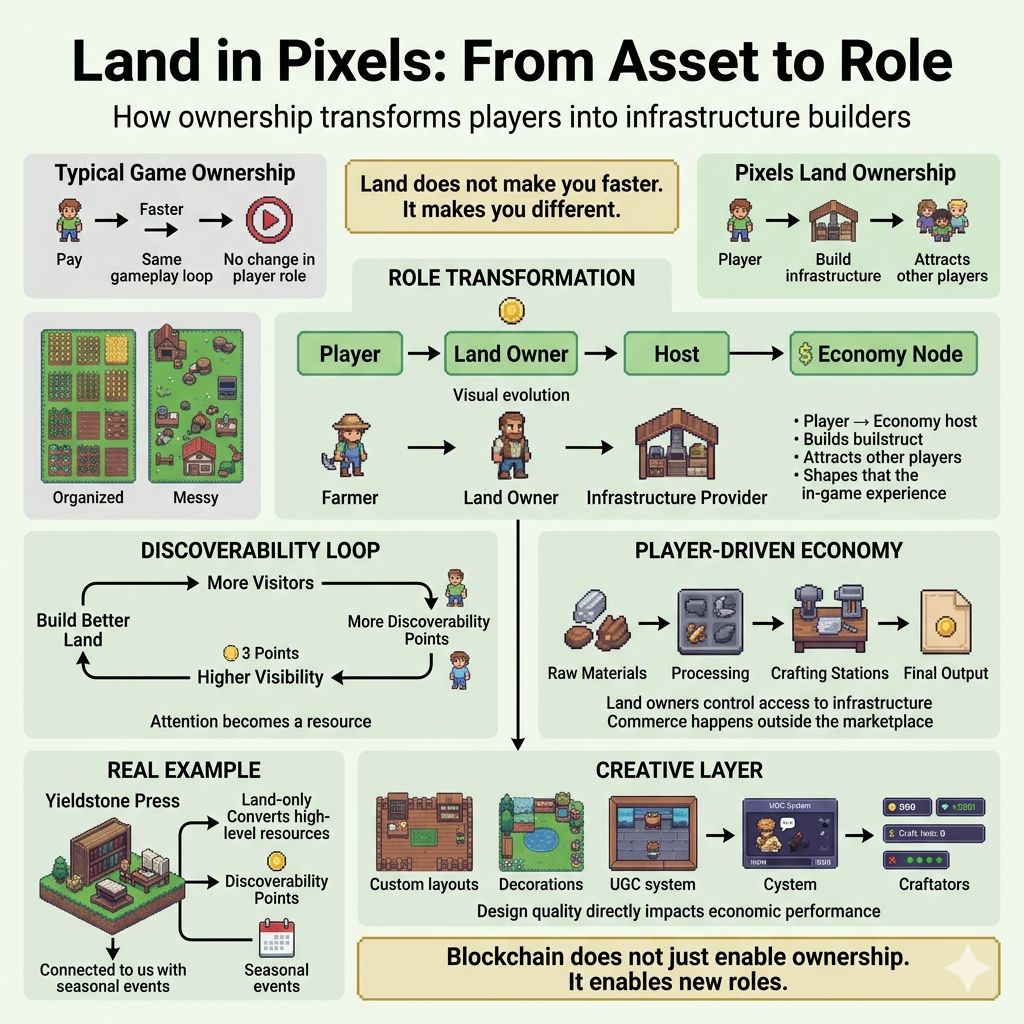
Most games treat premium ownership as a speed upgrade. Pay more, do the same things faster. Better gear, more drops, quicker progression. The experience underneath is identical — just accelerated. That works for revenue but it does not change what kind of player you are.
Land in Pixels works differently. A land owner does not just farm faster. They become a host. They build crafting stations, design layouts, open their plot to other players, and create a space that other people actually want to visit. That shift from participant to host is not cosmetic. It changes your entire relationship with the game.
The Discoverability Points system makes this tangible. Activity on your land — players visiting, using your stations, farming your plot — generates points that determine how prominently your land appears in the game's discovery layer. More visitors means more points means more visitors. The cycle rewards land owners who treat their plot as a space worth building rather than an asset worth holding.
The crafting station economy is where it gets genuinely interesting. Many high-level recipes in Pixels require stations that non-land players simply cannot access on their own. So they go to land owners. Land owners set the terms. That relationship generates real player-to-player commerce that exists completely outside the standard marketplace. Some players produce raw materials. Some process them. Some own the infrastructure that makes processing possible. All of them are in the same world, specializing, depending on each other. That is not a token distribution system dressed up as a game. That is an actual economy.
The Yieldstone Press is one concrete example of how land ownership connects to the broader systems. Land owners can build it, craft Yieldstones from high-level resources like Mirage Eggs, Ashnuts, and Gloomshards, and during Chapter 3 Bountyfall it generated 7000 Discoverability Points per use on top of that. A land-specific building tied directly to a seasonal competition mechanic. The systems talk to each other because they were designed to.
The creative side is the part most analyses skip. Land owners customize their plots with decorations, structures, and layouts. The UGC system lets players submit original decorations that, once approved, show up across the game world. A land owner who has spent months designing a well-organized, visually distinctive plot has built something that carries their fingerprint inside the world. Visiting a thoughtfully built plot feels different from visiting a neglected one. That difference is real, not cosmetic, and the Discoverability system rewards it directly.
Here is what changed my view on land ownership in Pixels. It is not the financial angle. It is the design angle. Land does not just give you more production capacity. It changes what kind of player you become. A land owner focused on designing their plot, building infrastructure, and attracting visitors is playing a fundamentally different game than someone optimizing their farming output. Both are inside the same world. Neither is playing it wrong. But only one of them could exist without genuine on-chain ownership.
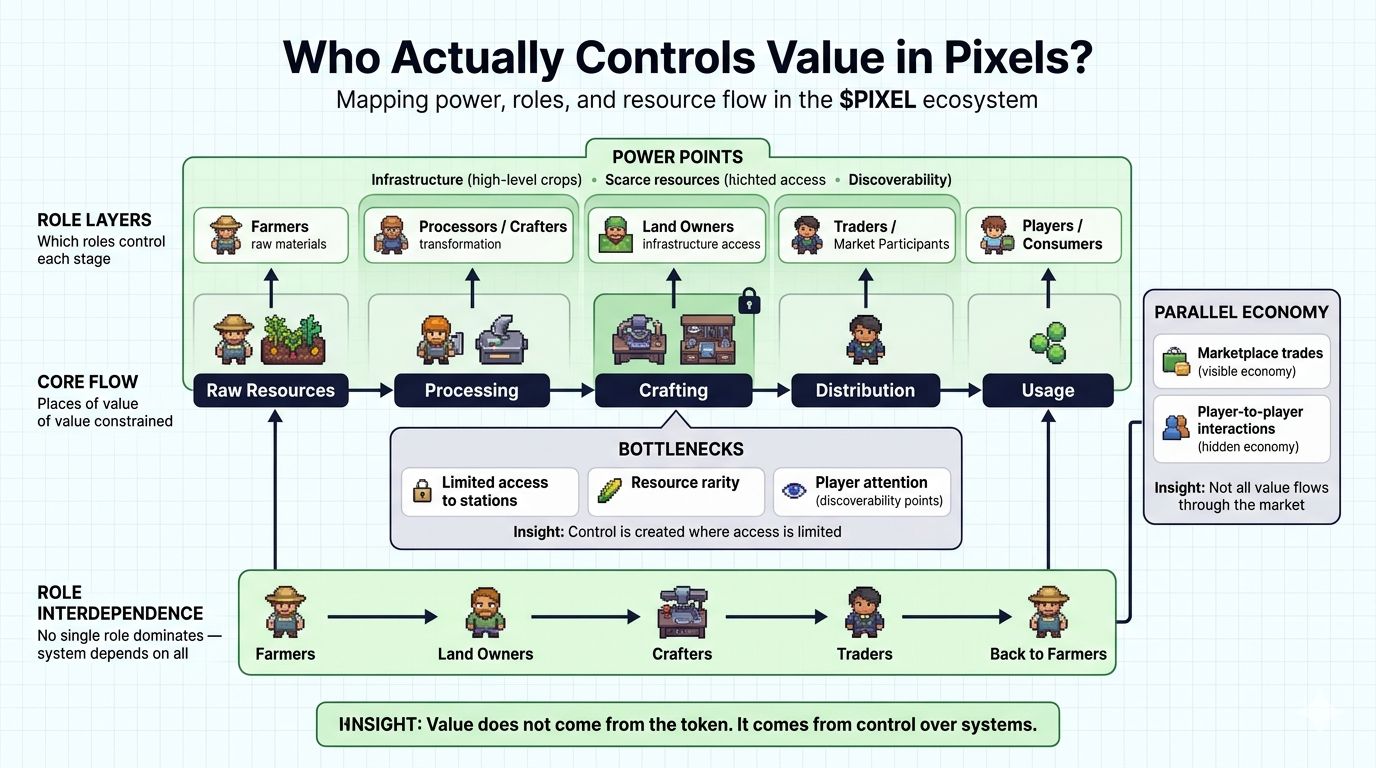
That is what blockchain actually adds to a game when the team uses it carefully. Not a faster exit mechanism. A different role entirely.
#MarketRebound #pixel @Pixels $PIXEL #JointEscapeHatchforAaveETHLenders #BTCSurpasses$79K #StrategyBTCPurchase
@Pixels $PIXEL #pixel #PİXEL #Web3Gaming #GameFi #Ronin #BinanceSquare