
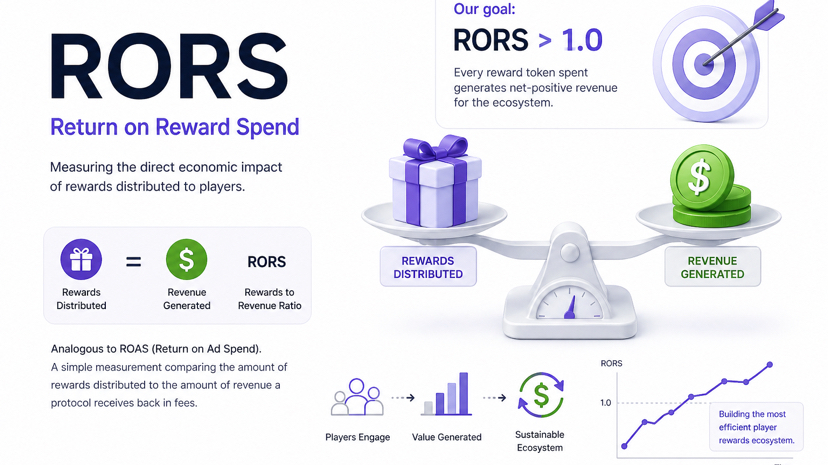
I didn’t pay much attention to the metric at first. Return on Reward Spend just sounded like a cleaner way to measure efficiency. Rewards go out, revenue comes back, compare the two. Simple enough.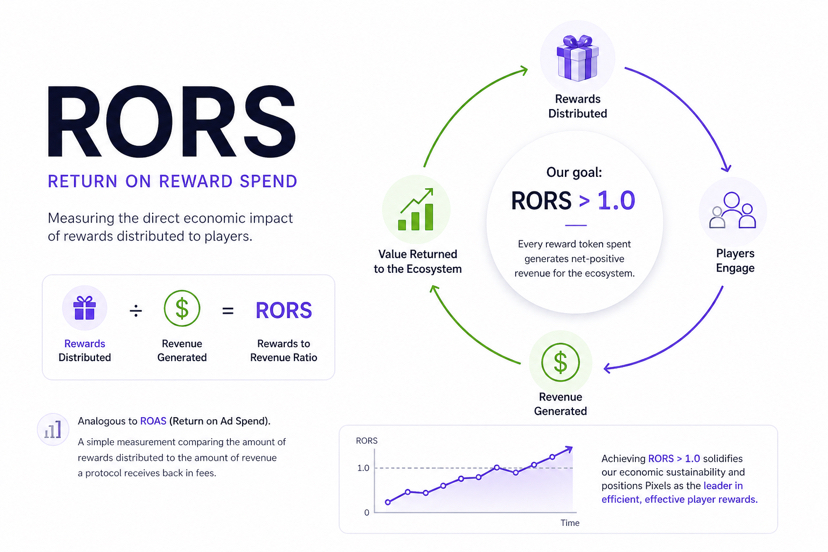 #pixel
On the surface, it feels like the kind of thing every system should track.
But the more I sat with it, the more it started to shift how I was looking at the whole structure.
Because if you frame rewards like ad spend, then players start to look less like participants and more like… traffic. Not in a negative way, just in how value is measured. Actions aren’t only about progress or enjoyment anymore. They become signals tied to return.
And that changes what “good behavior” means.
I started noticing how certain actions seem to carry more weight than others. Not because they’re more fun or more engaging, but because they likely feed back into the system more efficiently. You don’t see the metric directly, but you feel its presence in what gets reinforced.
Players respond in small ways.
They repeat what works. They drift toward loops that feel more “worth it.” Not necessarily because they understand the system, but because the system quietly nudges them there. Over time, those micro-decisions start to align.
It stops feeling like open-ended play.
More like guided movement.
That’s where the tension sits for me.
If the goal is pushing RORS above 1.0, then rewards aren’t just incentives. They’re investments that need to return value. And if that’s the case, then every player action is being evaluated, directly or indirectly, on whether it contributes to that loop.
Which makes me wonder what happens to the parts that don’t.
The slower actions. The less efficient paths. The things people do just because they enjoy them, even if they don’t “perform” well.
Do they get less visible over time?
Less supported?
Or do players naturally move away from them because the system doesn’t respond as strongly?
I don’t think this shows up in a single number like RORS. The metric might improve, but the shape of behavior underneath it could be changing in ways that are harder to see.@Pixels
Maybe that’s the trade-off.
A system that becomes more efficient at turning rewards into revenue might also become more selective about what kind of play it encourages.
I’m not sure if that’s a problem or just a direction.
I just keep noticing which actions feel more alive inside the system…
and which ones slowly stop echoing back.$PIXEL