

@Pixels #pixel
Pixels (PIXEL) sits in a strange but important corner of the market right now not because it’s “a game,” but because it’s one of the few live environments where you can actually observe retail-like behavior on-chain without needing a bull market. Most GameFi projects only function when token prices go up. Pixels, running on Ronin Network, is different it generates activity even in sideways conditions. That alone makes it worth studying, not as a game, but as a behavioral sandbox for liquidity.
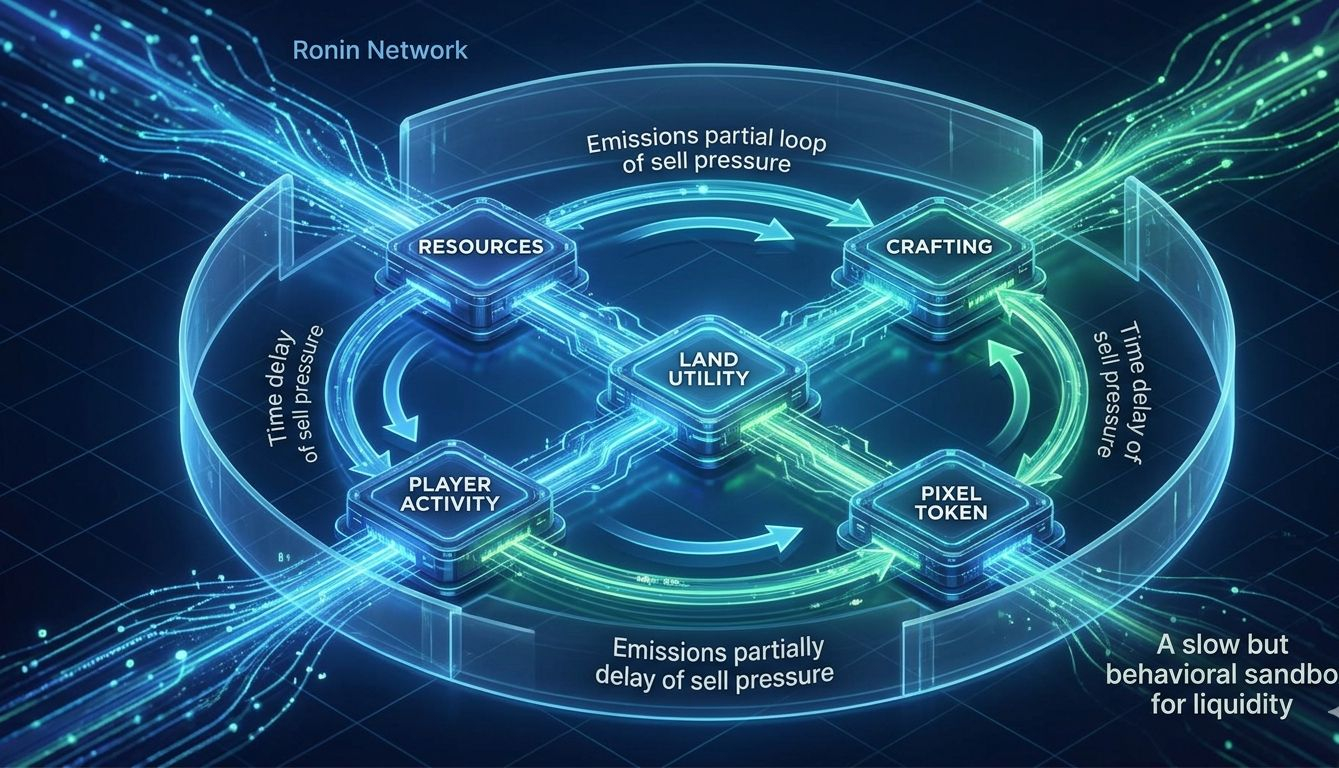
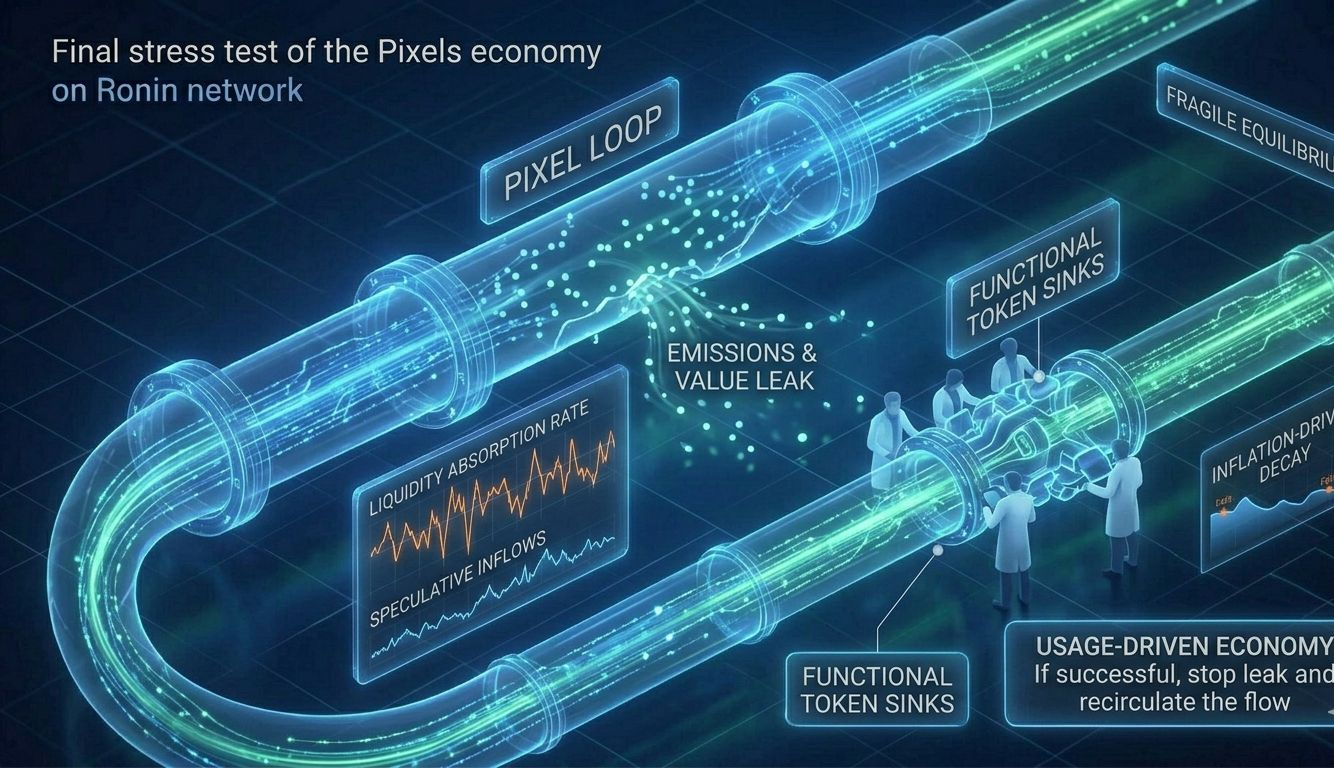
The first non-obvious thing: Pixels is effectively a soft faucet disguised as gameplay. New users come in, farm resources, earn small rewards, and slowly get introduced to on-chain actions. But unlike typical faucets, the emissions are partially circular. Resources feed into crafting, crafting feeds into land utility, and land drives demand for PIXEL. The loop isn’t perfectly closed inflation still leaks but the key is time delay. Most players don’t immediately sell rewards; they reinvest them into progression. That delay reduces instant sell pressure and creates a pseudo-staking effect without locking tokens.
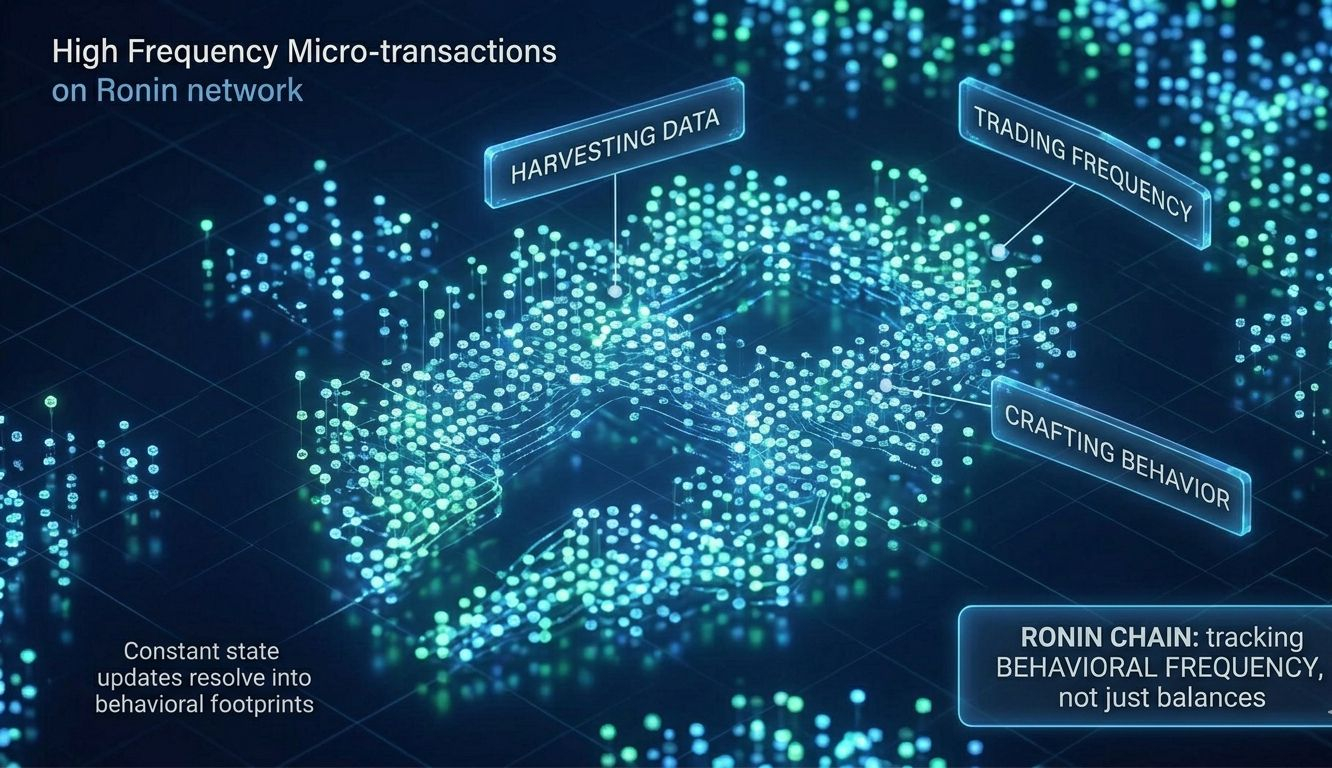
Second, the Ronin environment changes the usual GameFi math. On Ethereum mainnet, micro-transactions kill retention. On Ronin, near-zero fees allow constant state updates harvesting, trading, crafting all happening on-chain. That means Pixels isn’t just tracking balances; it’s tracking behavioral frequency. High-frequency, low-value actions create a different kind of data footprint, and that’s where things get interesting. Wallets interacting with Pixels aren’t passive holders they’re active participants, and that makes their capital “stickier” than typical airdrop farmers.
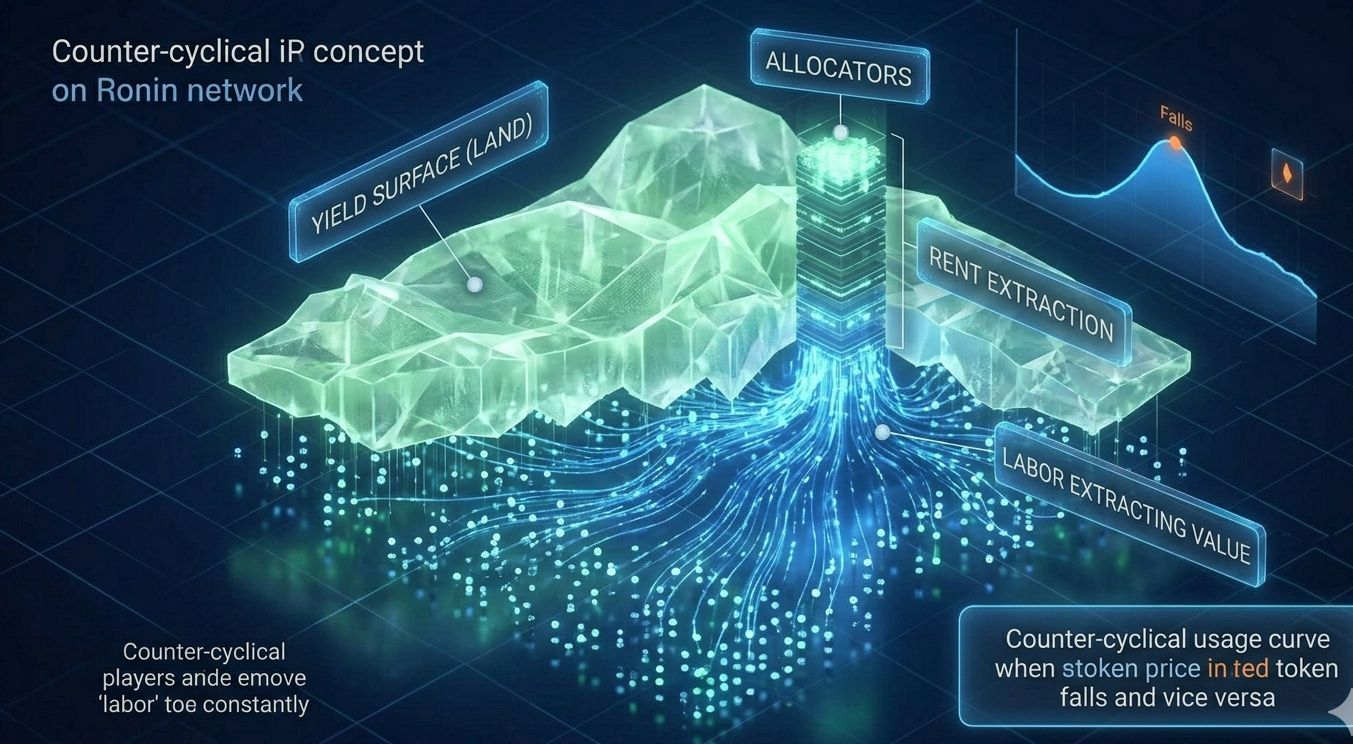
Now look at liquidity behavior. PIXEL doesn’t behave like a standard governance token because its demand is partially non-financial. Players need it for in-game actions, not just speculation. But here’s the catch: that demand is elastic and sentiment-driven. When token price rises, players reduce usage and hoard; when price drops, activity increases because costs feel cheaper. That creates a counter-cyclical usage curve the opposite of most DeFi tokens, where usage collapses when price falls. It’s subtle, but it stabilizes baseline demand.
There’s also an overlooked structural edge: land ownership. Land in Pixels isn’t just cosmetic it’s a yield surface. Owners extract value from player activity, effectively acting as micro-protocols inside the game. This creates a layered economy where capital allocators (landowners) and labor (players) interact. It’s closer to a simplified version of real-world economic systems than typical GameFi loops. More importantly, it introduces rent extraction, which concentrates value upward something most Web3 games try to avoid, but Pixels leans into.
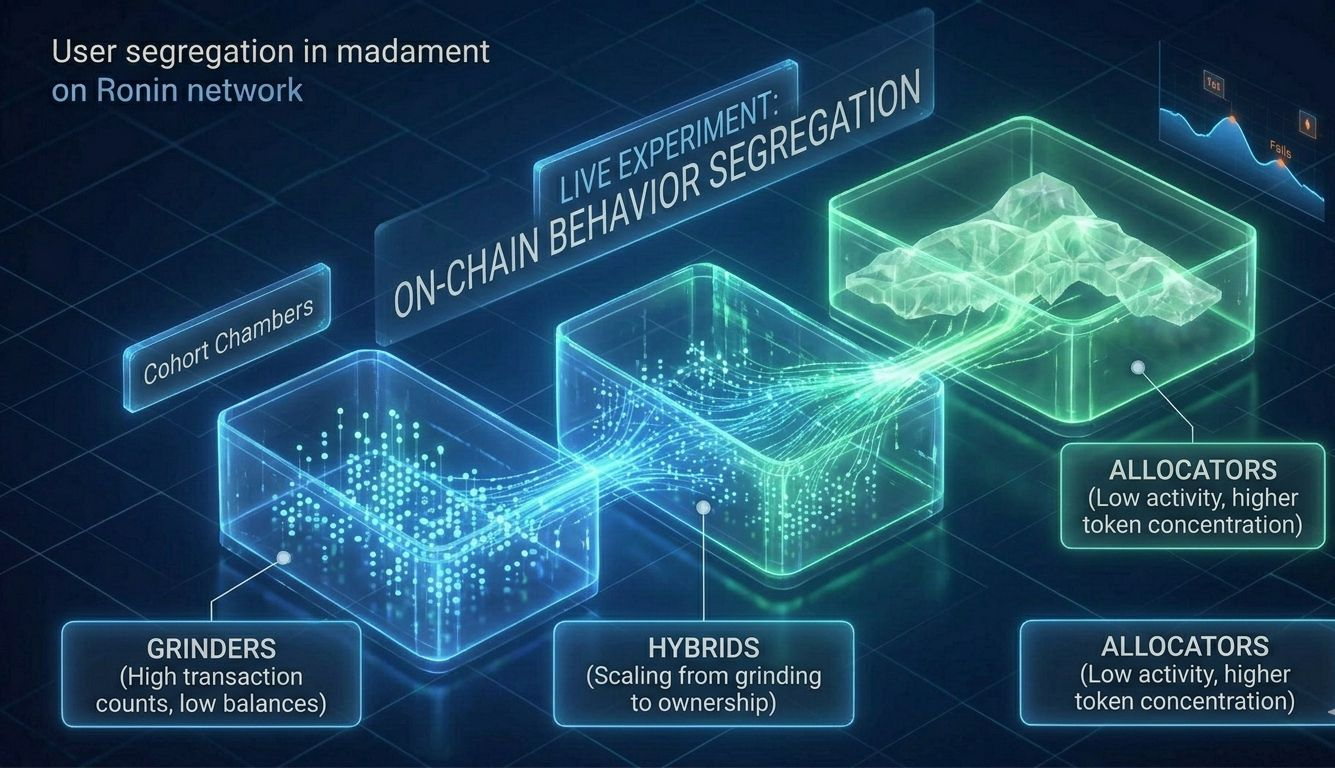
From an on-chain perspective, this creates identifiable cohorts. You can separate wallets into grinders, capital allocators, and hybrid players. Grinders show high transaction counts with low balances. Allocators show low activity but higher token concentration. Hybrids are the interesting group they scale from grinding into ownership. Watching this transition on-chain is one of the clearest signals of whether the system is actually retaining value or just cycling new users through emissions.
Token incentives are where the real stress test lies. PIXEL emissions are tied to engagement, but engagement itself is partially subsidized. That’s a fragile equilibrium. If external liquidity (DEX depth, CEX listings, or speculative inflows) weakens, emissions start dominating price action. The system relies on continuous partial absorption not full demand coverage, just enough to slow down decay. That’s a very different requirement than most tokens, and it makes PIXEL highly sensitive to liquidity fragmentation across chains and venues.
Another layer most people miss: Ronin’s user base isn’t purely crypto-native anymore. It’s one of the few ecosystems where non-DeFi users actually transact on-chain regularly. That means Pixels is indirectly onboarding a different class of participant less yield-optimized, more behavior-driven. These users don’t arbitrage efficiently, which introduces inefficiencies in pricing and resource markets inside the game. For traders, that’s alpha not in the token alone, but in the ecosystem’s micro-markets.
From a capital rotation perspective, PIXEL doesn’t compete with L1s or DeFi majors. It competes with attention. When the market is risk-on, capital flows into narratives with convex upside. Pixels captures a smaller, more persistent stream users who are willing to stay active even when volatility drops. That makes it less explosive, but more durable. In a fragmented market, durability is underrated.
Forward-looking, the real question isn’t whether Pixels grows it’s whether it can tighten its economic loop. Right now, value leaks through emissions faster than it’s captured through sinks. If the team increases meaningful token sinks (not cosmetic burns, but functional dependencies), the system could transition from inflation-driven to usage-driven. If not, it remains a well-designed, slowly leaking economy.
The takeaway is simple: Pixels isn’t a “GameFi bet.” It’s a live experiment in how small-scale, behavior-driven economies function on-chain under real market conditions. If you’re paying attention to capital flows, user retention, and incentive design, this isn’t noise it’s one of the cleaner signals we have right now.
