i used to believe that as more people played Pixels, the whole game would naturally get bigger and better. more farms, more activity, more rewards flowing out for everyone. that’s how games are supposed to scale, right?
but the longer i stay inside Pixels, the less that idea holds up.
on the surface, everything looks active. maps feel alive, the task board keeps refreshing, and there’s constant movement. the off chain layer is still incredibly smooth, planting, harvesting, crafting, and daily loops run instantly with zero gas fees. coins circulate endlessly, making the gameplay relaxing and addictive no matter how many players are online.
yet real $PIXEL doesn’t expand just because more people show up. it stays within tight boundaries, shifting around rather than growing.
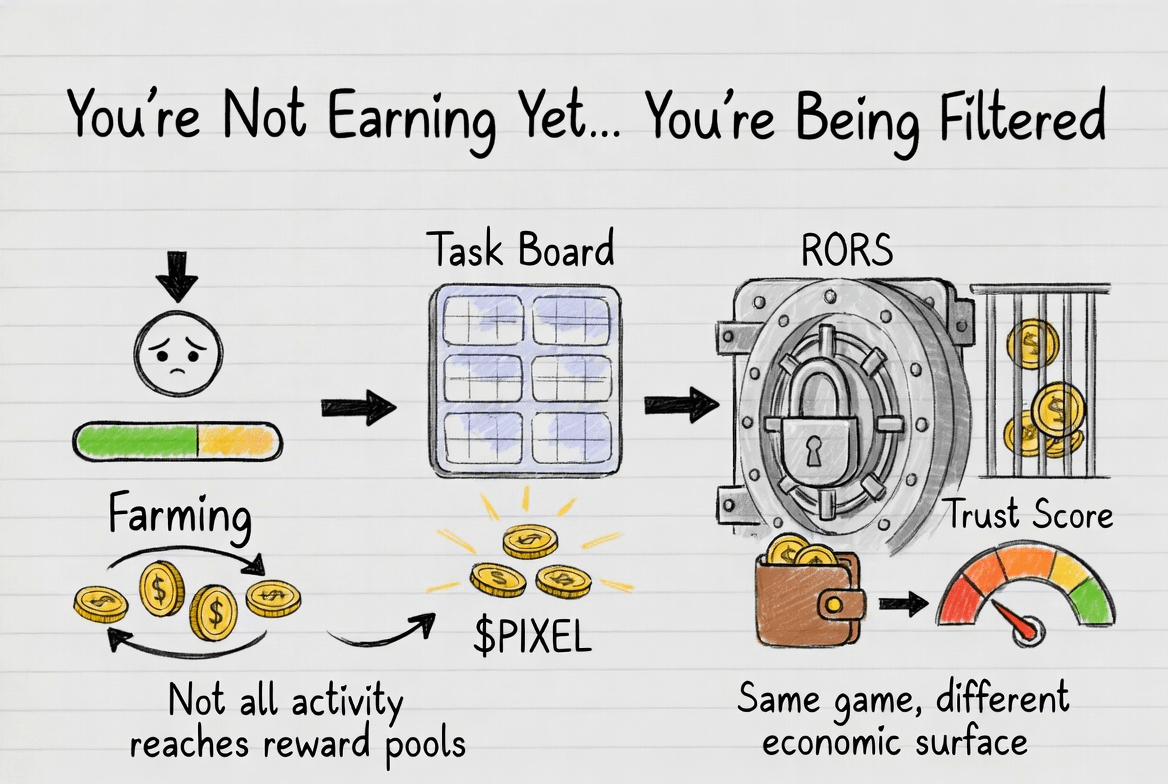
the reason lies in how Pixels is actually built.
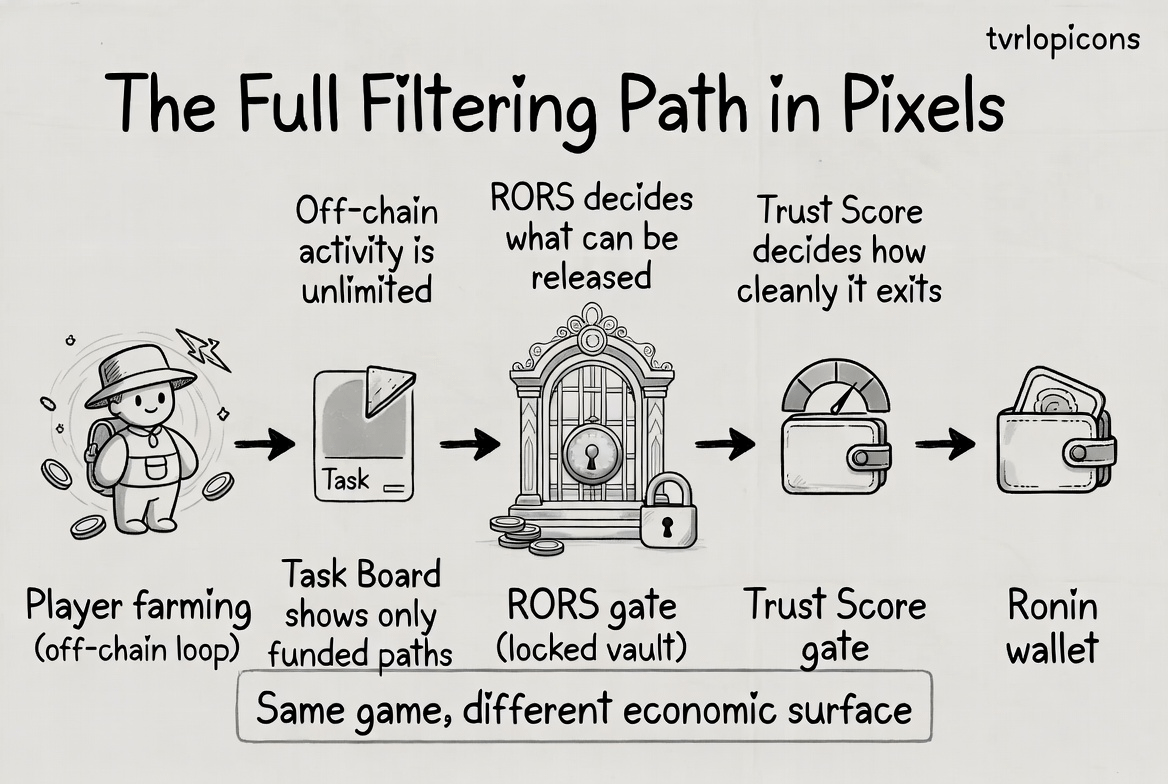
most of your daily play happens off chain on game servers. this layer absorbs unlimited activity without pressure. but when value tries to become real $PIXEL , something that settles on ronin, it hits multiple intelligent filters.
stacked, the AI powered rewarded liveops engine from the Pixels team, sits at the center. its AI game economist constantly studies player behavior, retention, and revenue impact. it works together with rors (return on reward spend) to ensure every reward distributed generates real value back to the ecosystem. staking $pixel further routes budget toward specific games or validators, deciding in advance where reward allocation can flow.
because of this system, more players and more off chain activity don’t automatically create more pixel. the system tests whether it can safely release additional rewards without breaking economic balance. reward budget gets redistributed rather than expanded.
some days your task board feels heavy and rewarding, like there’s real depth behind the chains. other days it feels lighter, even if you’re playing the same way. it doesn’t always feel like a direct response to your effort. it feels like the system has quietly moved the reward allocation somewhere else for now.
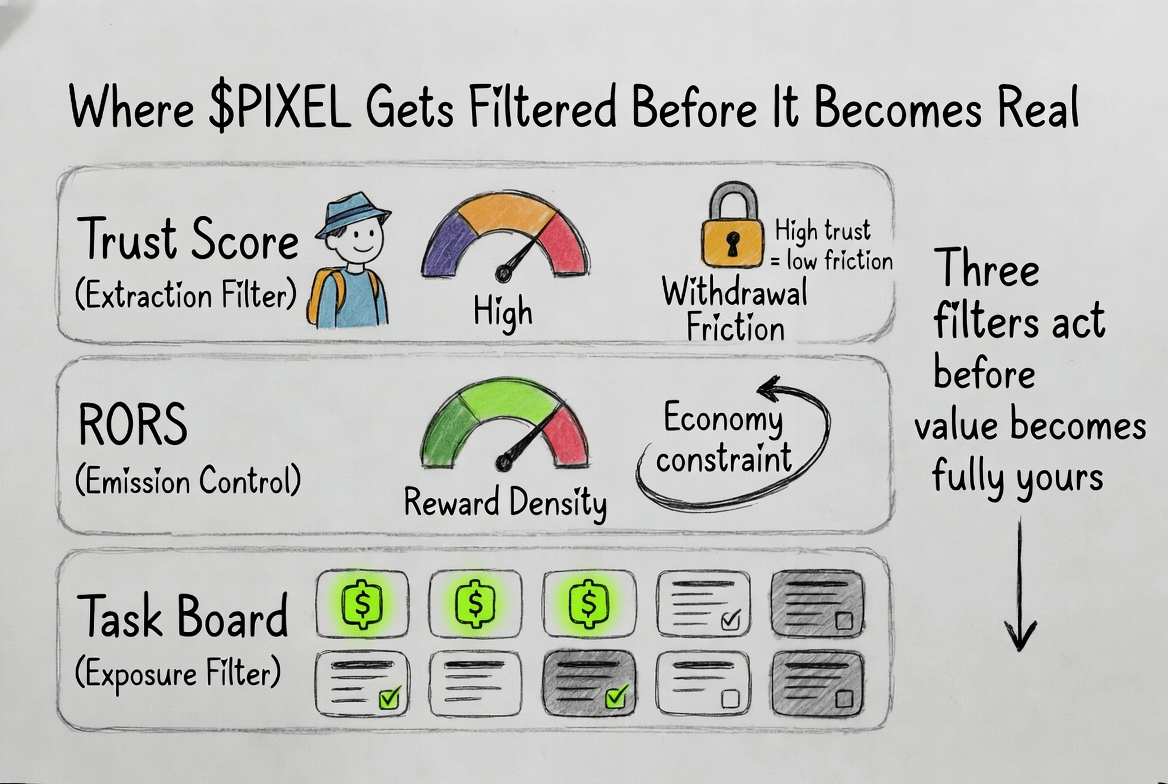
for the Pixels community, this controlled reallocation is actually a strength. while many early web3 games collapsed from unlimited token printing, Pixels has maintained better stability by carefully managing reward spend. the off chain farm keeps the experience fun and accessible for casual players, while the smart backend (AI + rors + staking routing) protects long term health.
from the player’s perspective, though, it creates a subtle but uncomfortable shift. you stop feeling like the game is growing with your effort. instead, it feels like the system is constantly moving the limited reward budget around, concentrating it in certain areas for a while, then shifting it somewhere else.
the farm remains cozy and enjoyable. the technology, seamless off chain gameplay combined with sophisticated AI driven reward targeting on ronin, still delivers one of the smoothest web3 experiences. but once you notice the movement, every strong task board carries a quiet reminder: this isn’t unlimited growth. it’s redistribution.
you’re not watching the pie get bigger. you’re watching the system decide where the next slice comes from, and where it goes next.
and that changes how everything feels. progress starts to feel less like climbing and more like being gently repositioned inside a carefully balanced economy.
the farm is still fun. the loops are still satisfying.
but the question lingers: when your task board suddenly feels stronger (or weaker), is the game rewarding you or has the system simply moved the money somewhere else for now?