
I’ve seen people obsess over the “main token” in games like Pixels, charts open, timelines full of speculation, like that’s where the real game lives. It isn’t. The thing people miss is the boring layer, the stuff you actually touch every five minutes while you’re grinding. That’s where things either hold together or quietly fall apart.
That’s basically what BERRY is doing here.
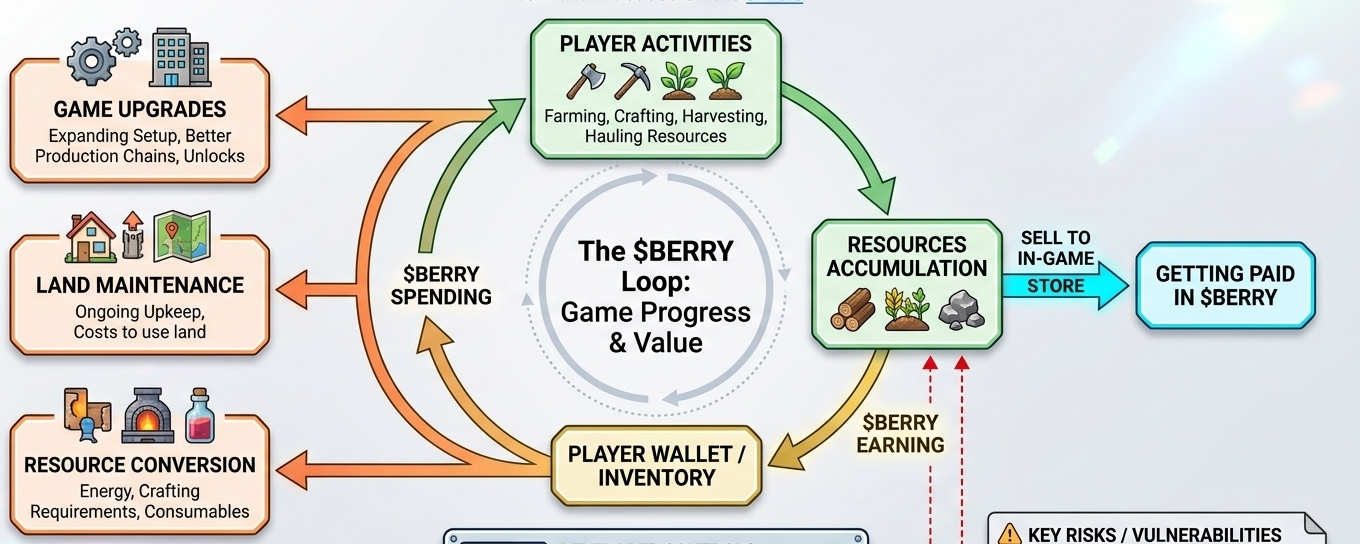
Look, it’s not flashy and it’s definitely not designed to make anyone feel like a genius investor. It’s just… there. You farm, you craft, you haul resources around and eventually you dump them into the in-game store and get paid in $BERRY. No magic. No clever DeFi tricks hiding underneath. Just a loop. And yeah, loops sound simple until you’ve played enough of these games to realize most of them can’t even get that part right.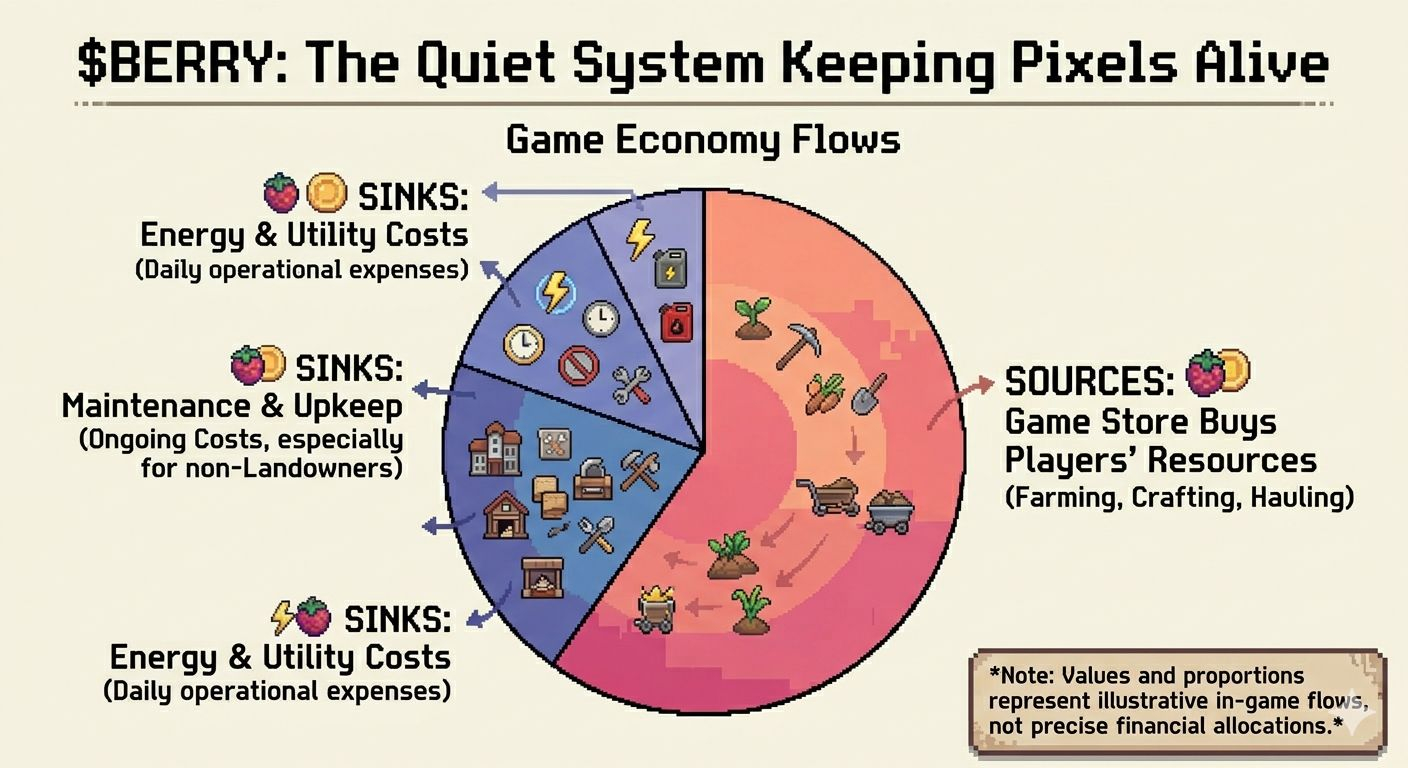
Because if that loop breaks even slightly you feel it immediately. New players feel it even more. No buyer for your stuff? You stall. Prices feel off? You stop bothering. I’ve seen this fail before, over and over, where devs overcomplicate things and forget that players just want a reliable way to turn time into progress.
And here, at least for now, there’s always a buyer. The system itself. That matters more than people want to admit.
But earning is the easy part. Always has been. Any game can make you feel like you’re getting somewhere for the first few hours. The real headache is the spending, where that currency actually goes once it’s in your pocket.
And this is where BERRY starts doing the less obvious work.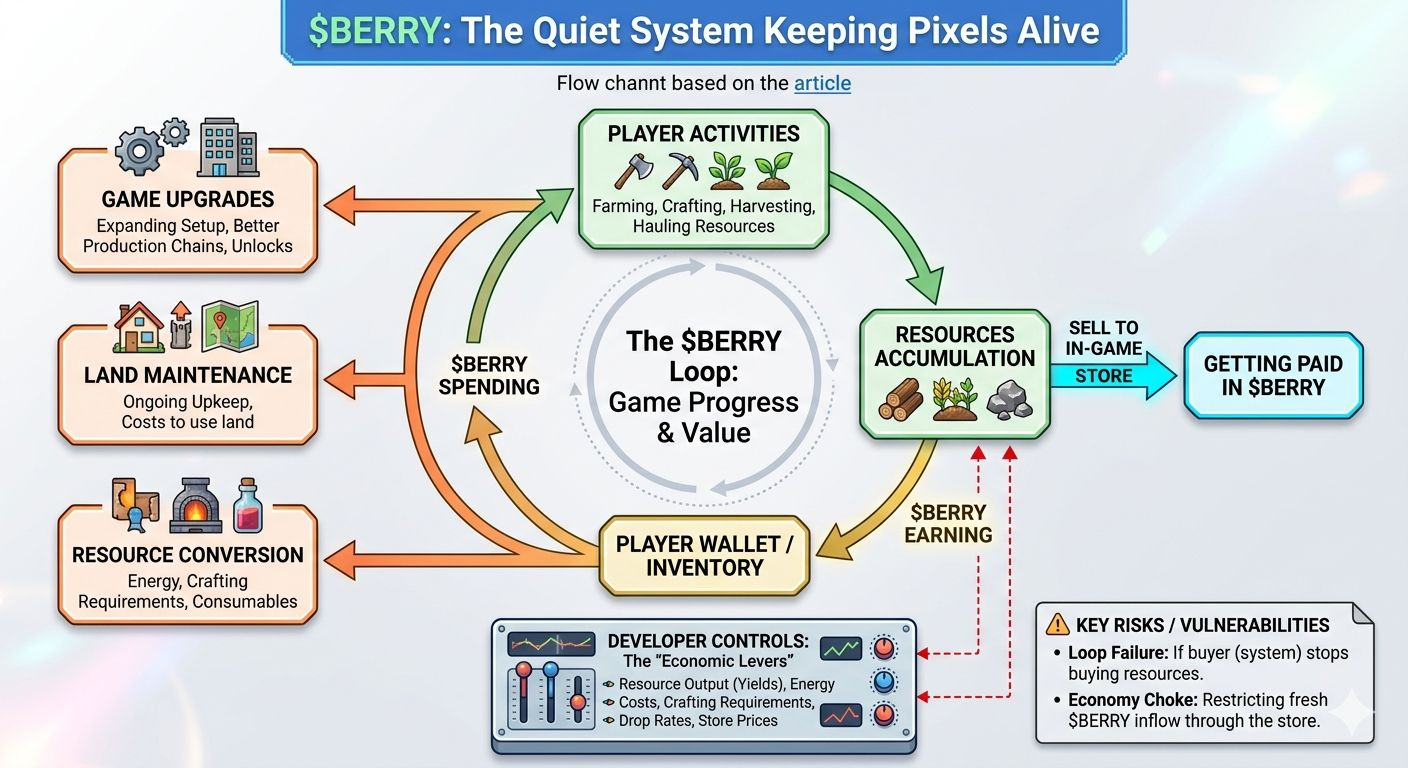
Everything kind of quietly pulls it back out of you. Unlocks, upgrades, expanding your setup, getting access to better production chains, it all costs $BERRY. Not in a way that feels like the game is slapping your hand but more like a constant drain you stop noticing after a while (which, let’s be honest, is exactly how good sinks are supposed to feel).
Even land especially if you don’t own it, isn’t just a passive bonus. It’s upkeep. Ongoing cost. You log in thinking you’re progressing, but part of that progress is just maintaining your position so you don’t slide backward. That tension? That’s the economy doing its job.
And yeah, after a few hours of grinding, you feel those costs differently. It’s not theoretical. It’s “I just spent my whole session farming and now it’s gone on upgrades.” That’s where players either stay engaged… or start questioning everything.
What makes this system a bit more interesting (and also a bit more dangerous, depending on how it’s handled) is how adjustable it all is behind the scenes.
There’s a lot of quiet control here. Resource output, energy costs, crafting requirements, drop rates, store prices, it’s all tweakable. Individually, each change feels minor. Together, it’s basically economic policy disguised as patch notes.
Increase yields a little, suddenly everyone’s flush with resources. Lower energy efficiency, and the whole grind slows down. Shift store pricing and you’re effectively printing or burning $BERRY without ever saying it out loud.
Players don’t always notice the lever being pulled. They just feel that something’s “off” or “better” or “more grindy than yesterday.”
And then there’s the bigger lever sitting in the background, the one people don’t talk about enough.
The store itself.
Right now, it’s the main way BERRY enters the system. You sell, you get paid. Clean. Predictable. But if that ever gets restricted or worse, removed you’re suddenly in a completely different economy. No fresh inflow. Everything tightens up fast.
That’s not inherently bad but it’s the kind of switch that can flip player sentiment overnight if it’s handled poorly. I’ve watched economies choke because of moves like that, even when they made sense on paper.
What I’ll give them is this: they didn’t overbuild it. No five-token circus. No unnecessary layers pretending to be innovation. Just one soft currency doing the plumbing.
And yeah, “plumbing” sounds unglamorous, but that’s the point. If players are thinking about the plumbing, something’s already wrong.
When it works, you don’t notice $BERRY. You just log in, do your thing, progress a little, log out. Come back tomorrow. Repeat. That rhythm is the whole game, whether people admit it or not.
If Pixels actually scales, this is the part that gets stress-tested first. Not the headline token. Not the partnerships. This quiet loop.
Soft currencies look easy. They’re not. They’re usually where everything breaks.
This one… at least feels like someone’s paying attention.


