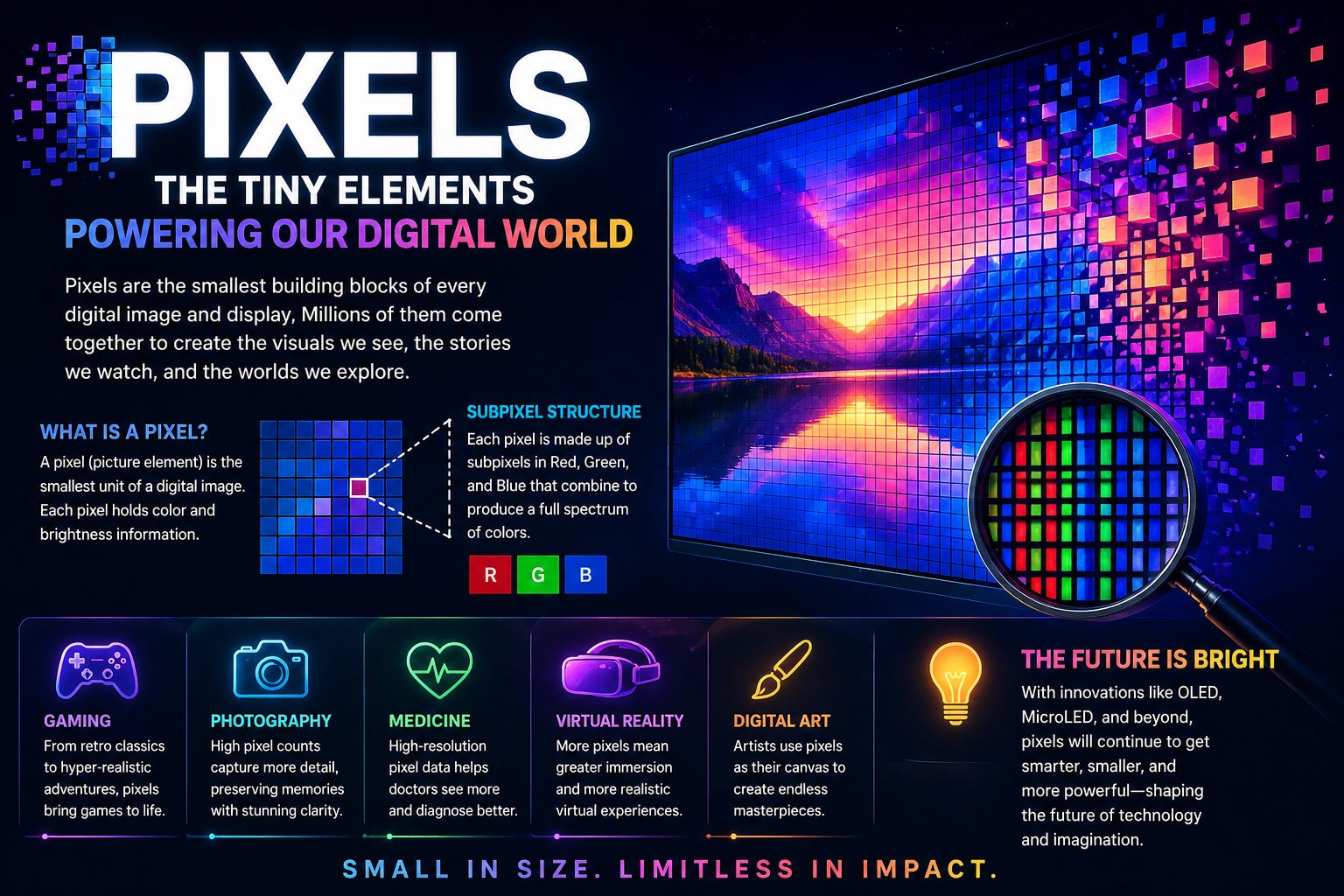
Pixels are the invisible building blocks behind every digital experience we encounter, yet their impact is anything but small. A pixel, short for “picture element,” is the smallest unit of a digital image or display. When millions of these tiny squares come together, they create the vibrant visuals we see on smartphones, computers, and televisions. From the sharpness of a photograph to the smoothness of a video, pixels shape how we perceive the digital world.
In the early days of computing, displays had very low pixel counts, resulting in blocky and unclear images. Over time, advancements in technology led to higher resolutions, meaning more pixels per inch and significantly improved clarity. Today, devices boast ultra-high-definition screens where individual pixels are nearly impossible to detect with the human eye. This evolution has transformed not only entertainment but also industries like design, gaming, medicine, and education.
Pixels do more than just display images—they carry color and light information. Each pixel typically consists of subpixels in red, green, and blue, which combine in varying intensities to produce a full spectrum of colors. This precise control allows screens to render lifelike images, deep contrasts, and smooth gradients. Whether you're watching a movie, editing a photo, or scrolling through social media, pixels are constantly working to deliver a seamless visual experience.
Beyond screens, the concept of pixels extends into creativity and innovation. Digital artists use pixels as their canvas, crafting intricate works of art in styles ranging from hyper-realistic to nostalgic pixel art. In gaming, pixels have defined entire eras, with classic games relying on pixel-based graphics that still hold cultural significance today. Even modern games, despite their realism, rely on pixels at their core.
Pixels also play a crucial role in emerging technologies. In virtual reality and augmented reality, pixel density directly affects immersion and realism. In fields like medical imaging, high-resolution pixel data can mean the difference between detecting a condition early or missing it entirely. As technology continues to advance, researchers are exploring ways to make pixels even smaller, more energy-efficient, and more responsive.
Looking ahead, the future of pixels is tied to innovation in display technologies such as OLED, MicroLED, and beyond. These advancements promise brighter screens, better color accuracy, and lower power consumption. Flexible and foldable displays are also redefining how pixels can be arranged and used, opening the door to new device designs and experiences.
In essence, pixels may be small, but their influence is vast. They are the foundation of digital communication, creativity, and progress. As our world becomes increasingly digital, pixels will continue to evolve, shaping how we see, interact with, and understand the information around us.