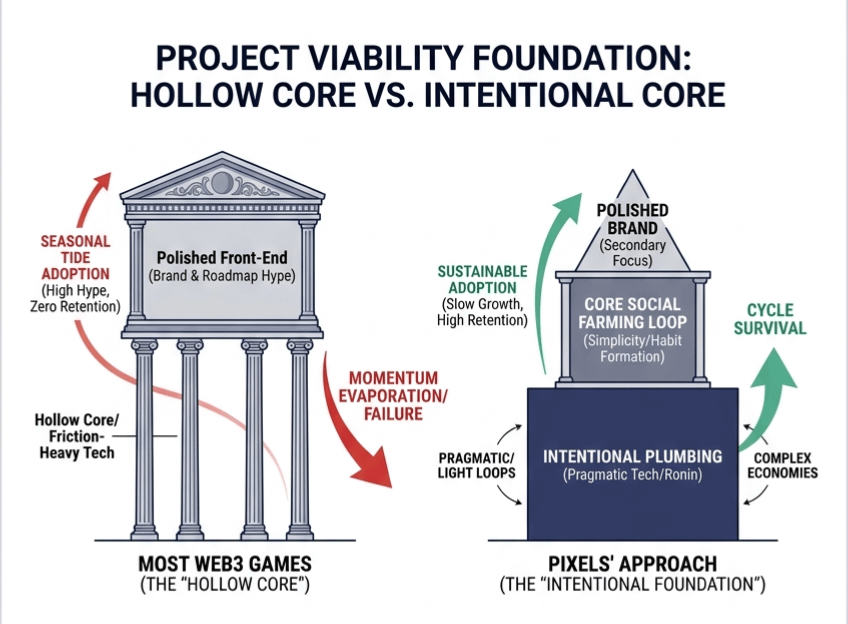
I’ve spent enough years watching this market to know that a polished interface is often just a high end shroud for a hollow core. In the early days I used to get genuinely amped when a project rolled out with a sleek brand and a roadmap that looked like it was designed by a Tier 1 agency. Then the cycles start to bleed together and you realize that most of it is just expensive noise dressed up as progress. Money and attention flood in like a seasonal tide and they recede just as fast leaving nothing but salt on the rocks. It changes the way you look at a project like Pixels because after you have seen enough momentum evaporate you stop looking at the scoreboard and start looking at the plumbing.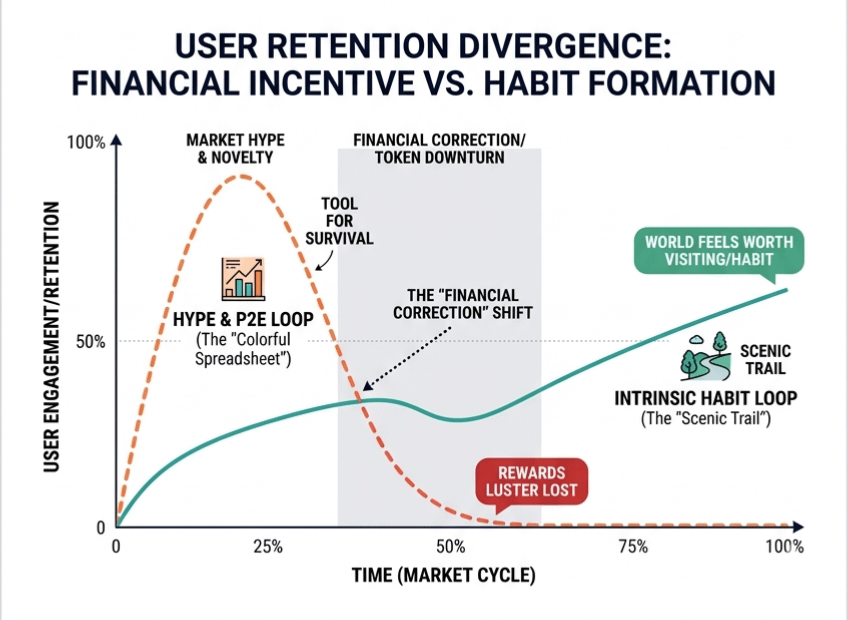
I find myself caring less about the whitepaper hype and more about whether or not something was built with actual intentionality. Pixels gave me that feeling early on and it wasn't because it promised to be the next grand evolution of human interaction. It stood out specifically because it didn’t seem desperate to impress me. In a space where every founder is screaming that they are the next revolution Pixels just sort of sat there and offered a social farming world. It sounds modest on paper and that is probably its greatest weapon. Most Web3 games arrive carrying the weight of grand visions that nobody actually asked for. They build complex economies and token systems stacked on token systems until the whole thing feels like a chore. They forget that people usually open a game to relax rather than to study for a degree in macroeconomics.
The decision to build on Ronin shows a level of pragmatism that is rare in this industry. It places the project in an ecosystem that actually understands gaming users instead of just treating them like liquidity providers. We talk a lot about the tech stack but the bone deep reality is that friction ruins good ideas every single day. If a user has to burn through their patience before they can even get to the enjoyment they are going to walk away every time. Pixels handles this by making the loops feel light and the transactions cheap which is the bare minimum that many others still fail to grasp. But being smooth is not the same thing as being essential.
This is the part of the cycle that many people choose to ignore because it is uncomfortable to acknowledge. A project can be attractive and well managed and still fail to matter in the long run. Good design creates a moment of curiosity but it doesn't buy you loyalty. I have seen plenty of products that look incredibly meaningful from the outside but they never actually become a habit. The real test for Pixels is whether the world feels worth visiting when the rewards lose their luster and the token price goes quiet for six months. If you strip away the financial angle and the world feels empty then you haven't built a game you have just built a colorful spreadsheet.
I respect the fact that Pixels feels calmer than the rest of the market. It doesn't have that frantic energy of a project trying to pump its way into relevance before the treasury runs dry. It is a more considered approach to the genre but I have seen plenty of thoughtful projects disappear into the void anyway. Being good at what you do is often only half the job in this environment. The other half is the intangible process of becoming a necessity in the lives of the users. You can build a beautiful park but you can't force people to sit on the benches. It is the difference between a high speed railway and a scenic trail where one is a tool for survival and the other is just a pleasant way to spend an afternoon.