
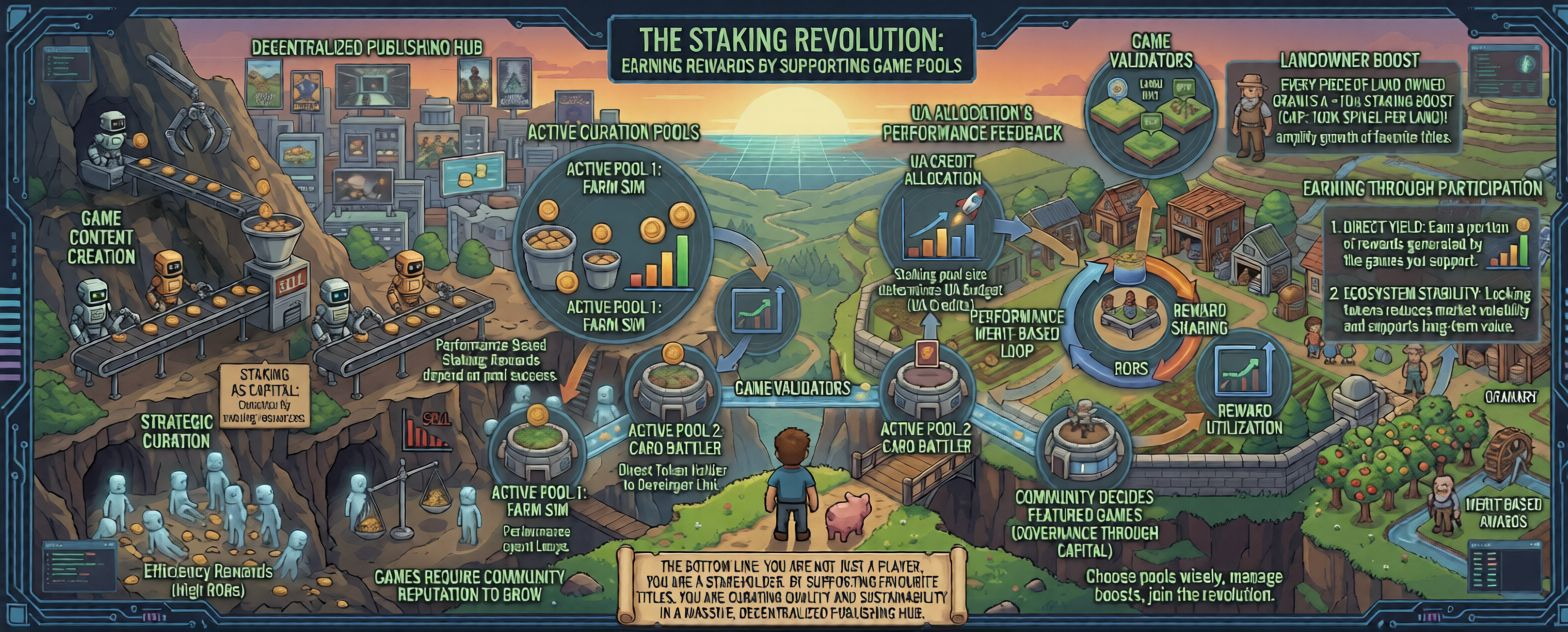
The Pixels ecosystem is fundamentally changing the way players and investors interact with Web3 gaming. Through the new Game Pool Staking model, the community is no longer just playing games—they are actively curating the future of the decentralized publishing platform.
From Passive Holding to Active Curation
In many Web3 projects, staking is a passive activity where tokens are locked away for a fixed return. Pixels is disrupting this by turning pixel staking into a strategic, performance-based activity. Instead of staking into a generic pool, you now stake directly into specific games within the ecosystem.
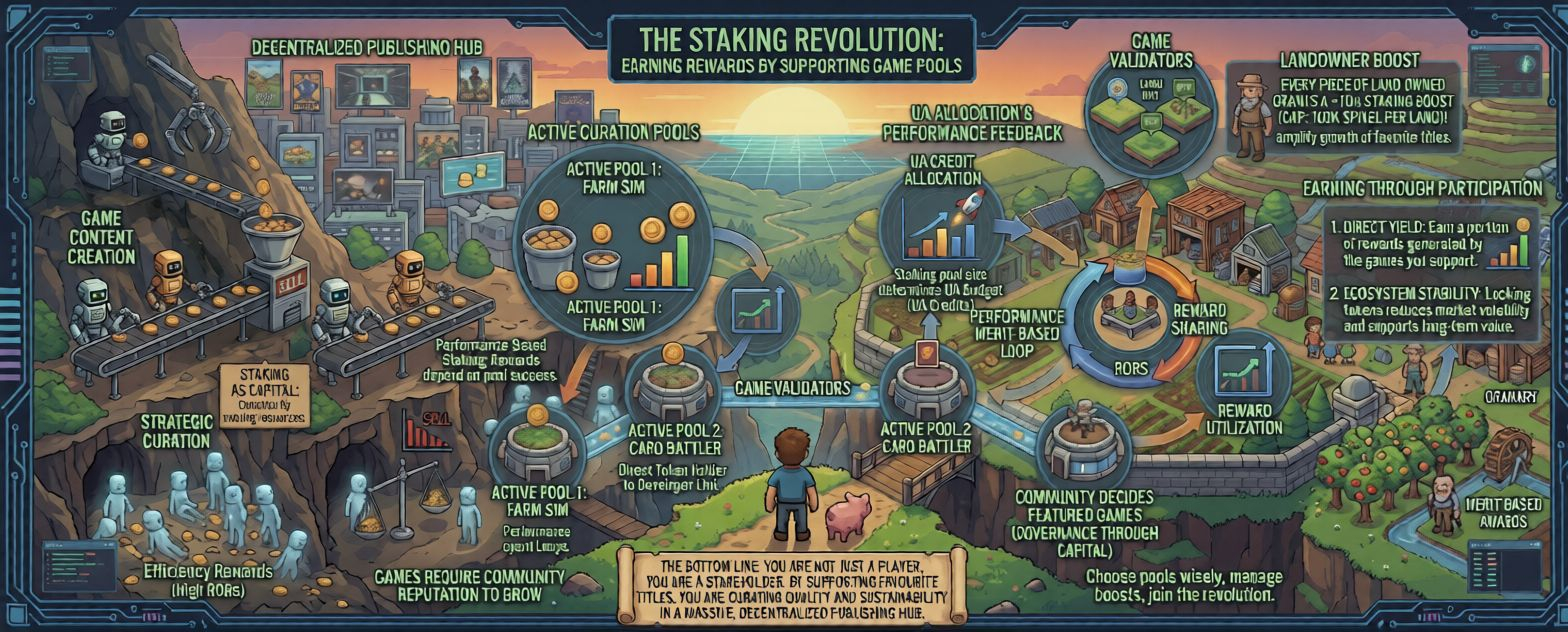
This "Staking Revolution" creates a direct link between token holders and game developers. When you stake your pixel into a game pool, you are providing that title with the "on-chain reputation" and resources it needs to grow.
How Game Pools Drive Growth
The amount of pixel staked in a game's pool serves as a primary signal of its value and potential. This system directly influences the Smart-Reward Ad Network in several ways:
UA Credit Allocation: The size of a game's staking pool determines its budget for User Acquisition (UA). Games with higher community backing receive more resources to attract and reward new players.
The Landowner Multiplier: Holders of Farm Land NFTs hold significant sway in this new meta. Every piece of land owned grants a 10% staking power boost (capped at 100,000 pixel per land), allowing long-term supporters to amplify the growth of their favorite titles.
Performance Metrics: Stakers are incentivized to move their tokens toward games that demonstrate high Return on Reward Spend (RORS). This ensures that rewards are efficiently distributed to games that provide real value back to the ecosystem.
Earning Through Participation
The staking revolution isn't just about supporting developers; it’s about sharing in the success of the platform. By staking in game pools, participants become part of a merit-based reward system:
1.Direct Yield: Stakers earn a portion of the rewards generated by the games they support.
2.Ecosystem Stability: By locking tokens into game pools rather than selling, stakers help reduce market volatility and support the long-term value of $PIXEL.
3.Governance through Capital: Staking acts as a decentralized voting mechanism. The community—not a central authority—decides which games are featured and funded based on where they put their capital.
Summary
The shift to game-specific staking pools marks the transition of Pixels from a single farming game to a massive, decentralized publishing hub. By supporting your favorite titles, you aren't just earning rewards; you are acting as a gatekeeper for quality and sustainability in the next generation of Web3 gaming. Choose your pools wisely, manage your land boosts, and join the revolution that is putting the power of publishing back into the hands of the players.
