
The latest update inside Pixels feels less like a simple patch and more like a shift in how the entire game is meant to be played. If you’ve been active recently you’ve probably already noticed itthis is not just about adding new features, it’s about changing player behavior in a subtle but powerful way.
ReaL time Shift in Gameplay
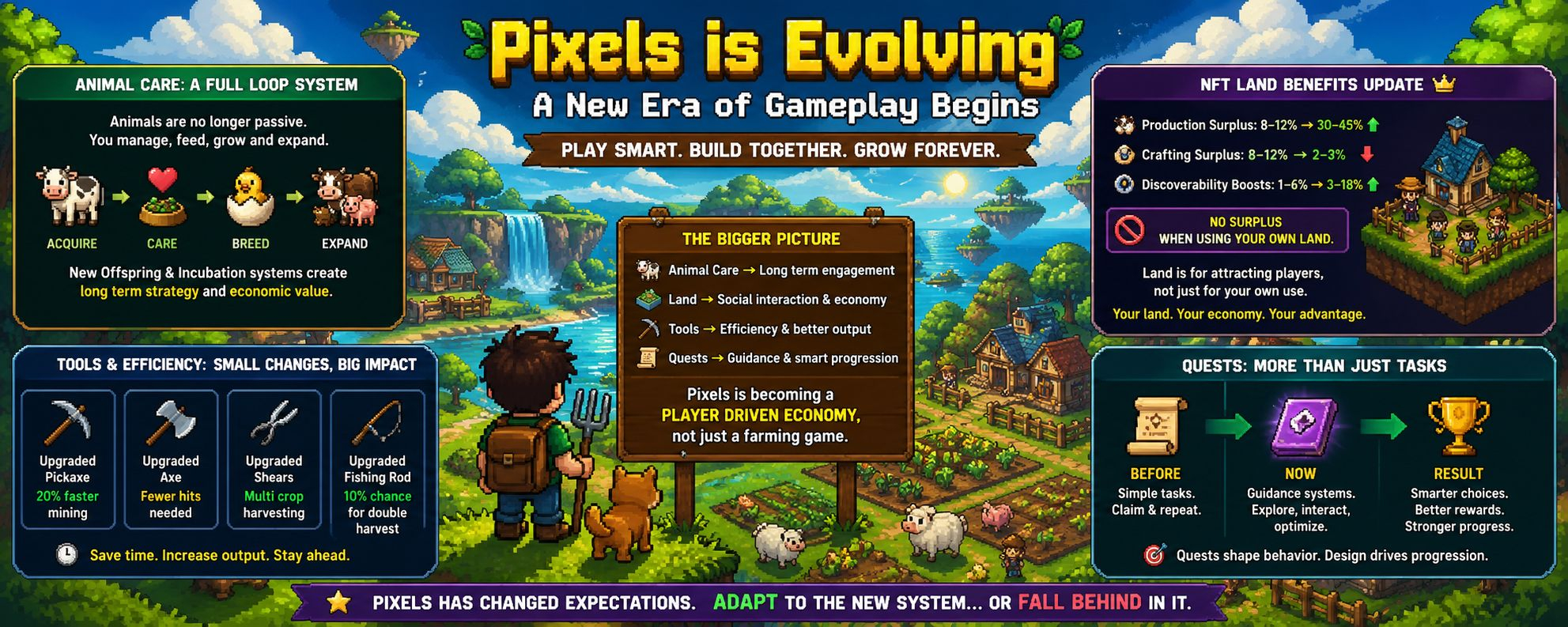
Right now Pixels is moving away from repetitive grinding and pushing players toward deeper systems. The new Animal Care update is the clearest example of this transition. earlier animals were more like passive assetssomething you owned but didn’t actively engage with much. That’s no longer the case.
now animals are part of a full gameplay loop.
You don’t just own them you manage feed grow and expand through them. The introduction of Offspring and Incubation systems makes this even more interesting. Instead of static ownership players are now participating in a cycle:
acquire care breed expand.
This creates a long term strategy layer that wasn’t really there before.
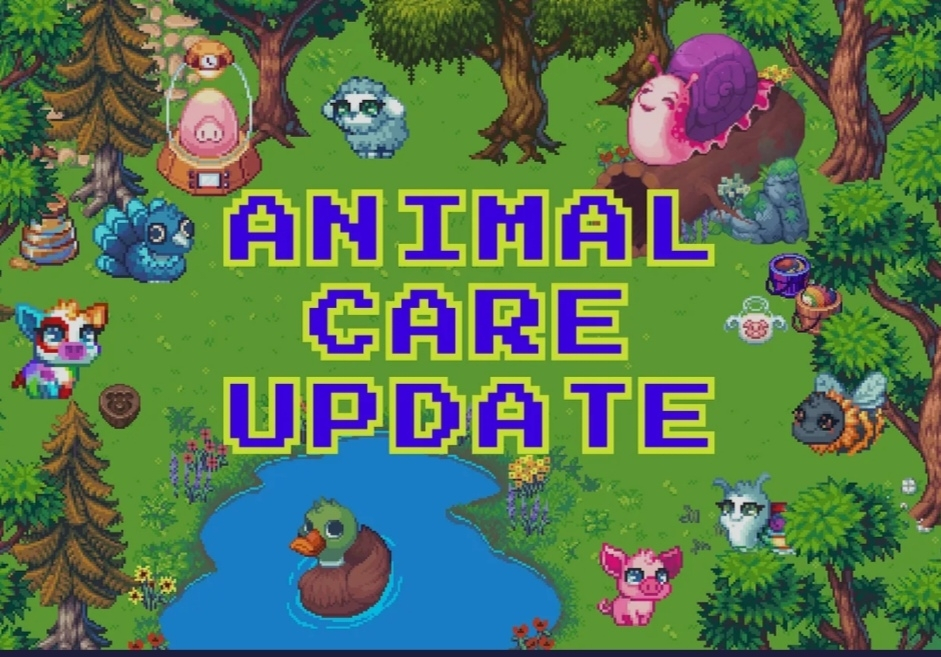
Animal Care: More Than Just a Feature
The addition of new species isn’t just cosmetic. Each animal now has potential economic value depending on how you manage it. Feeding cycles incubation timing and farm placement all start to matter.
This means one important thing:
active players gain an edge over passive holders.
Earlier you could rely on simple routines. Now efficiency comes from attention and planning.
AMA Insights: What This Update Really Means
From recent AMA discussions it is becoming clear that the Pixels team is focusing on sustainability over short term rewards. Instead of giving easy gains the system is being designed to reward consistent and smart gameplay.
Players who understand systems will outperform those who just follow tasks.
And that connects directly to another major update…
NFT Land Benefits Update A Strategic Rebalance
Land ownership inside Pixels has always been valuable but this update changes how it creates value.
Here’s what changed:
Production Surplus: Increased to 30–45% (previously 8–12%)
Crafting Surplus: Reduced to 2–3% (previously 8–12%)
Discoverability Boosts: Increased to 3–18% (previously 1–6%)
But the most important detail is often missed:
You don’t get surplus if you are using your own land.
This is huge.
It means land is no longer just for self use it is designed to attract other players. The system now rewards economic activity and traffic not isolation.
So if you own land your mindset has to shift:
It’s not just your farm
It’s a mini economy
Tools & Efficiency: Small Changes Big Impact
the introduction of upgraded tools might look simple but they significantly affect gameplay efficiency:
Upgraded Pickaxe: 20% faster mining
Upgraded Axe: Fewer hits needed
Upgraded Shears: Multi crop harvesting
Upgraded Fishing Rod: 10% chance for double harvest
Individually these seem minor. But combined they reduce time costs and increase output consistency.
And in a system that’s becoming more competitive time efficiency advantage.
Quests Are No Longer Just Tasks
Quests in Pixels are quietly evolving.
Before they were straightforward: complete claim repeat.
now they feel more like guidance systems. They push you toward certain behaviors exploration interaction optimization.
You might not notice it immediately but over time:
some actions feel more rewarding
others feel less effective
that’s not random. That is design.
The Bigger Picture
All these updates Animal Care Land changes Tools Quests are connected.
They point toward one direction:
Pixels is becoming a player driven economy, not just a farming game.
Animals create long term engagement
Land creates social interaction
Tools improve efficiency
Quests guide behavior
It’s no longer about doing more work.
It’s about doing the right work.
Final Thought
If you’re still playing Pixels the same way you did a few months ago you’re probably feeling the difference already.
the game hasn’t just added features.
It has changed expectations.
Now the question is simple:
Will you adapt to the new system… or fall behind in it?