

I do not know if it is just me, but when I think about @Pixels, I do not see one straight story. I see a timeline that keeps shifting. At first it looked simple. Then it started feeling deeper. And now it feels like something in between a game, a system, and a small living economy.
At the beginning, it was easy to understand.
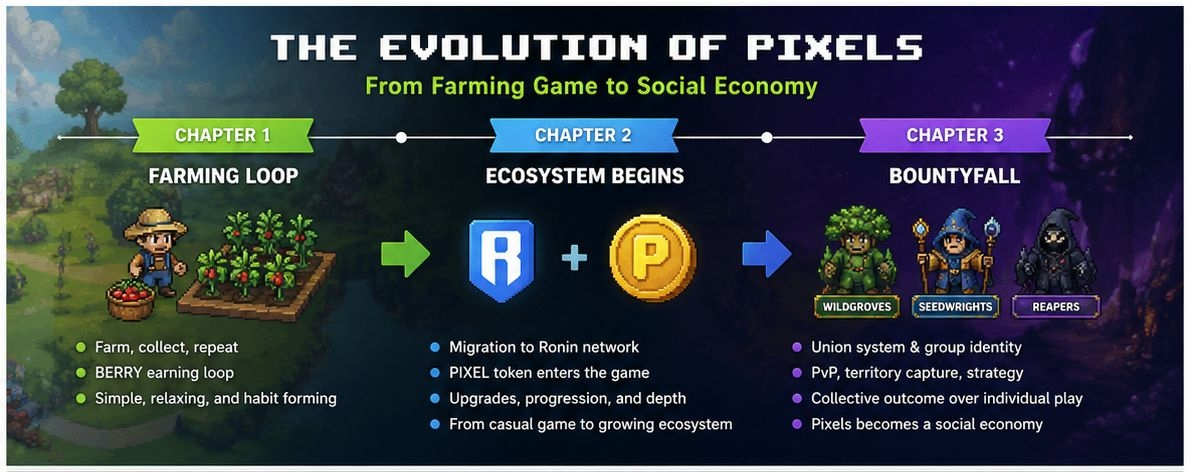
Chapter 1 was farming, land, and that old BERRY earning loop. From the outside, it looked like a very simple game. You click, collect, repeat, and move on. But that is exactly where the interesting part started. A lot of players did not just play it. They built a routine around it. It was a game, yes, but it was also becoming a habit.
Then came Chapter 2.
That was the point where things stopped feeling casual. The move to the Ronin network, the arrival of PIXEL tokens, and the rise of upgrades and progression made the whole experience feel more serious. It was no longer just a time-pass. It started looking like a system with layers. That is when I began asking myself, is Pixels slowly becoming an ecosystem, or are we just watching the complexity grow?
And then Bountyfall arrived.
That changed the mood again.
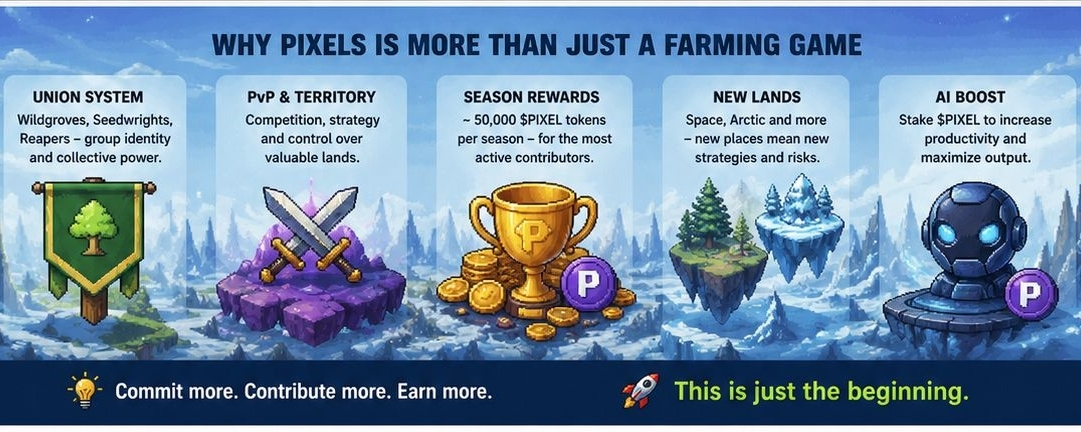
The first thing that stands out is the union system. Wildgroves, Seedwrights, Reapers — the names sound like fantasy at first, but the idea behind them is bigger than that. The player is no longer only farming alone. Now identity matters. Group matters. Contribution matters. Your work is no longer standing by itself. It starts feeding a collective result.
That is where the question gets more interesting.
Is this still a game, or is it becoming a small social economy?
And then there is the combat side.
That changes everything again. PvP, territory capture, strategy — once those words enter the picture, the whole behavior of the player base changes. People stop playing only to participate. They start playing to optimize. That creates pressure, of course. But it also creates depth. And that depth is usually where real systems begin to take shape.
The reward structure makes that even more obvious.
A season reward of around 50,000 PIXEL tokens sounds big, but the real question is not the number. The real question is who gets it, how they get it, and what kind of behavior the system is actually rewarding. That is where you can start seeing whether the ecosystem is balanced or whether it naturally leans toward the most active players.
And the new lands — Space and Arctic — are not just map updates.
They feel more like player expansion. New land means new movement. New movement means new strategy. And new strategy means new pressure. That is usually how games start becoming more than games.
The most interesting part, at least to me, is the AI boost feature. On the surface, it sounds technical. But the idea behind it is actually very simple: the more you commit, the more you can unlock. That is powerful, but it also raises a question. Does this make the game better for players in the long run, or is it just a smarter way to keep people engaged?
Honestly, maybe both.
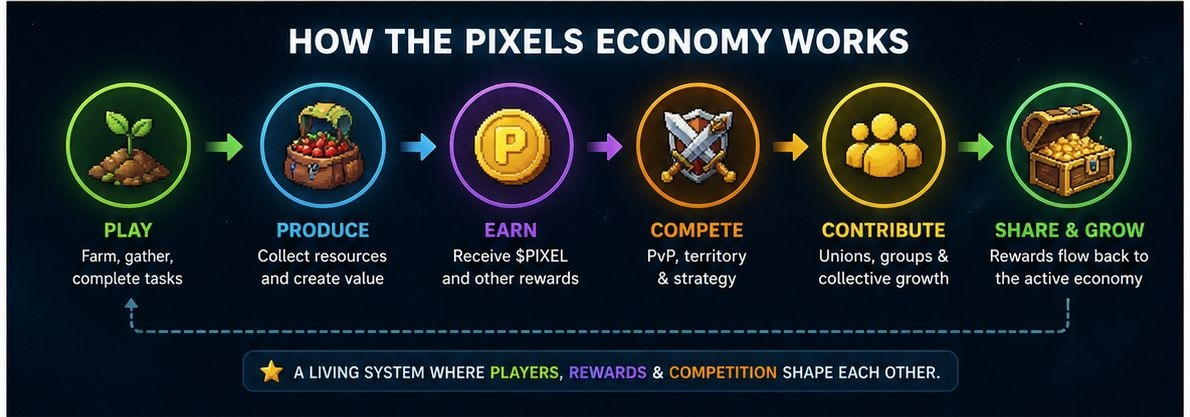
That is probably the clearest way to read Pixels right now. It is not just a farming game anymore. It is turning into a living system where rewards, competition, identity, and participation all affect each other. And once that happens, the game stops being only about fun in the usual sense.
That is the dilemma.
When a game slowly becomes an economy, does the fun disappear? Or does it just change shape and become something deeper, something a little harder to explain, something less comfortable but more meaningful?
I do not think the full answer is here yet.
Maybe there is no full answer right now. But one thing feels clear to me: @Pixels is no longer the simple loop it used to be. It is moving slower, yes. But it is also moving deeper. And sometimes, that is where the real story begins. 🚀
