
I was adjusting the brightness on my phone late at night, trying to make a photo look closer to how it felt in real life. Sliding the bar back and forth didn’t change the moment itself, just how it appeared to me. It struck me how easy it is to believe that what I’m seeing on a screen is something fixed, when it’s really just a controlled interpretation.
That feeling came back while I was working through the CreatorPad task on Pixels. I had already submitted an entry, and out of habit I went to check the leaderboard. Then I switched to the distribution tab. The numbers didn’t contradict each other, but they didn’t feel like they were describing the same reality either.
I started to feel like the value of what I made wasn’t being measured directly, but filtered through a structure that decides how it should be seen.
In that moment—moving between the submission box, the leaderboard, and especially the distribution tab—I noticed something uncomfortable. The system didn’t just record participation; it reshaped it. The presence of more entries didn’t simply expand the space, it compressed the share each one could represent unless it stood out in a very specific way. The interface didn’t say this out loud, but it didn’t need to.
There’s a common belief that turning something into a digital asset, especially on blockchain, makes it more transparent and fair. That once it’s recorded, it becomes closer to truth. But what I felt during this task was different. The recording might be permanent, but the interpretation is still heavily designed.
Pixels, in this case, wasn’t just about owning or creating something digital. It was about entering a system where visibility and value are shaped after the fact. The asset isn’t only the content—it’s the position it ends up occupying within a moving structure of other contributions.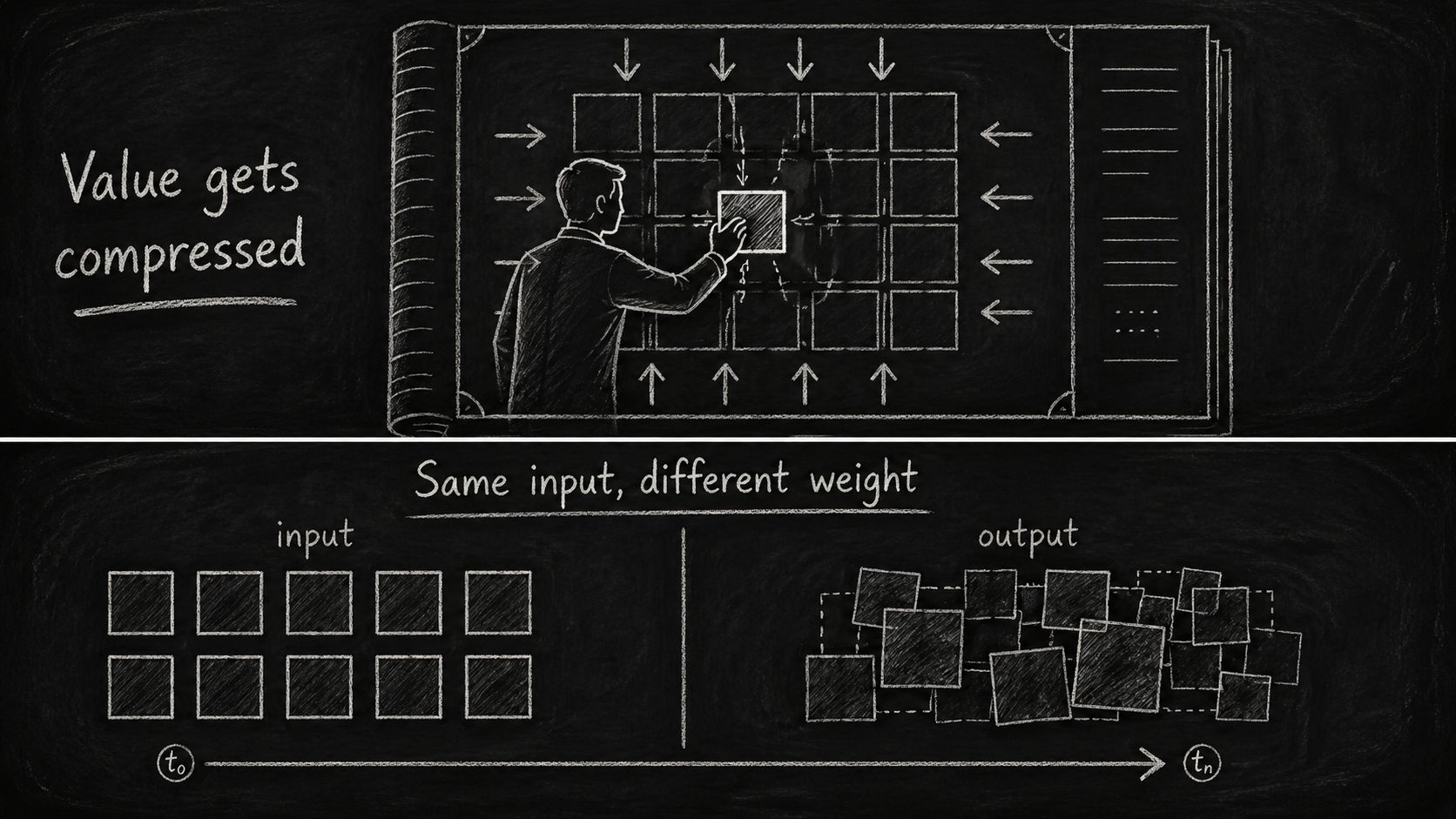
What unsettled me is how subtle this shift is. Nothing looked misleading. The interface was clean, the metrics were there, and everything seemed accessible. But the experience of making something and the experience of seeing its outcome were slightly out of sync. That gap is where the real mechanism lives.
It made me question whether decentralization actually removes control, or just relocates it into design choices we stop noticing. If the outcome depends on how a system aggregates and redistributes attention, then the fairness isn’t just about open access—it’s about how that aggregation behaves under pressure.
I don’t think this is unique to Pixels. It just made it visible in a way I couldn’t ignore because I was part of it. I wasn’t observing from the outside; I had already submitted something, already stepped into the structure. That made the realization harder to dismiss.
The more I think about it, the less I see digital assets as static units of value. They feel more like entries in a living system that constantly recalculates what they mean. And if that’s the case, then the promise of clarity becomes more complicated. It’s not just about what is recorded, but how it is continuously reframed.
So now I’m left wondering whether what we call “ownership” in these systems is actually stable, or just a temporary position inside a mechanism that quietly keeps redefining it.