
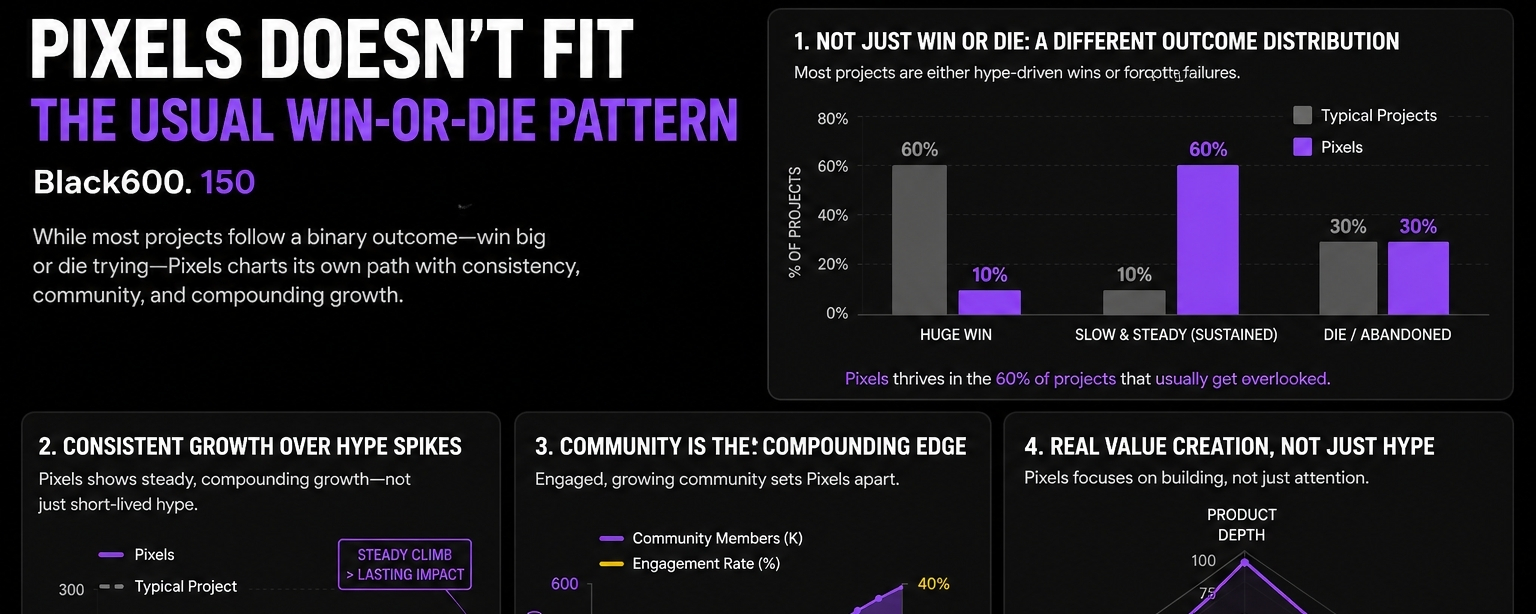

Pixels (PIXEL) is a social, casual Web3 game running on the Ronin Network, and if I’m being honest, I didn’t expect to spend more than a few seconds thinking about it. I’ve seen too many of these setups already—farming loops, open worlds, light social layers—all wrapped in the same promise that this time it’s different. Most of the time, it isn’t. So I went into this with that same quiet dismissal, the kind that comes from watching the same story repeat itself over and over.
But this one didn’t disappear as quickly as I expected.
That’s usually the first thing I notice now. Not what something claims to be, but how long it manages to stick around without forcing itself into your face. Pixels didn’t explode, didn’t flood timelines, didn’t try to convince everyone it was the next big shift. It just kept showing up in the background. People logging in, doing their thing, coming back again. No rush, no obvious pressure.
That alone is enough to make me pause a little.
Because the game itself is almost too simple. You farm, you move around, you interact. There’s nothing in there that feels groundbreaking. If anything, it feels intentionally small. And in this space, small usually gets ignored or crushed by something louder. But here, the simplicity seems to be doing something subtle. It lowers expectations. You’re not stepping into it thinking about profit or strategy right away. You’re just… there.
And that changes how people behave, even if they don’t notice it.
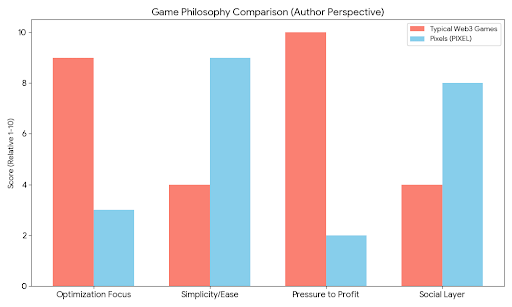
Most Web3 games push you into optimization from the start. You’re thinking about efficiency, returns, timing. It becomes work almost immediately. Pixels feels like it delays that moment. Not forever, but long enough that the experience doesn’t collapse into pure extraction on day one. That’s a fragile balance, though. I’ve seen systems like this hold for a while and then flip completely once incentives start tightening.
So I don’t trust it fully.
Because incentives always find a way back in. Tokens exist, economies exist, and eventually they shape everything. It doesn’t matter how soft the design feels at the beginning. If there’s value attached, people will push it, stretch it, test its limits. That’s when most projects lose whatever made them interesting in the first place.
The question is whether Pixels can hold its shape when that pressure builds.
Right now, it’s sitting in that uncomfortable middle space. Not hyped, not dead. Just steady. And steady is hard to read. There’s no clear signal to follow, no obvious narrative to lean on. It’s just people showing up and spending time in it without making a big deal out of it.
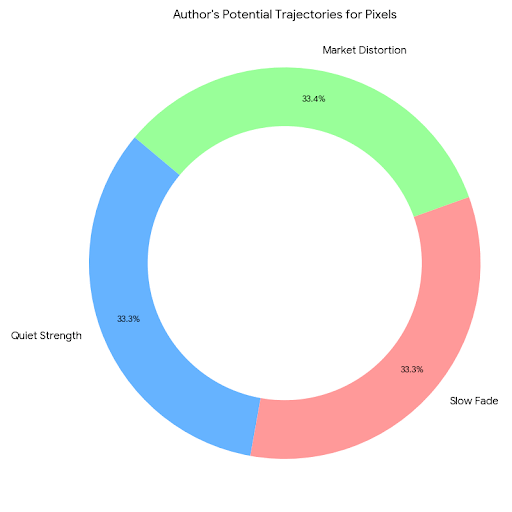
That’s either a quiet strength or a slow fade. I can’t tell yet.
There’s also the network it’s built on, which has already gone through its own cycle of over-incentivized growth and the fallout that comes with it. So maybe this slower, more controlled approach is intentional. Maybe it’s a reaction to what didn’t work before. Or maybe it just looks that way from the outside.
I’ve stopped trying to assume intent in this market.
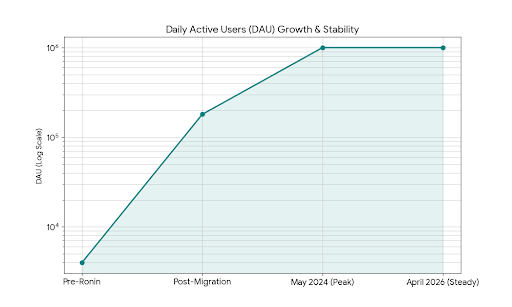
What I pay attention to now is behavior. And the behavior here hasn’t broken yet. People aren’t rushing in just to extract and leave. At least not all of them. Some are just… staying. That doesn’t sound like much, but in this space, it’s not normal.
Still, I’m not convinced it lasts.
Good ideas fail all the time here. Sometimes because of bad timing, sometimes because the market simply doesn’t care. And sometimes because even a decent design can’t hold up once real money starts pulling at it from every direction.
So I keep watching it in the same way I watch everything else now. No expectations, no excitement. Just attention.
Maybe it turns into something people actually stick with. Maybe it slowly gets distorted like everything else. Or maybe it just fades out without anyone really noticing when it happens.
Right now, it’s just there. Quietly existing in a space that usually doesn’t allow that for long. And that, more than anything, is the only reason I haven’t looked away yet.