
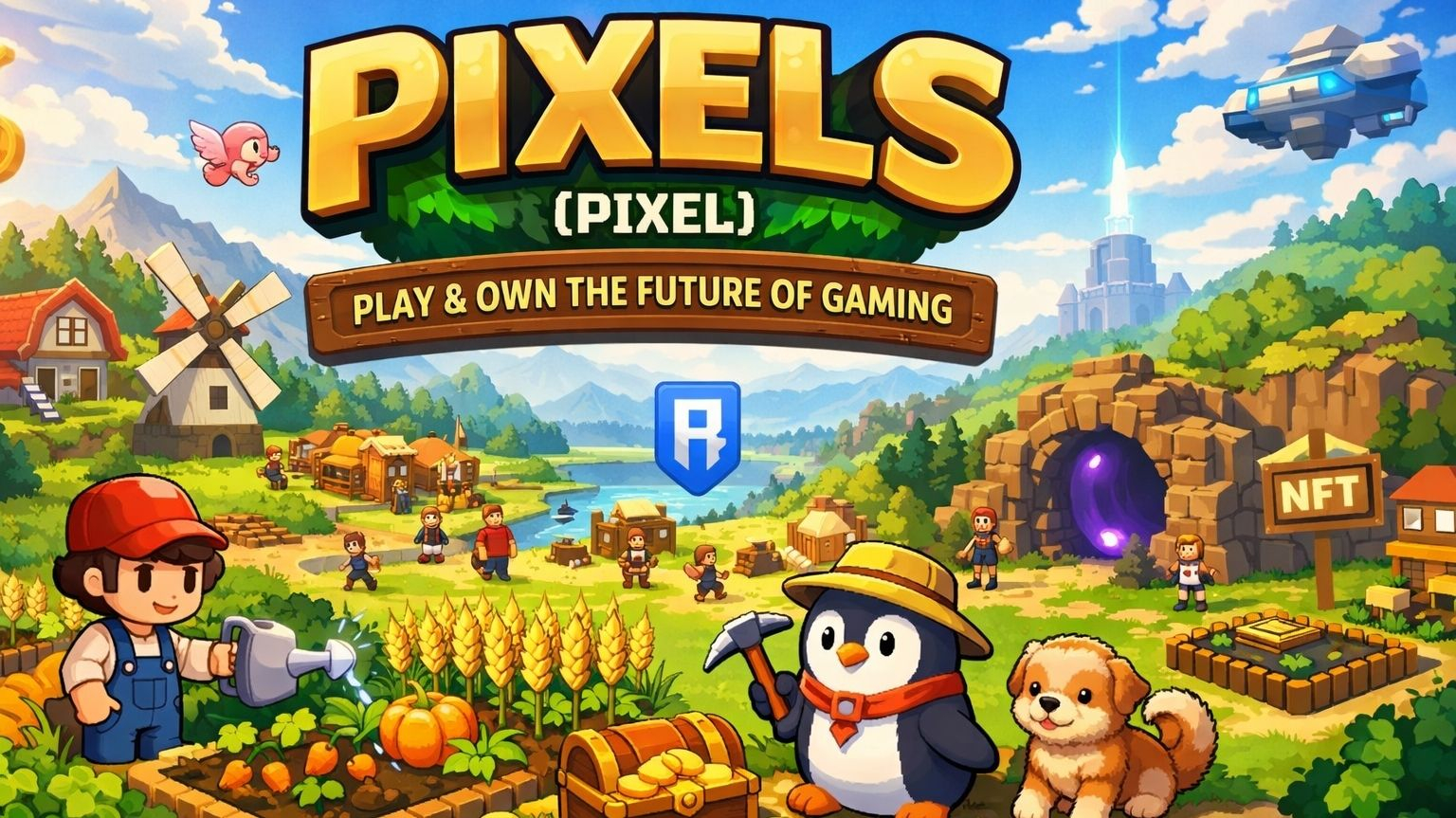
Most games end when you log out. Your progress sits on a server you don’t control, your items belong to the publisher, and your time—while fun—rarely carries value beyond the screen.
Pixels (PIXEL) flips that idea.
Built on the Ronin Network, Pixels looks simple on the surface—a charming pixel-art farming game—but underneath, it’s part of a much bigger shift. It blends relaxing gameplay with real ownership, turning everyday in-game actions into participation in a living, breathing digital economy.
This isn’t about hype or quick earnings. Pixels is part of a new generation of Web3 games trying to answer a harder question:
What if games respected both your time and your ownership?
The Core Idea: Play, But Actually Own
At its heart, Pixels is a social farming MMO where players grow crops, gather resources, craft items, and interact with others in a shared world.
But the key difference lies in ownership:
Your land can be yours—not just rented from a server
Your items can be traded outside the game
Your progress can hold real-world value
This is powered by blockchain technology, but Pixels doesn’t overwhelm you with it. In fact, many players don’t even notice it at first—which is exactly the point.
A Familiar World—with a Twist
If you’ve ever played farming games like Stardew Valley or Harvest Moon, Pixels feels instantly comfortable:
You plant seeds 🌱
You wait, harvest, and repeat
You upgrade tools and expand your space
But then the game quietly evolves.
Your crops aren’t just crops—they’re resources in a player-driven economy.
Your farm isn’t just decoration—it can become productive digital property.
That subtle shift is what makes Pixels different.
Gameplay That Rewards Patience, Not Pressure
🌾 Farming as a Foundation
Everything begins with farming, but it’s not just about grinding. Players must:
Manage energy efficiently
Choose which crops to grow
Optimize time vs reward
It becomes less about repetition and more about strategy over time.
🌍 Exploration That Feels Personal
Pixels doesn’t force a strict path. Instead, it encourages curiosity:
Hidden areas
NPC quests
Skill-based progression
You’re not rushing to “win”—you’re building your own pace in a shared world.
🛠️ Crafting and Interdependence
One player farms. Another crafts. Another trades.
Pixels thrives on interdependence, where no single player does everything efficiently. This creates:
Natural trading ecosystems
Player specialization
Real economic loops
It starts to feel less like a game—and more like a small digital society.
The Economy: Where It Gets Interesting
Pixels runs on a dual system:
Coins (earned in-game, used for progress)
PIXEL tokens (blockchain-based, tradable)
This design solves a major issue in early Web3 games:
👉 balancing fun gameplay with financial incentives
Instead of forcing players to “earn,” Pixels lets them choose their level of involvement.
Casual players → play for fun
Dedicated players → optimize and earn
Investors → own land and assets
Land Ownership: The Game-Changer
Land in Pixels isn’t just cosmetic—it’s functional.
Owning land allows players to:
Generate resources more efficiently
Host other players
Earn passively through activity
This creates a system where time + strategy + ownership = opportunity.
But importantly, land is optional.
You can still fully enjoy the game without spending anything.
Why Pixels Took Off (When Others Failed)
Early Web3 games often focused too much on earning and not enough on fun. Many collapsed when their economies became unsustainable.
Pixels learned from that.
What it does differently:
🎮 Gameplay first, earnings second
🌐 Strong social layer (not solo grinding)
⚖️ Balanced economy (not hyper-inflationary rewards)
🚪 Free entry for everyone
This balance is why Pixels didn’t just attract crypto users—it attracted actual gamers.