
When I first began studying game economies and crypto systems, I always had a sense of what would be the loud markers of a successful system. The metrics were clear: player engagement, high transaction volumes, rising token prices, and explosive player growth. I expected these signals to be the ultimate indicators of success. But over time, I started to notice something Subtle a slow, almost imperceptible shift that made me rethink how I approached these systems.
AT first glance, Pixels The Web3 game powered by the Ronin Network, appeared just like many others in its category: a play-to-earn system with a farm-and-explore theme, one that promises players autonomy in their own virtual economy. The mechanics seemed simple: grow crops, build assets, and explore a vast world. The game followed the standard loop—play, earn, repeat. It felt like a safe, familiar cycle. But, as I spent more time with it, things began to feel... off. Not in an obvious way, but in the deeper, quieter rhythm of the system.
It started with something small An offbeat moment when I noticed that the satisfaction of “earning” wasn’t as rewarding as I thought it would be. There was no sudden rush of excitement with each task completed or currency gained. Instead, there was a lingering, almost imperceptible feeling of repetition. I found myself asking: what am I really getting out of this? It wasn’t the reward itself that started to feel empty, but rather the cycle I was stuck in. Play. Earn. Repeat. But was that all?
That’s when I realized that the game’s true value doesn’t lie in its surface-level mechanics. The system doesn’t change loudly. It reshapes behavior quietly. And in this slow transformation, something deeper was happening.
The game doesn’t simply give players rewards. It nudges them into specific behaviors through subtle shifts in mechanics—rewarding efficiency, consistency, and engagement. While the mechanics of farming, exploration, and creation seemed straightforward, the underlying reality of value creation began to reveal itself in ways that felt almost hidden. Players’ decisions were no longer just about the immediate rewards they could capture—they were shaping and reshaping their behavior over time, all without explicit signals or announcements from the game itself.
What I started to notice were small but significant behavioral nudges embedded in the core of the system. Retention, repetition, and efficiency—the game encouraged these aspects without explicitly highlighting them. Over time, the game learned the behavior patterns of its players and adapted its feedback loops accordingly. Players began to focus on maximizing their time, doing tasks that felt most efficient, optimizing for the “next level.” There was a quiet intelligence emerging from the system, one that observed, learned, and compressed feedback loops between data and action so that adjustments were made in near real-time. It wasn’t just a game anymore It was a living system that was slowly shaping and guiding behavior with increasing precision.
What’s fascinating about this is how the system wasn’t just optimizing for fun, but also for retention. This wasn’t a clear directive; rather, the game rewarded players for sticking with it. It didn’t ask for their loyalty built it quietly through the repetitive cycles that were strategically designed to keep players engaged, nudging them toward staying within the system long enough to generate the necessary engagement metrics. These metrics, in turn, flowed into the economic layer.
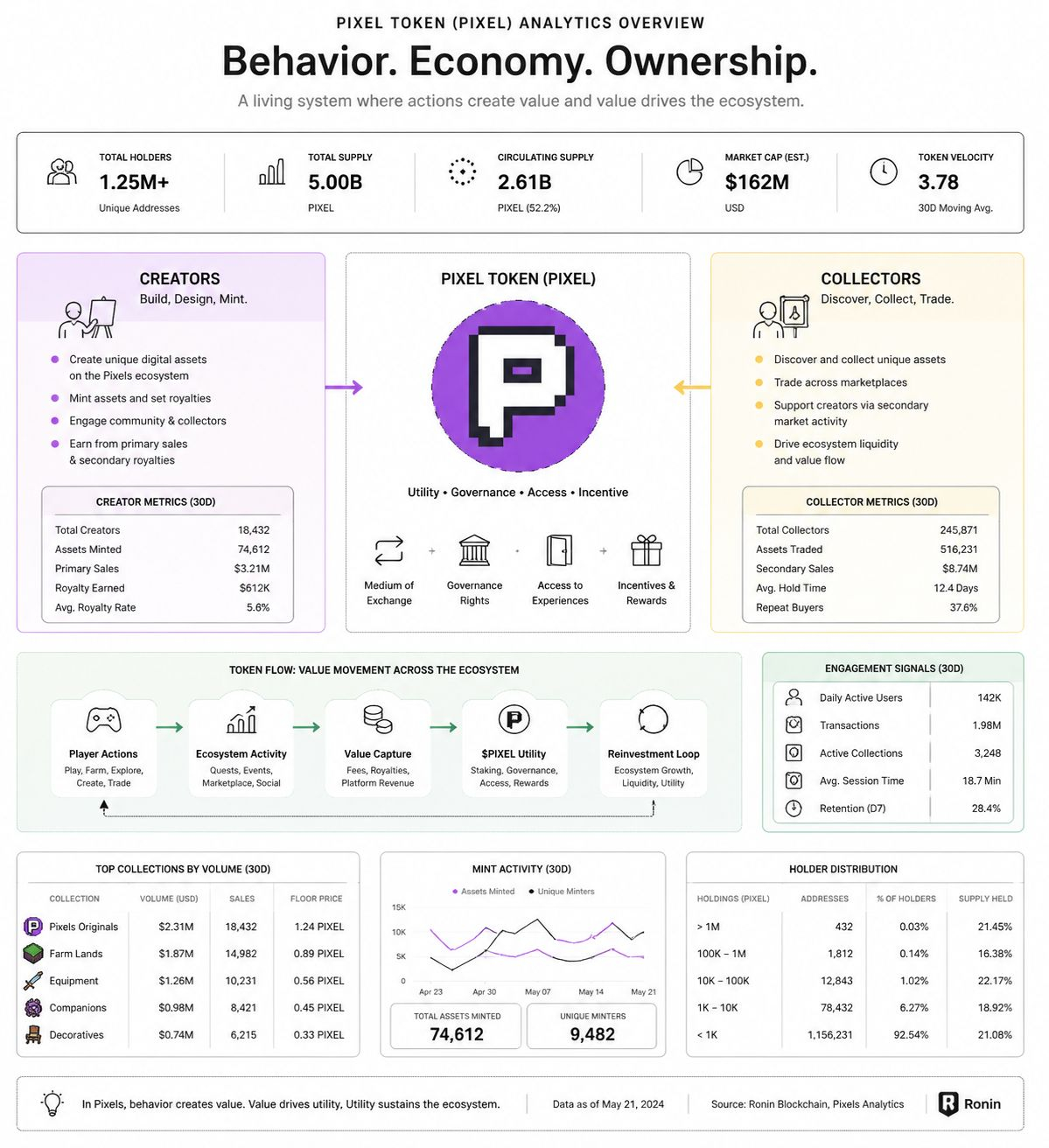
Here’s the thing: With hen I started looking more closely at the flow of value within the game, it became clear that the game was focused on far more than just participation. The gameplay loop wasn’t just about earning in the traditional sense Was about shifting attention, subtly guiding players to create value in ways they might not consciously realize. Engagement metrics, in other words, were no longer simply a reflection of how many players were active or how many tasks they completed. They became indicators of real revenue generation. Every interaction, every completed task, every decision nudged the system closer to realizing income.
But what does that actually mean for players? If engagement is a reflection of value generation, what about the tokens the token, for example? For many players, the token might appear to be a simple reward, a way to cash in on their time spent in the game. But looking at it through a different lens, it becomes clear that the token is actually a behavioral instrument. It’s not just about the reward it’s about how that reward circulates, how it moves through the system, and how it behaves.
Tokens like don’t just serve as rewards they represent the flow of value across multiple environments. has velocity, it moves across various platforms, and its utility is tied not just to the game but to the broader economic system it is a part of. Its value is rooted in the demand loops created by player behavior. And this is where things get interesting: the value of is not only determined by how much it’s traded or how many players earn S shaped by the intricate web of interactions within the system. Every player action, every choice, influences the way the token moves and accumulates.
Of course, no system is perfect. I can’t ignore the risks here. As with any game economy, there are scaling issues to consider. The game’s long-term success hinges on its ability to handle increased demand and integrate new players without diluting the Experience. There’s also the risk of fragile integrations if the game relies too heavily on weak partnerships or untested technologies, it could undermine the stability of the system. The player base itself poses a risk too. A game like Pixels has to balance its appeal across various player groups, each with its own motivations. What works for one group may not work for another, and the system’s ability to adapt without fracturing is crucial.
But in the larger picture, these challenges pale in comparison to a much broader shift that’s unfolding in the industry. What Pixels represents, in its quiet reshaping of behavior, is a shift from attention-based models to behavior-based models. It’s not just about how much time players spend watching or interacting’s about how those actions translate into economic outcomes. The marketing dollars, once focused on attracting attention, are now shifting toward understanding how capital can be allocated more efficiently. Games are no longer just content delivery systems they are economic infrastructures that rely on player behavior as the core driving force.
This shift in perspective From attention to behavior, from marketing spend to capital allocation Represents a philosophical change in how we view control, freedom, ownership, and efficiency. Ownership used to be a straightforward transaction, a product you bought and owned. Now, it’s about permission and access ♿ who controls the infrastructure that supports your digital ownership? And efficiency, in a system like Pixels, isn’t just about optimizing play it’s about Optimizing identity. As players become more immersed in the system, they are reshaped, their actions funneled toward efficiency. In the process, something subtle happens: their sense of self within the system evolves.
I Might be wrong, but I think the real question here isn’t whether Pixels is the next big thing. It’s whether we’re witnessing a deeper transformation in how games and economies will work together in the future. The systems are no longer changing loudly. They’re reshaping behavior quietly, under the surface, in ways that are far more difficult to measure but, ultimately, far more profound.
In the end, I find myself wondering about the balance between control and freedom, between ownership and permission, between efficiency and identity. As games become economic infrastructures, we’ll have to ask: how much freedom do we really have in a system that quietly nudges us toward specific Dehaviors How much ownership do we actually possess when the system itself holds the power to Direct how and where our value Flows