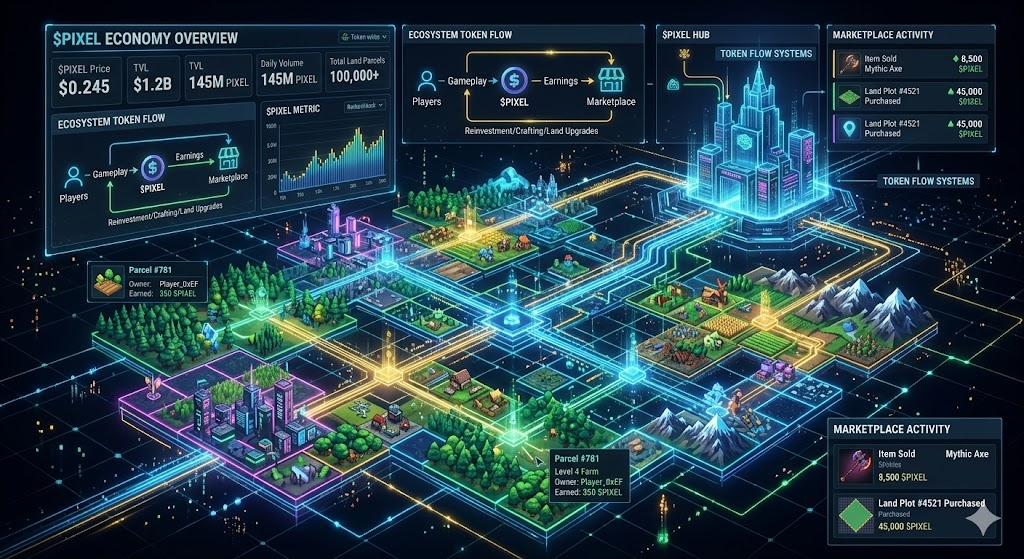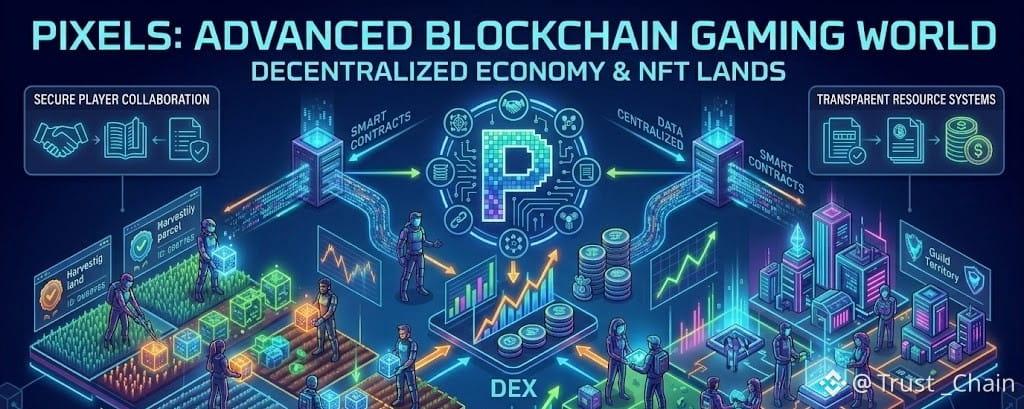
The evolution of GameFi is no longer about simple play-to-earn loops—it’s about building sustainable digital economies. And in that shift, $ pixel is quietly positioning itself as one of the most structurally sound ecosystems in the space.
At its core, Pixels has moved beyond the early-stage hype cycle that once defined blockchain gaming. Instead of chasing short-term attention, the project is doubling down on user retention, economic balance, and scalable gameplay systems. This is where $PIXEL stands out—it’s not just a token; it’s an integrated layer within a growing digital world.
Recent updates across the Pixels ecosystem highlight a more refined approach to resource sinks and token velocity. The introduction of deeper crafting mechanics, land utility enhancements, and progression-based incentives has significantly improved how value flows within the game. Rather than relying on inflationary rewards, Pixels is creating closed-loop systems where players actively contribute to and benefit from the economy.
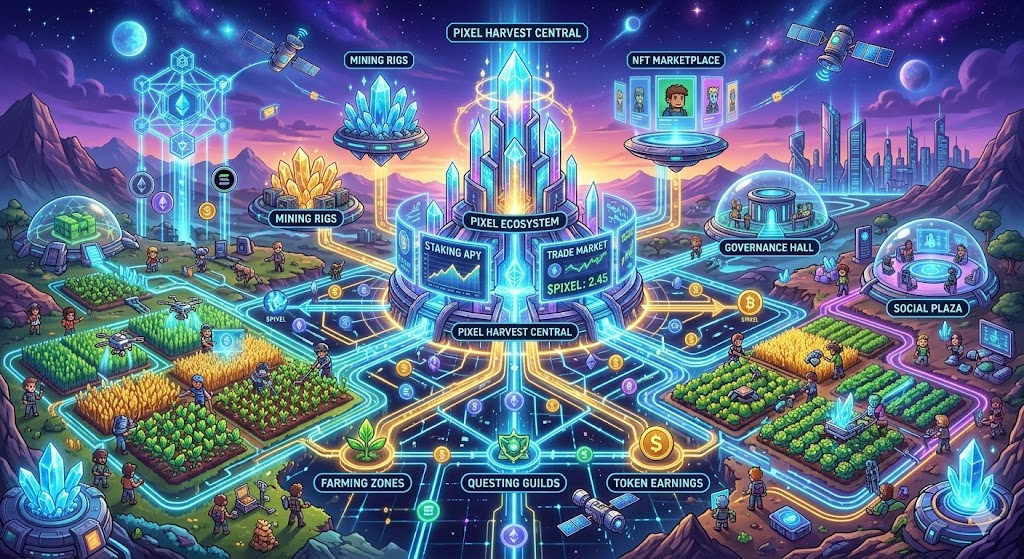
From a technical standpoint, the migration and optimization on Ronin Network continues to play a crucial role. Faster transactions, lower fees, and a gamer-friendly infrastructure have made onboarding smoother and in-game actions more seamless. This isn’t just an upgrade—it’s a necessary foundation for scaling a Web3 game to mainstream adoption levels.
What’s particularly impressive is how Pixels is handling player behavior modeling. The latest gameplay adjustments reflect a clear understanding of how users interact with incentives. Farming, resource management, and social collaboration are no longer isolated features—they are interconnected systems designed to encourage long-term engagement rather than short-term extraction.
The Guilds and social layer expansion is another key development. Pixels is gradually transforming from a solo farming simulator into a collaborative economy where coordination matters. This shift introduces a new dynamic: players are no longer just participants—they are contributors to a shared ecosystem. And in Web3, that distinction is critical.
On the token side, $PIXEL is becoming increasingly utility-driven. Its role in governance, premium features, and in-game transactions is evolving in a way that aligns with sustainable tokenomics. The team’s focus on reducing speculative pressure while increasing functional demand shows a level of maturity that many GameFi projects still lack.
Another noteworthy advancement is the project’s attention to data-driven balancing. Instead of reactive updates, Pixels appears to be leveraging gameplay data to fine-tune reward systems, ensuring that neither whales nor casual players dominate the ecosystem unfairly. This creates a more inclusive and competitive environment—something that’s essential for longevity.
Visually and experientially, Pixels maintains its signature simplicity, but under the surface, the architecture is becoming increasingly sophisticated. The blend of accessible gameplay with complex backend systems is what makes it scalable. It appeals to casual users while still offering depth for dedicated players.
Looking ahead, the roadmap suggests continued expansion in interoperability and ecosystem integrations. As Web3 gaming moves toward interconnected worlds, Pixels is positioning itself as a modular platform that can adapt and integrate rather than operate in isolation.
In a market where many projects fade after initial hype, Pixels is doing something different—it’s building quietly, iterating consistently, and prioritizing fundamentals over noise.
$ pixel is not just growing. It’s evolving—with structure, intention, and a clear understanding of what sustainable GameFi should look like.
And in this phase of the market, that’s exactly what sets it apart.