
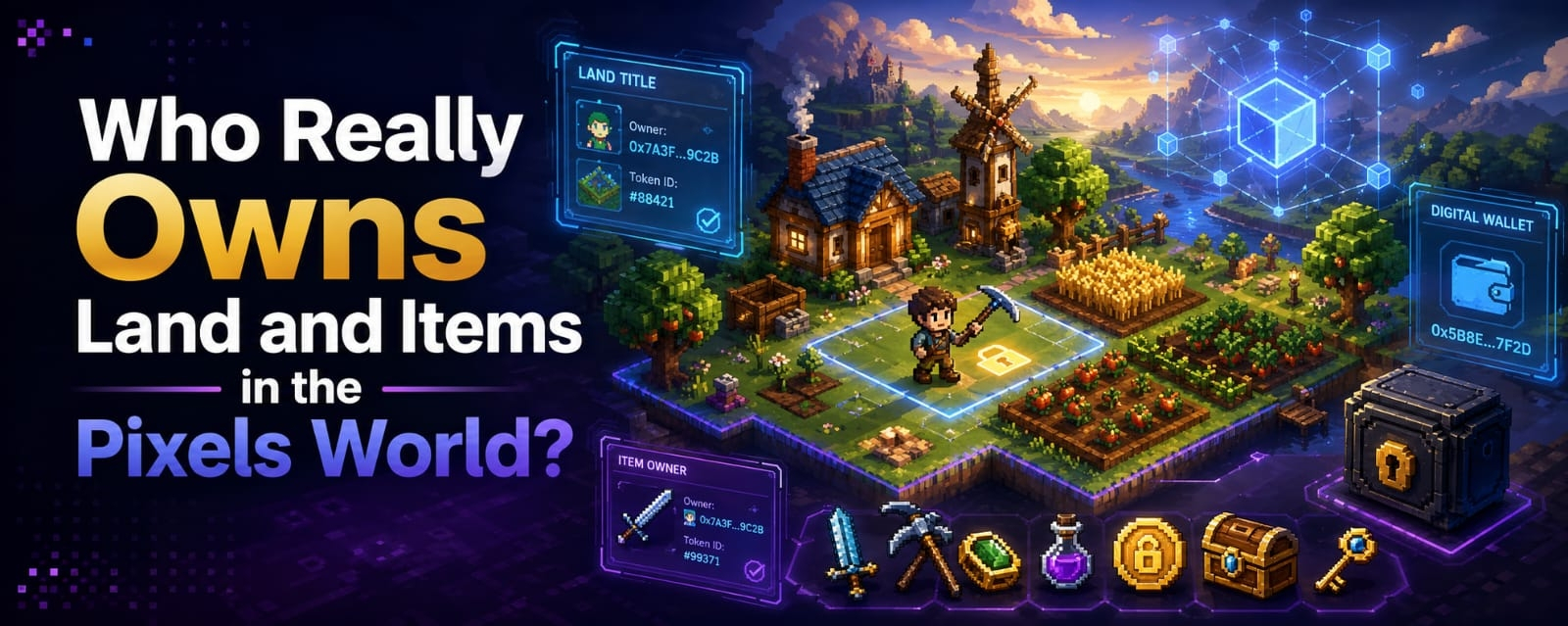
When I think about Pixels, I don’t see land as just a fancy NFT that people buy to show off. In this game, land actually has a job. It gives players a place to build, farm, decorate, and connect with others. But what I like most is that Pixels does not make land ownership the only way to enjoy the game. Even if someone does not own land, they can still play, farm, complete tasks, use Specks, join guilds, and slowly grow inside the world.
That balance is important. In many Web3 games, players feel left behind if they don’t own expensive assets. Pixels feels a bit different. Land owners do get extra control and more options, but regular players are not pushed out. They can still take part in the game and find their own path.
Land in Pixels feels useful because it is not just empty space. A land owner can turn it into a working farm, a decorated hangout spot, or a place where other players can help and work together. They can place items, manage resources, grow crops, and build something that feels personal. This makes land feel alive instead of just sitting in a wallet.
Access is a big part of land ownership too. A land owner can decide who gets to enter their land and who can use it. The land can be open for everyone, private, or limited to certain guild members. This makes land more than just property. It becomes a place where trust matters. Owners need to choose carefully who they allow in, especially if the land has useful resources or important items.
Guilds make this system even more interesting. A land owner can connect their land with a guild, and then members can use that land based on their role. This can turn one farm into a shared space for a whole group. It can become a guild base, a farming area, or even a small community spot where players work together and help each other grow.
The role system helps keep things organized. Not every person in a guild has the same power. Some players may only support the guild, while others may become workers, members, or admins. These roles decide who can enter, who can work, and who can manage things. This keeps the land safer and stops everything from becoming messy.
One of the most important rules in @Pixels is about items placed on land. Many new players may think that if they put an item on someone else’s land, the land owner automatically owns it. But that is not usually how it works. In most cases, the item still belongs to the player who placed it.
I think this rule is very important because it protects players who help others. For example, if I place soil, decorations, or other items on another player’s land, those items do not suddenly become theirs. They are still tied to me. This makes teamwork feel safer. Players can help build a land without worrying that everything they place will be lost.
Pixels also makes item ownership easier to understand through the land gate. The land gate can show who placed which items on the land. This helps avoid arguments and confusion. If many players are working on the same land, everyone can check who owns what. That kind of clear record is very useful in a shared game world.
This rule becomes even more important when land is sold or moved to a new owner. If someone buys land, they are buying the land itself, but not always every item placed on it. Some items may still belong to the players who placed them. Those players can usually come back and remove their items.
If the new land owner uses the remover tool on someone else’s item, the item usually goes back to the mailbox of the original player who placed it. So buying land in Pixels is not the same as buying everything sitting on that land. This is something every buyer should understand before making a deal.
A land may look full of useful items, but some of those items may not belong to the seller. That means a buyer needs to check item ownership before buying. Otherwise, they may think they are getting a fully built farm, but later some items may disappear because the real owners remove them.
There are also special cases. Some items do not follow the normal rule. A few special items may go to the new land owner if removed. Some fixed objects, like houses, silos, windmills, bunkers, trees, and other main structures, may not be removable like normal items. This shows that Pixels gives players ownership, but it still has game rules that must be followed.
Older items can also be a little tricky. Some items placed before older updates may not show properly in the land gate list. This can create confusion on older lands. So when dealing with old land, players should be extra careful and check everything they can before buying, selling, or removing items.
Chapter 2 made land even more useful. Industries and resources became more organized, and land started to feel more connected to player progress. Players can place different levels of industries on NFT land, but higher-level industries may need the right skill level. This means land is not powerful by itself. The player also needs skills, planning, and smart management.
There are also limits on how many industries can be placed on land. I think this is good for the game because it keeps things fair. Without limits, some lands could become too strong and the economy could become unbalanced. These limits make players think carefully about how they use their space.
Trading is another part of digital property in Pixels. Since it is a Web3 game, players care about owning and trading items. But this also means players need to be careful. Trading outside the official systems can be risky. If someone makes an unsafe deal, they may lose items or tokens. Ownership gives freedom, but it also brings responsibility.
For me, Pixels has a smart property system because it gives ownership real meaning inside the game. Land owners can control access. Item owners can keep rights over what they place. Guilds can share land and build together. Players can work as a team without everything becoming confusing.
At the same time, Pixels does not let ownership become wild or unfair. The game still has rules, limits, permissions, and special cases. That is needed because a game economy must stay balanced. If everyone could do anything without rules, the game would quickly become hard to manage.
That is why land and item rights in Pixels feel interesting. Land is not just a digital object. It is a useful place. Items are not just decorations. They have ownership rules. Guilds are not just groups. They can control access and create shared value.
In the end, Pixels shows that digital property can actually matter in a game when it is used properly. It affects how players farm, build, trade, and trust each other. Players who understand these rules will have a better experience because they will know what they own, what they can use, and what they need to protect.
For me, this is the real strength of Pixels. It gives players a world where ownership is not only about holding assets in a wallet. It is about using them, managing them, sharing them, and respecting the rules that keep the whole world running.