
I'm staring at the numbers on the screen, and one question keeps running through my mind: why do some GameFi projects tank within three months, while others quietly operate in the shadows for two years?
The answer isn't in the whitepaper, nor in the Twitter narratives, and definitely not in the token price.
It's recorded in the backend of player behavior.
In 2023, over 80% of GameFi projects have collapsed within 180 days post-token launch. The reasons are nearly identical: withdrawal rates exceeded the system's capacity. Players rush in, mine, sell, and bounce. The system couldn't establish any value reclamation mechanism before it dried up.
This isn't a matter of luck; it's a structural issue.
A detail that's easy to overlook in the design of Pixels is that its reward distribution isn't a fixed formula, but a dynamic response system.
Most GameFi projects use static models—you do X, the system gives you Y tokens, and it’s always like that. But static models have a fatal flaw: they can’t differentiate between 'one-time withdrawers' and 'long-term participants.' In the on-chain world, these two types of people hold completely different values to the system, yet they receive the same rewards at the token level.
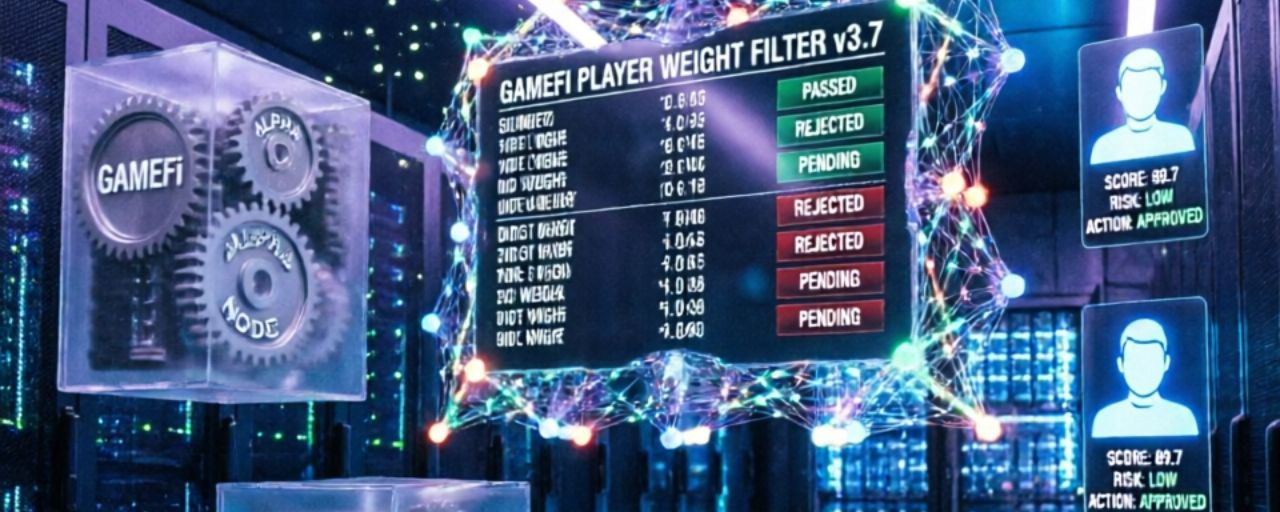
The Pixels model isn't just a set of technical parameters; it's a form of 'feedback-weight adjustment'. The system observes your behavior patterns—login frequency, holding time, staking stability—and then fine-tunes the efficiency of your rewards. It's not punishment or reward, just priority adjustment.
This sounds soft, but the economic logic behind it is hard: token emissions are a scarce resource, and the system must choose where they flow.
The underlying mechanism here can be broken down into three layers.
The first layer is behavior recognition. On-chain data is inherently transparent, allowing the system to track the complete behavioral history of wallet addresses. It knows how many times you log in daily, how often you sell, and whether you dump everything right when the unlock period hits. These aren't privacy data; they're public records.
The second layer is the weight decay function. Imagine a curve where the x-axis is time, and the y-axis is reward efficiency. If you stay active, the curve stays steady; if you suddenly disappear and then come back, the curve gets suppressed. This isn't punishment; it's the system asking: who should I allocate limited tokens to?
The third layer is the staking commitment signal. When you stake PIXEL tokens, you’re essentially sending a signal: 'I won't sell immediately.' Once the system receives this signal, it raises your position in the weight function. It's like saying: I'm willing to expose myself to price volatility in exchange for higher future reward efficiency.
The combination of three layers forms a behavior filter.
I've seen too many players complain: 'I did the same thing, why is he getting more than me?'
Because not all 'the same actions' are equal.
The system doesn't look at the action itself but the context of the action. Logging in for 10 minutes every day for 30 days versus logging in for 5 hours one day sends two completely different signals in behavior records. The former signals 'I'm observing you', while the latter signals 'I'm trying to extract once and for all.'
This isn't a moral judgment; it's a matter of system efficiency. The core contradiction of GameFi is always: token emission speed > actual demand growth speed. When emission outpaces demand, tokens devalue, and the system collapses. The only way out is to let emissions selectively flow to 'behaviors that are beneficial for the long-term health of the system.'
What Pixels has done is algorithmize this selection process.
But this mechanism has a hidden cost: it starts filtering players.
As the system gets better at identifying 'valuable behavior', it naturally amplifies certain patterns and suppresses others. Those who have a habit of flipping quickly will find their rewards diminishing. They might leave, complain, or tweet 'this project is dead.'
From the player's perspective, this seems unfair. From the system's perspective, it's a survival strategy.
GameFi doesn't need all players to stick around. It needs those who are willing to stay, forming a stable behavioral base. When this base is solid enough, the tokens have support, and the economy has resilience.
There's a bigger picture here.
When you scale the mechanism of Pixels to the entire Web3 economy, you'll see similar logic appearing in many places. Staking itself serves as a signaling mechanism—it differentiates 'passing speculators' from 'participants willing to expose risk.'
In the narrative of $BTC , this is called 'holder faith'; in the narrative of $ETC , it's called 'immutable commitment'. Essentially, the system is asking the same question: Are you worth my resource allocation?
Pixels has simply made this logic explicit. It embeds the filtering process into the game loop, making behavior itself a form of voting weight.
So, back to the initial question: why do some GameFi projects last longer?
It's not because the token design is particularly clever, nor is it because the community is so loyal. It's because the system quietly made a choice in the background: it decided who to allocate rewards to.
This choice determines the project's lifespan.
Do you think you're willing to be chosen by the system?
Article key points summary.
Core concept: Reward efficiency as a behavior filter.
Mechanism breakdown:
Behavior recognition: on-chain tracking of login frequency, holding periods, and staking stability.
Weight decay function: non-linear time-efficiency curve; intermittent behavior is suppressed.
Staking commitment signal: Staking = willingness to expose risk = increased weight priority.
Core point:
The lifespan of GameFi depends on the choice of where rewards flow, not the total emission amount.
Staking isn't just passive income; it's a signal to the system that you're willing to expose yourself to risk.
Behind the 'unfairness' is the system executing a survival strategy.