
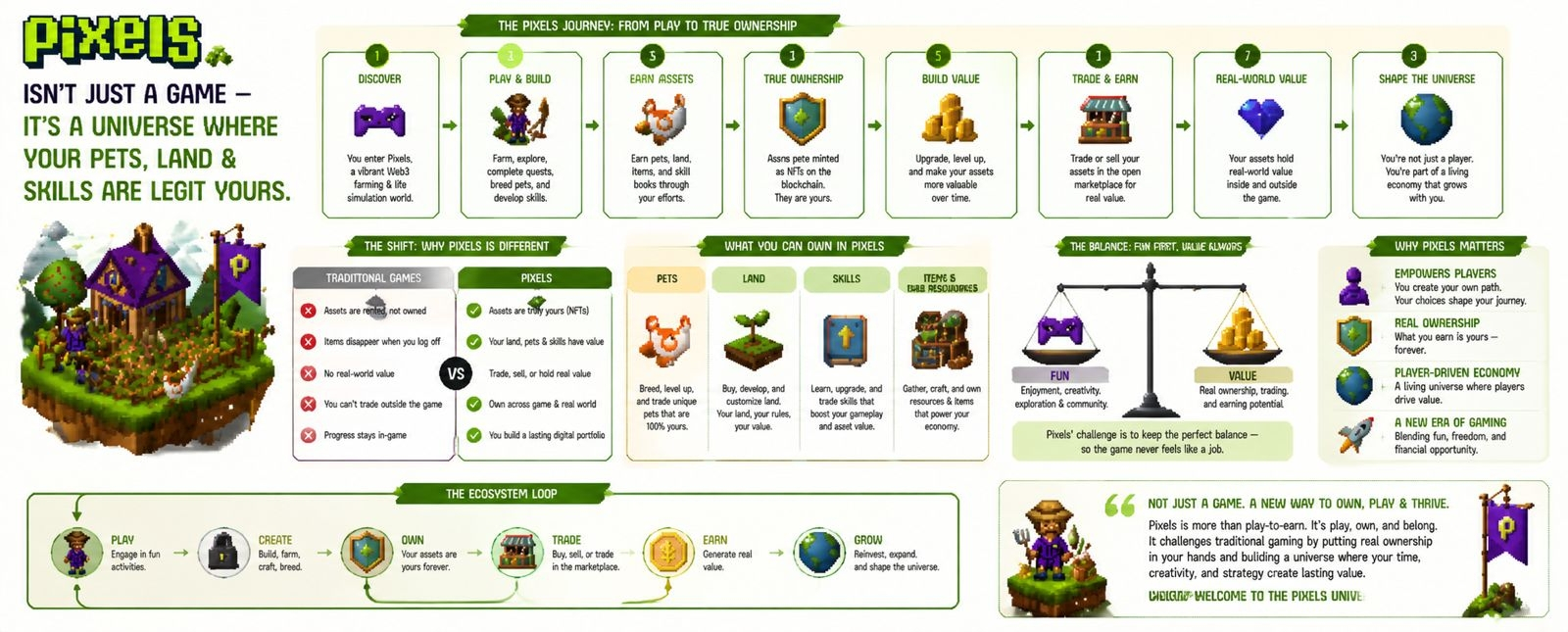
When I first came across Pixels, I thought it was just another “play to earn” game jumping on the Web3 bandwagon. However, as i explored more, I realized it was something completely different. Pixels is not just about playing and earning rewards; it is about owning real, valuable digital assets. Pets, land, and skills are not just virtual items in the game; they are yours to keep, trade Or sell. It is not just a game; it is a universe where what you build has genuine value.
What really struck ME is how Pixels solves a major issue that has always existed in gaming: ownership. In traditional games, the things you earn are confined to that game. Sure, you might level up, collect rare items, or build a strong character, but once you log off, everything stays behind. In Pixels, however, when you earn something, it is yours. Your land is real, your pets are yours to develop, and your skills matter in ways that go beyond the game. It is not just about grinding for rewards that disappear when you are done playing. You are building a portfolio of digital assets that hold value both in and outside of the game.
This shift from temporary in game rewards to real, tradable assets is what makes Pixels stand out. I keep coming back to this idea of ownership; it is not just about playing; it is about creating something that lasts. Imagine having pets or land that you can sell or trade outside the game. This is a game changing concept. Pixels brings a level of depth that I have not seen in other games, and it is why it feels different. You are not just playing; you are building an economy.
But, let us be honest.... there is a tension here. Pixels is about ownership, but what happens when players focus too much on earning instead of enjoying the game? I have seen this happen in other games, where the desire to collect and maximize rewards makes the experience feel more like a job than fun. The balance between having fun and earning something valuable is tricky. Pixels needs to keep that balance, or it risks losing what makes it special. If it leans too much into the financial side, it could become another grindfest, and no one wants that. #pixel
That said, Pixels does something most games do not; it empowers players to shape their experience. In most games, you follow the story, complete missions, and collect rewards. In Pixels, you create your own path. The land you buy, the pets you breed, and the skills you develop are all your choices. This is what truly makes Pixels feel like an investment. You are not just following a script. you are writing your own.
The more I reflect on it, the more I see that Pixels requires a different kind of commitment. It is not a casual game you can pick up and drop whenever. It asks for investment; not just time, but thought, strategy, and effort. In some ways, that is exciting. It is a deeper, more immersive experience. But it also means that players need to be more involved in the game’s world. It is not just about playing a character; it is about building something real.
And that is what makes Pixels unique. It is not just a game; it is a new way of thinking about digital ownership. It combines play and economics in a way that is fresh and exciting. But I cannot help but wonder where the line is between fun and profit. Will players be able to enjoy the game without feeling like they are always chasing the next valuable asset? Only time will tell. But if Pixels can keep the balance between enjoyment and financial rewards, it could redefine how we think about gaming.
For now, I am intrigued. It is not often that a game makes me reflect on how I engage with digital spaces, but Pixels does. It is a game that challenges what ownership means in a digital world and it might just be the beginning of a new era in gaming.