

I've been thinking about this for a while and i think pixels accidentally cracked something that most Web3 projects completely fumble.
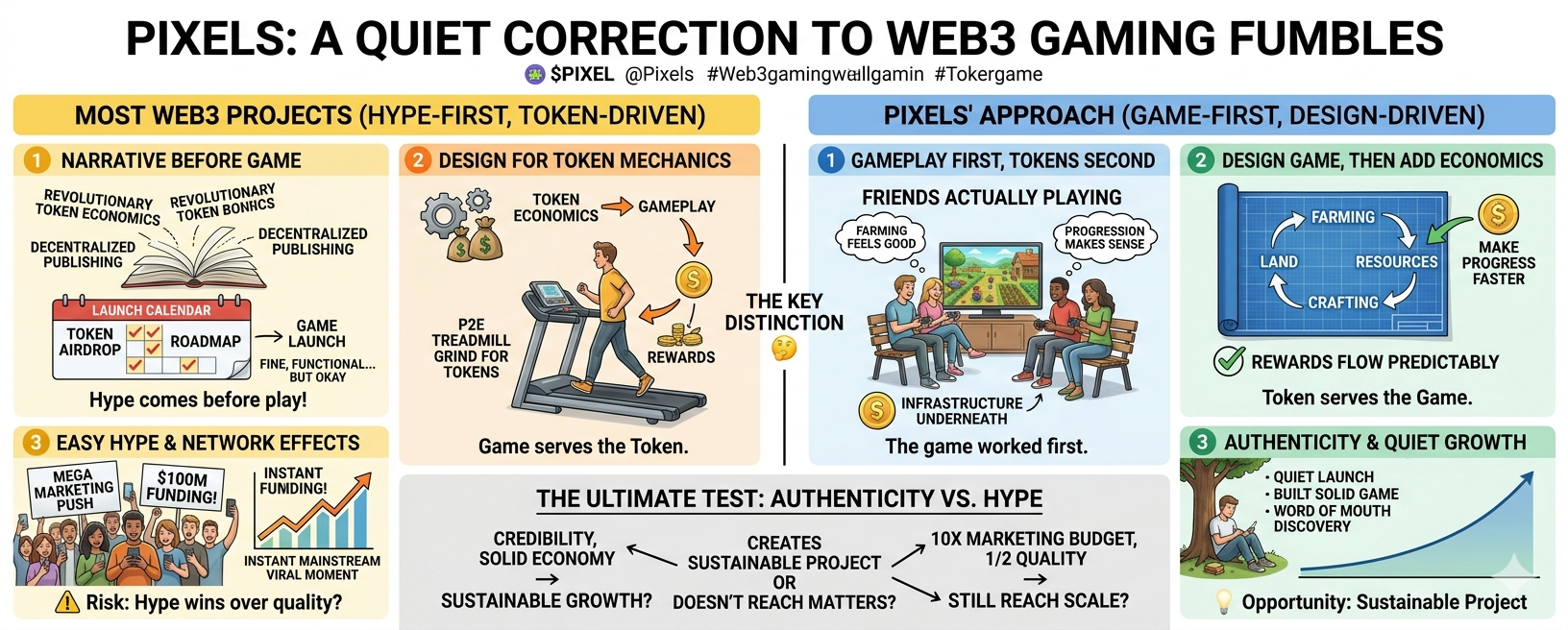
most crypto games launch with the narrative first. "revolutionary token economics." "decentralized publishing." "owned assets." the hype comes before the game. sometimes way before. sometimes instead of. you hear about the token, the airdrop, the roadmap. you don't actually play anything until months later when the game finally launches and it's... fine. functional. but not particularly good or interesting
pixels did the opposite.
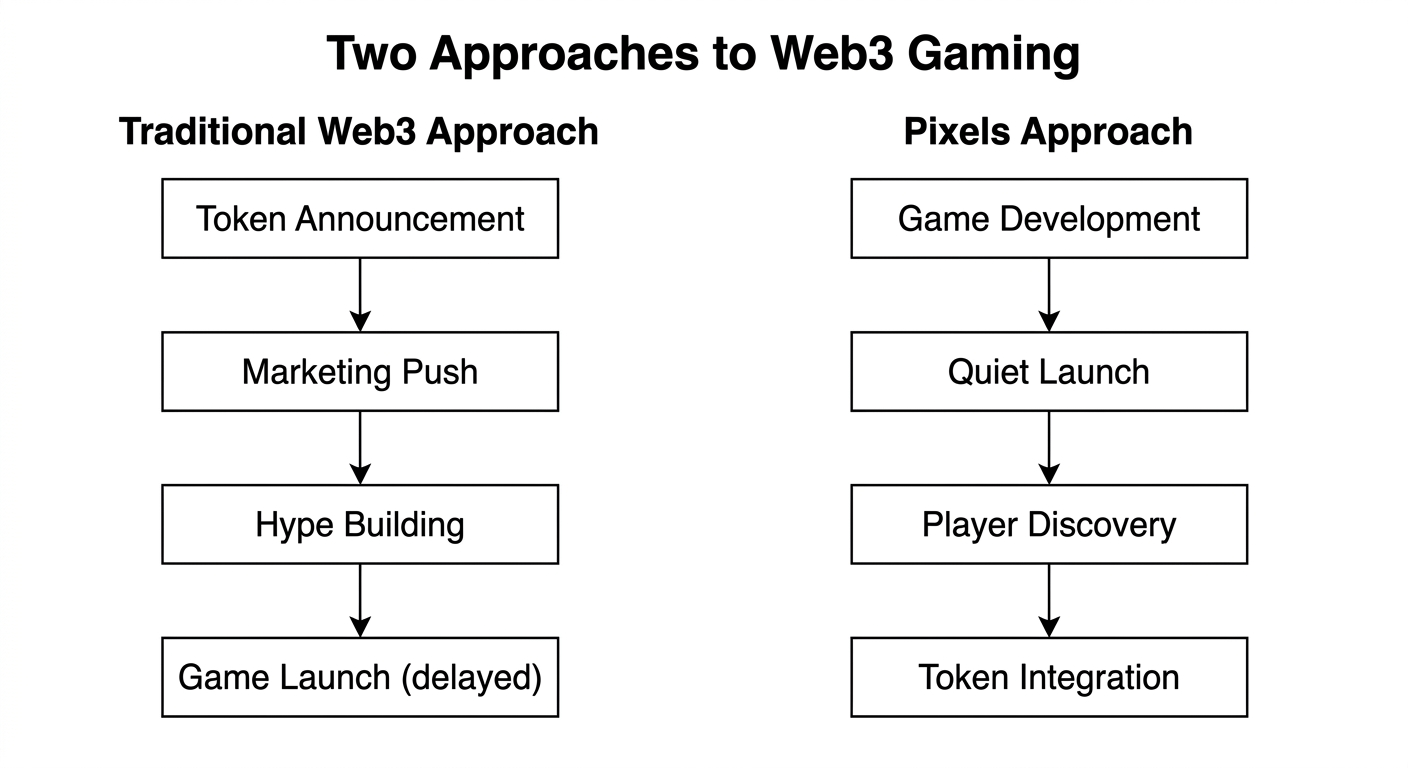
i stumbled into pixels because friends were actually playing it. not because of a token announcement or a marketing push. they were talking about how farming felt good. how the progression made sense. how you could actually own your land and see other players' farms. the game worked first. the token was just infrastructure underneath.
that shouldn't be revolutionary but it is. because most Web3 games lead with tokenomics and hope the game catches up. pixels led with game design and added tokenomics that actually served the game instead of the other way around.
here's what i mean by that distinction
most P2E games design the token mechanics first. "we'll have a governance token and a reward token and a liquidity pool." then they build a game that's basically a treadmill to interact with those tokens. the game exists to justify the token. the token is the thing that matters. the game is just the excuse to have rewards to claim.
pixels designed the game first. farming. land. resources. crafting. actual gameplay loops that make sense without any token. then they added $PIXEL as a way to make progress faster and access premium stuff. the token serves the game. the game doesn't serve the token.
i keep coming back to something that feels true about this. pixels removed the easy hype. they could've launched with massive marketing. "web3 revolution in gaming." $100M funding announcement. influencer push. instead they launched quietly. built a game. let people discover it through word of mouth. stayed boring for long enough that the game actually got solid.
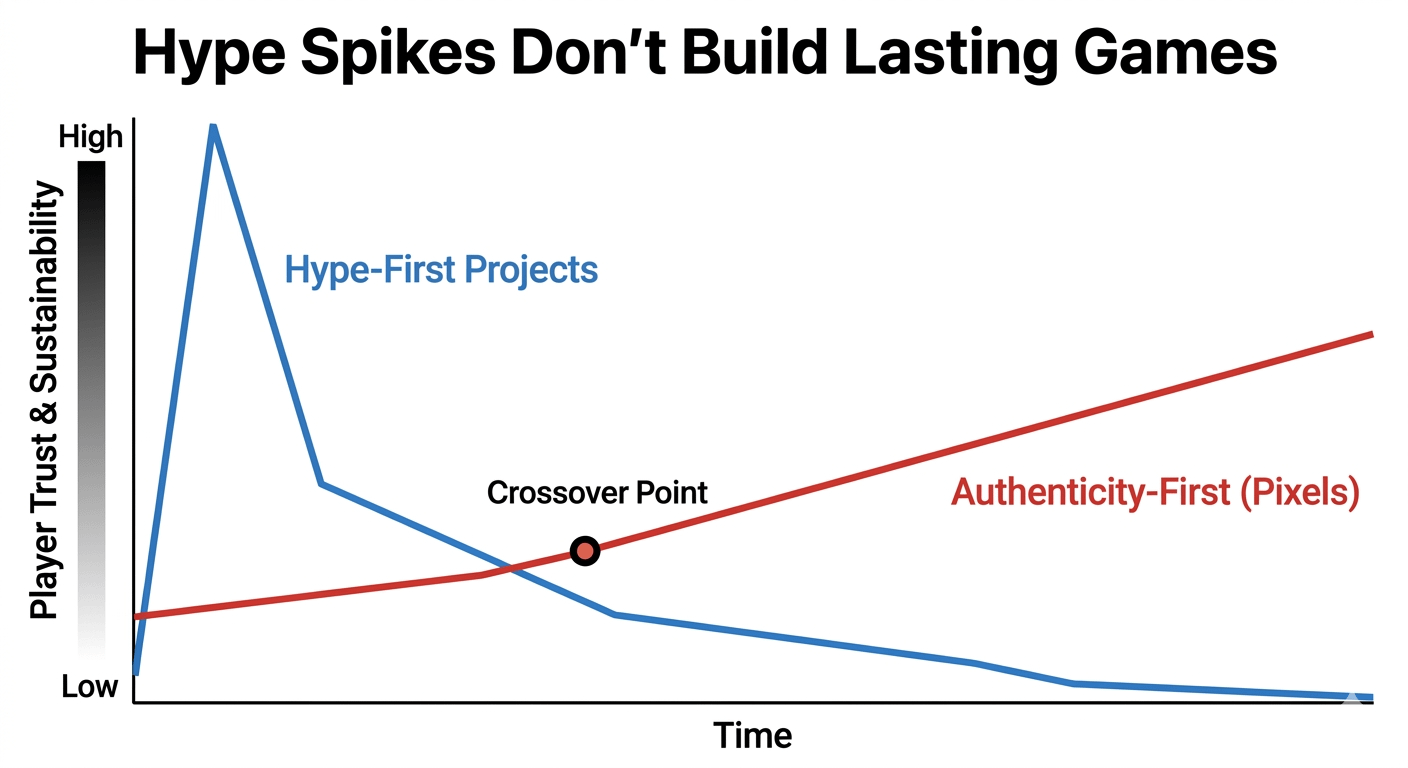
that's actually credible in a way that hype-first projects never are.
because once people started playing pixels, they realized the system actually works. the economy isn't just a token holder fantasy. it's legitimately functioning infrastructure. rewards flow predictably. exploits get caught. the game is genuinely playable without feeling like a grind designed to extract your money.
that's not revolutionary in traditional gaming. that's just how games should be. but in Web3 it's apparently shocking enough to be worth noting.
i think what happened is that pixels looked at every failed P2E game and realized the problem wasn't tokens or ownership or blockchain. the problem was that most Web3 games were built as token extractors first and games never. so pixels just... built a game. really well. then added the Web3 layer on top.
but here's what actually concerns me about this approach
the downside of removing the easy hype is that you don't get the hype. pixels grew slowly. it didn't have the network effect viral moment that could've made it mainstream instantly. instead it had to earn players one at a time through people actually enjoying it. that's slower. that's riskier. that's not how most crypto projects operate because they can't afford to wait.
there's also a real question about whether "boring authenticity" can actually compete with hype-driven marketing at scale. pixels might be better designed than most competitors but if competitors have 10x the marketing budget and half the game quality, they might still win on reach if not on actual sustainability.
what pixels has done is genuinely impressive. they looked at Web3 gaming and said "we're going to build this differently." they removed the easy narrative. removed the token-first positioning... removed the hype machine. and bet everything on the game being good enough to carry itself.
that's either incredibly brave or incredibly foolish. and i won't know which for a while.
the real test is whether a game built on authenticity and quiet infrastructure can actually achieve the scale and adoption that a hyped project can.... because right now pixels is winning on credibility and game quality. but credibility doesn't guarantee success.... sometimes hype wins.
does building on authenticity instead of hype create a more sustainable project that survives long-term, or does it just mean pixels never reaches the scale where it actually matters?