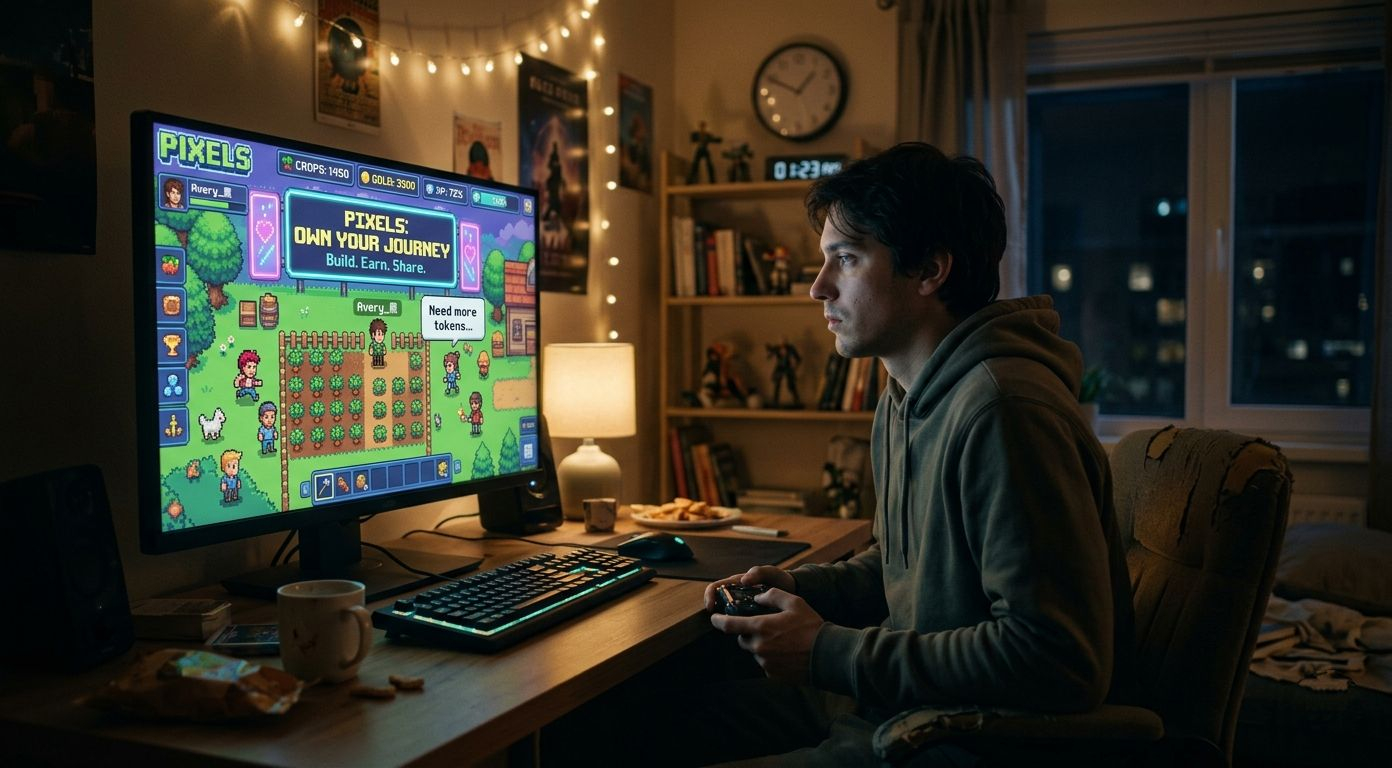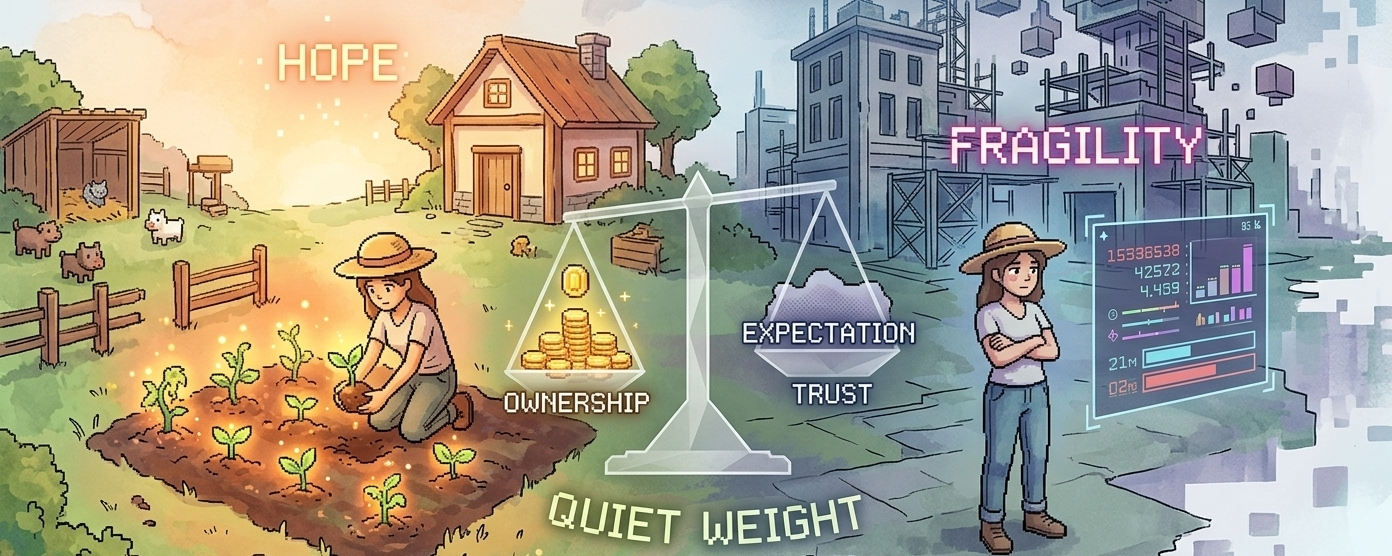
Looking at @Pixels for the first time, I felt that quiet pull—the kind that doesn’t demand your attention but somehow keeps it. There was something soft and reassuring about it. The colors, the pace, the idea of a world that continues even when I step away. It didn’t feel like just another game. It felt like somewhere I could exist for a while. Somewhere my time might actually mean something.
And honestly, that’s what drew me in.
The idea that what I plant, build, or earn doesn’t just vanish when I log off—it’s powerful. It makes you lean in a little more. Makes you care in a way games don’t usually ask you to. I remember thinking, this is it… this is what games were meant to become. Not just distractions, but spaces where your effort stays, where something grows with you.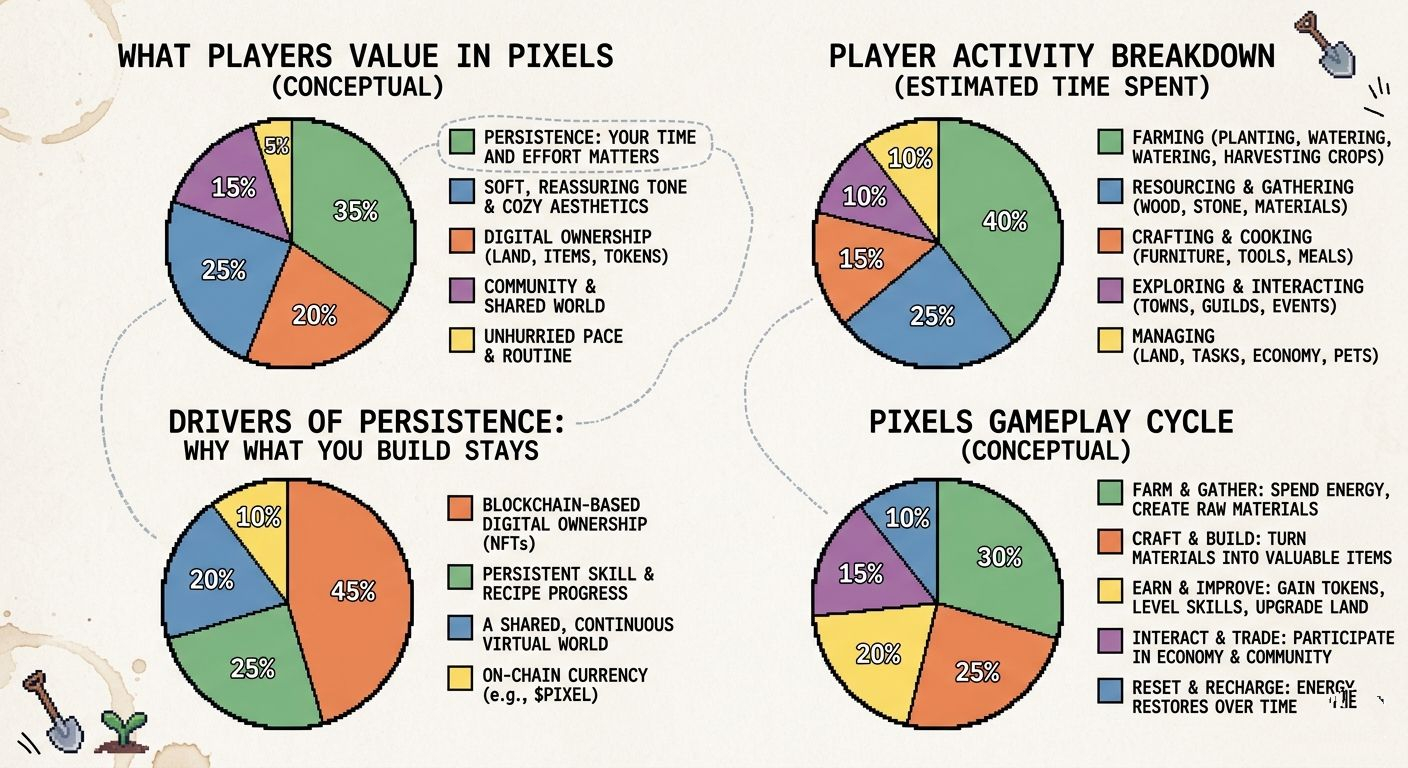
At the beginning, it feels exciting. Almost refreshing. Like you’ve stumbled onto something that respects your time.
But then… the questions start creeping in.
Not all at once. Not loudly. Just small thoughts that show up in the quiet moments.
What am I actually owning here?
Because yes, it feels like ownership. It’s built to feel that way. But the more I sit with it, the more fragile that idea starts to seem. Everything I “own” still exists inside a system I don’t control. A system that can shift, evolve, or even disappear depending on forces way outside my reach.
And that’s where the comfort starts to crack a little.
Because a world like this runs on belief. On people showing up, staying engaged, bringing energy into it. It needs momentum. And belief… belief is unpredictable. It can hold everything together—until it suddenly doesn’t.
I keep wondering what happens when things slow down.
Not collapse. Not vanish overnight. Just… fade a little.
When fewer people log in. When the excitement softens. When rewards don’t feel as rewarding anymore. Does everything I’ve been building still matter the same way? Or does it slowly lose its weight without me even noticing?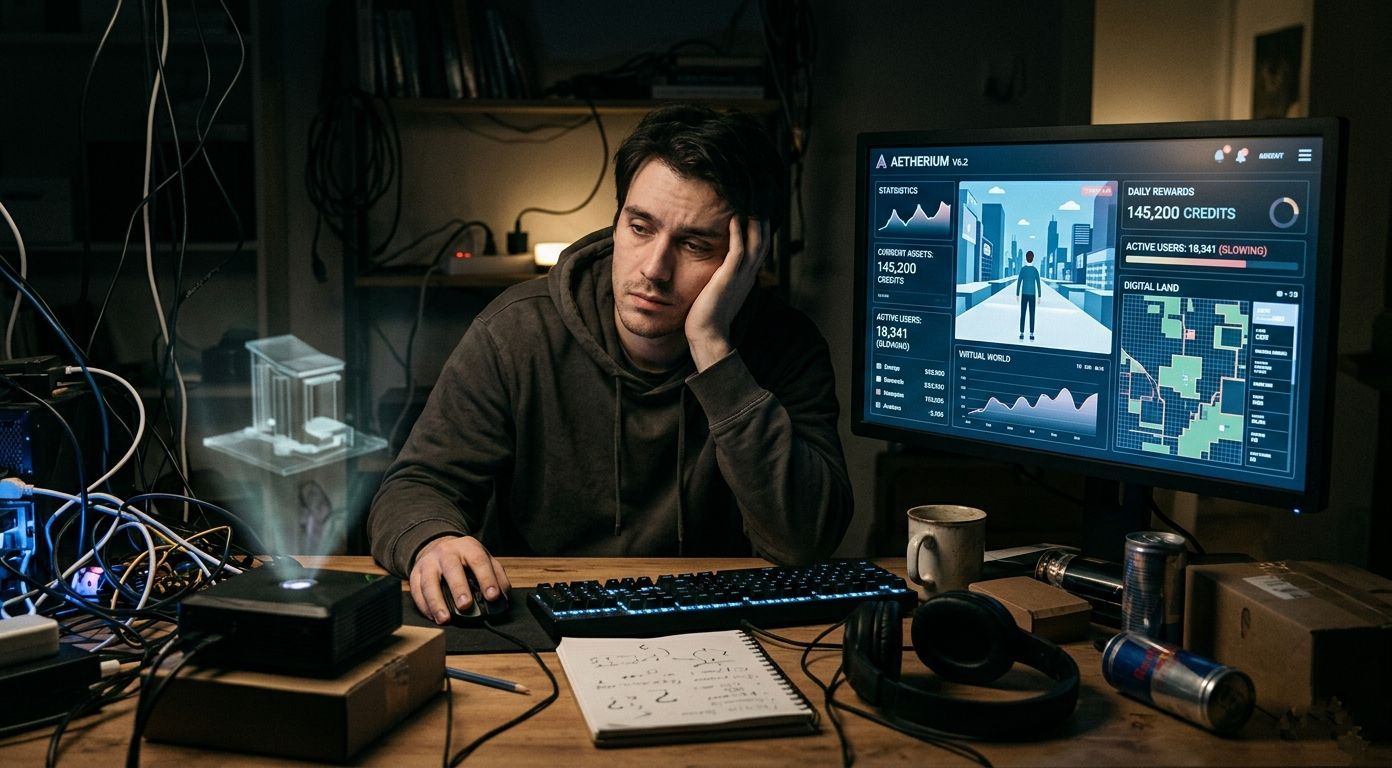
And then I think about the everyday player.
Not the early winners. Not the ones who figured everything out first. Just someone like me—logging in after a long day, planting crops, exploring a bit, holding onto that quiet hope that maybe this time means something more.
What happens to that person when things don’t unfold the way they expected?
Because at some point, it stops feeling like just a game.
It becomes expectation. A subtle kind of hope. The feeling that your time should lead somewhere—that it should matter in a way games usually don’t promise.
And when that expectation isn’t met, it doesn’t just fade away. It lingers. It turns into something heavier. A kind of disappointment that’s hard to explain, but easy to feel.
That’s the part that stays with me.
Because the system doesn’t feel any of that. The mechanics don’t. But the player does.
And when things don’t work out, it’s hard to know where that feeling belongs. Is it on the creators? The players? Or just the idea itself—the belief that games could be something more than what they’ve always been?
I’ve also noticed how the tone shifts over time.
At first, it’s light. Curious. Fun.
Then it becomes opportunity.
And before you really notice it, it starts to feel like pressure.
Nothing overwhelming. Nothing obvious. Just small things. The feeling that you should log in. That you shouldn’t fall behind. That the time you’ve already spent needs to mean something.
And that’s when it changes.
It stops feeling like a choice.
It starts feeling like an obligation.
And that’s the question I can’t shake: what happens when a game stops being optional?
Because at its core, the idea behind Pixels really is beautiful. A shared world. A sense of ownership. A place where play and value blend together. It makes sense why it pulls people in.
But it also relies on everything staying in balance—attention, trust, growth, stability. And real life doesn’t hold steady like that. People drift. Energy fades. Things change.
So I keep coming back to one simple thought.
If all the rewards disappeared tomorrow—no incentives, no promises, nothing to earn except the experience itself—would I still want to be here?
Would I still log in?
Or would it all suddenly feel… empty?
And if it does feel empty, then maybe what I thought I was building was never really mine to begin with.