
I’ve watched enough GameFi projects die to recognize the pattern.
it’s never the gameplay. it’s never the team. it’s always the same thing: the moment rewards become easy to sell, the wrong people show up. gold farming studios. mercenary players. wallets that exist purely to extract. they come in fast, drain what they can, and leave before anyone realizes what happened. two months later the chart looks like a cliff edge and the Discord is full of people calling it a rug.
Pixels survived that. the question worth asking is why.
they looked at every project that died before them and reverse-engineered the failure. then built friction into the protocol at the exact points where value was leaking out.
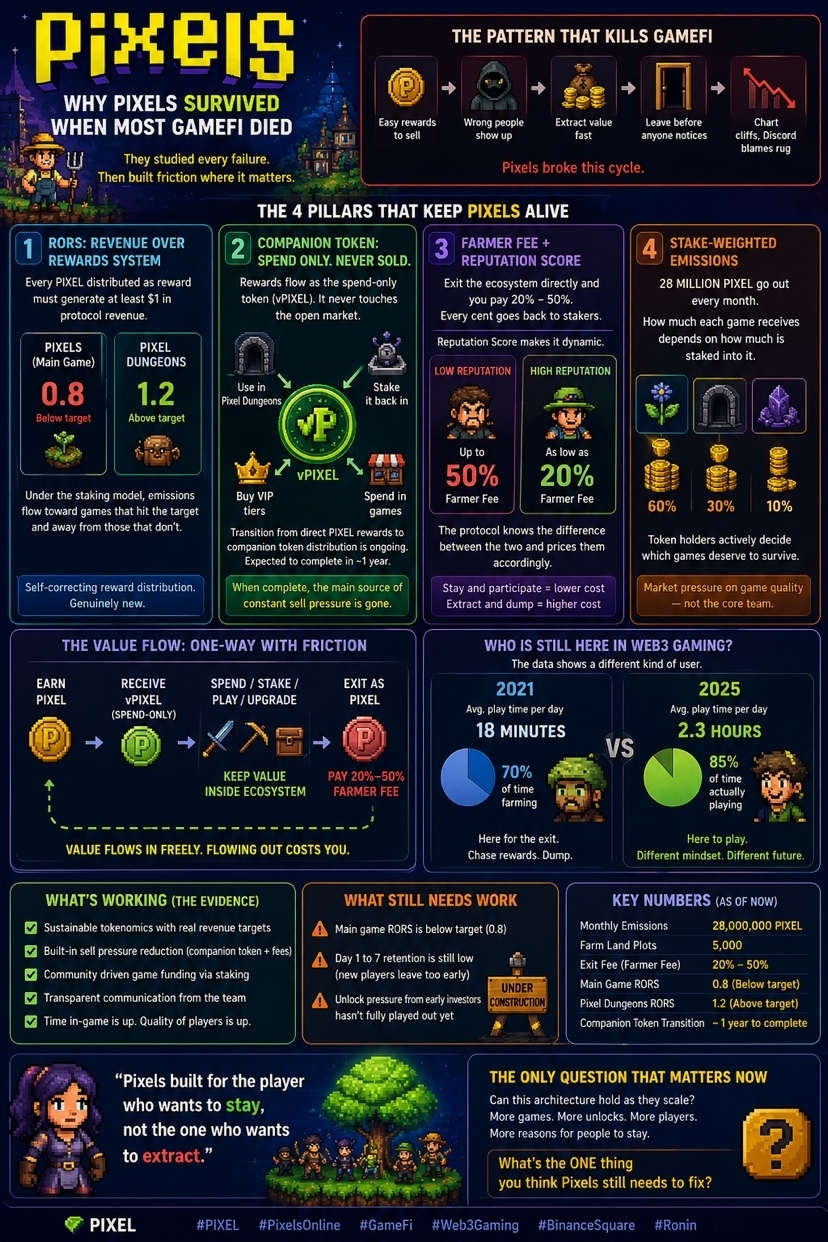
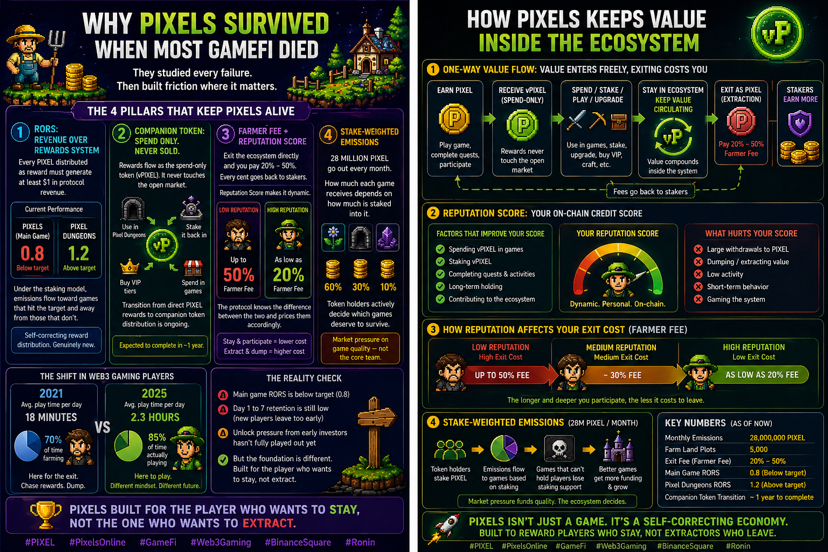
start with RORS. most projects just emit tokens and hope the game is engaging enough to absorb them. Pixels set an actual rule: every PIXEL distributed as reward has to generate at least one dollar in protocol revenue. the main game is currently running at 0.8 — below target, and the team says so openly. Pixel Dungeons is at 1.2. under the staking model, emissions flow toward games that hit the target and away from those that don’t. the reward distribution is self-correcting. that’s genuinely new.
then there’s the companion token. rewards that flow as the spend-only token never touch the open market. a player earns it, uses it in Pixel Dungeons, stakes it back in, buys a VIP tier — all of that circulates inside without creating a single sell order. the transition from direct PIXEL rewards to companion token distribution is still happening, expected to take about a year to complete. when it does, the main source of constant sell pressure in the ecosystem is gone.
the Farmer Fee sits on top of all that. exit the ecosystem directly and you pay between 20% and 50% — every cent of which goes back to stakers. the Reputation Score makes it dynamic: the longer you’ve been genuinely participating, the lower your fee. the more extractive your behavior, the more leaving costs you. the protocol knows the difference between the two and prices them accordingly.
28 million PIXEL go out every month. how much each game receives depends entirely on how much is staked into it. token holders aren’t passive — they’re actively deciding which games deserve to survive. games that can’t hold players lose staking support and eventually lose funding. the whole system applies market pressure to game quality without requiring the core team to make every decision.
none of this is without problems. the main game running below RORS target matters. day 1 to 7 retention is still on the fix list — new players are leaving too early, and the team has said so directly. unlock pressure from early investors hasn’t fully played out yet.
but here’s what the data shows: in 2021, the average blockchain game player spent 18 minutes a day in-game, 70% of it farming. by 2025 that number was 2.3 hours, with 85% of time actually spent playing. the person who stayed in Web3 gaming after everything collapsed is a fundamentally different kind of user. not here for the exit. here because they actually want to play.
Pixels built for that person before most projects even knew that person existed. that’s why it’s still here.
whether the architecture holds as they scale — more games, more unlocks, more users who need a reason to stay — is the only open question that matters now.
what’s the one thing you think Pixels still needs to fix? 👇