
I’ll be honest—Pixels feels boring at first. If you log in expecting excitement or fast rewards, it won’t give you that. The first time I entered the game, I just walked around… planted some crops… waited. That was it. No rush. No pressure. And for a moment, I thought maybe I was missing something.
But after a few days, something changed.
The slowness started to make sense.
It didn’t feel like a game trying to impress me. It felt like a routine I was slowly getting used to. And that’s when the real idea behind Pixels started to become clear—it’s not trying to entertain you in short bursts. It’s trying to build a world you can quietly stay in.
That’s a very different goal.
Most blockchain games in the past had a simple problem. They focused too much on rewards and not enough on behavior. People came in, earned quickly, and left just as fast. The system worked only as long as new players kept joining. When that slowed down, everything else started breaking.
Pixels seems to understand this.
Instead of asking “how do we reward players?”, it asks something more basic: what do players actually do every day, and why would they come back tomorrow?
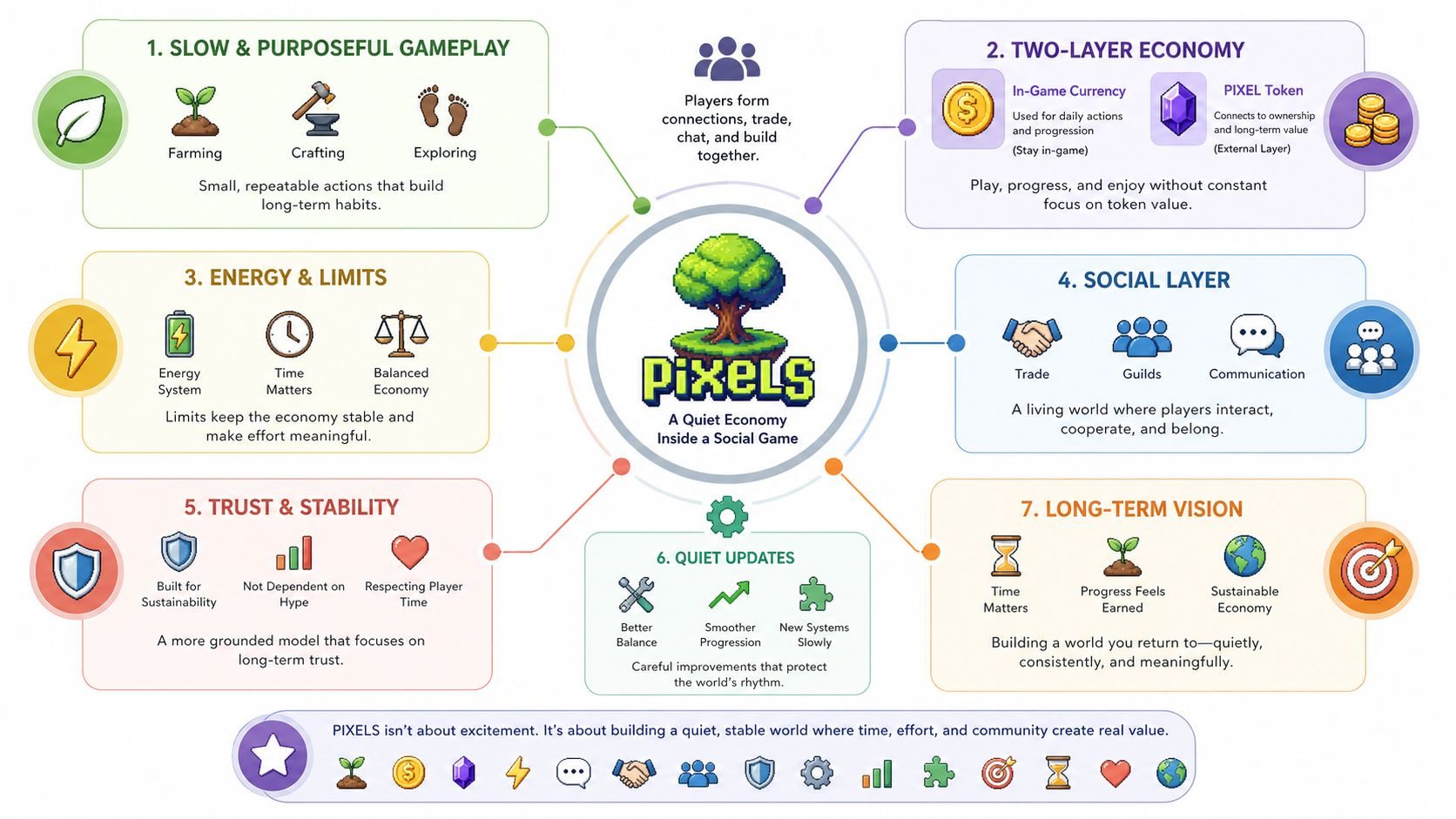
So the game is built around small, repeatable actions. Farming. Crafting. Walking. Talking. Nothing feels urgent. In fact, Pixels almost ignores your need to rush.
It’s patient.
And in a space where everything moves too fast, that patience feels… unusual.
The economy inside Pixels is also designed in a quiet, careful way.
There are two layers. One is a simple in-game currency used for daily actions—buying seeds, crafting tools, progressing step by step. It stays inside the game. The other layer is the PIXEL token, which connects certain parts of the game to ownership and long-term value.
But here’s the important part: most of your time in the game doesn’t depend on that token.
You can play, progress, and enjoy the loop without constantly thinking about value. And honestly, that changes how it feels. It takes the anxiety out of the experience. You don’t feel like you’re losing something just because you took a break or spent time exploring.
That separation feels intentional.
Maybe even necessary.
Another thing I noticed is how the game handles limits.
Everything runs on energy. You can’t just play endlessly and farm without stopping. At first, it feels restrictive. But then you realize why it exists. Without limits, resources would flood the system. And once that happens, nothing holds value anymore.
So Pixels slows you down.
Not in an annoying way. Just enough to keep things balanced.
I think this is where it starts to resemble a real economy—production is controlled, time matters, and effort has weight. It’s not perfect, but it’s trying to be stable rather than explosive.
There’s also a social layer that’s easy to overlook.
You see other players moving around. Sometimes you trade. Sometimes you just stand there and chat. It’s simple, but it creates a sense that the world isn’t empty. Over time, groups form. Guilds start to matter. People coordinate, share resources, and work together.
It’s subtle.
But it changes everything.
Instead of playing alone for rewards, you start feeling like part of something small. Not a massive system. Just a shared space.
I think what Pixels is really trying to fix is trust.
Not in the usual sense, but in how players feel about spending their time. In many Web3 games, you always feel like something might collapse—like the system depends too much on growth, hype, or constant activity.
Here, the approach is slower.
Maybe even safer.
But I’m still not entirely sure if this model can survive extreme conditions, like a long downturn or a big drop in player activity. That part is unclear. Still, it feels more grounded than most. At least it’s not trying to sell a perfect dream.
Recent updates seem to follow the same philosophy.
Instead of adding loud features, the game is being adjusted quietly—better balance, smoother progression, more reasons to return daily. New systems are introduced slowly, almost carefully, like the developers are testing how much the world can handle without breaking its rhythm.
That restraint stands out.
Most projects expand too fast. Pixels doesn’t.
In the end, Pixels isn’t trying to be exciting.
And maybe that’s the point.
It’s building something slower. A system where time matters, where progress feels earned, and where the economy doesn’t depend on constant hype to survive.
It might not appeal to everyone.
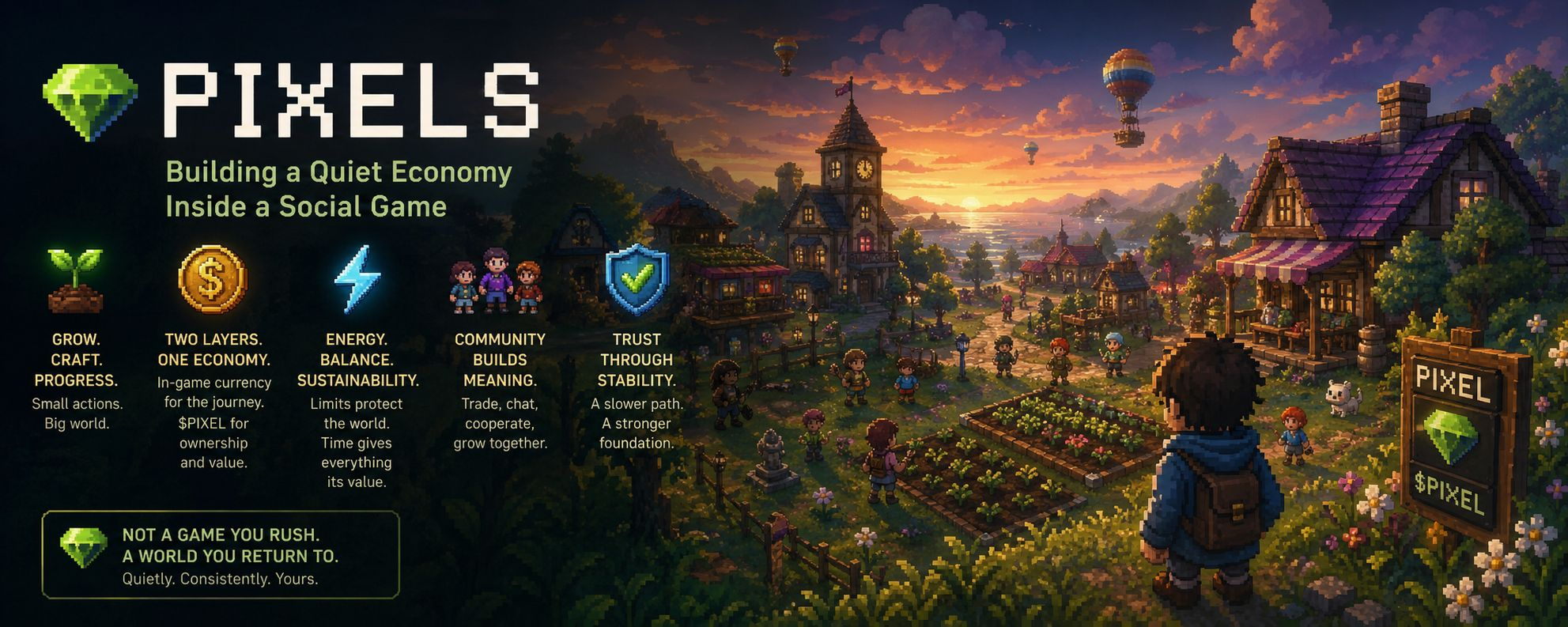
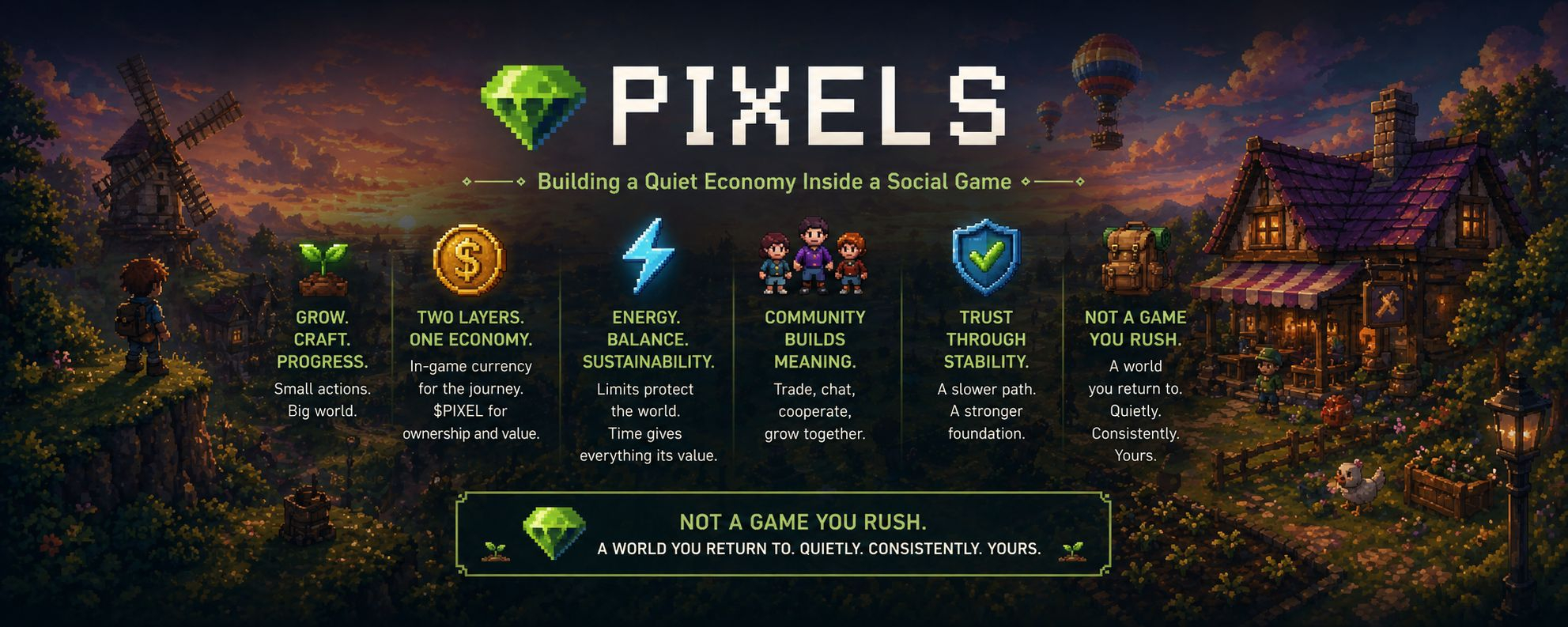
But if you spend enough time inside it, you start to see what it’s aiming for—not a game you rush through, but a place you return to. Quietly. Consistently.
And maybe in a space obsessed with moving fast and breaking things, what actually lasts is something that simply… doesn’t rush at all.