i was thinking last night when coming back from frinds home after playing farming games. We ofte debate on such web3 games.
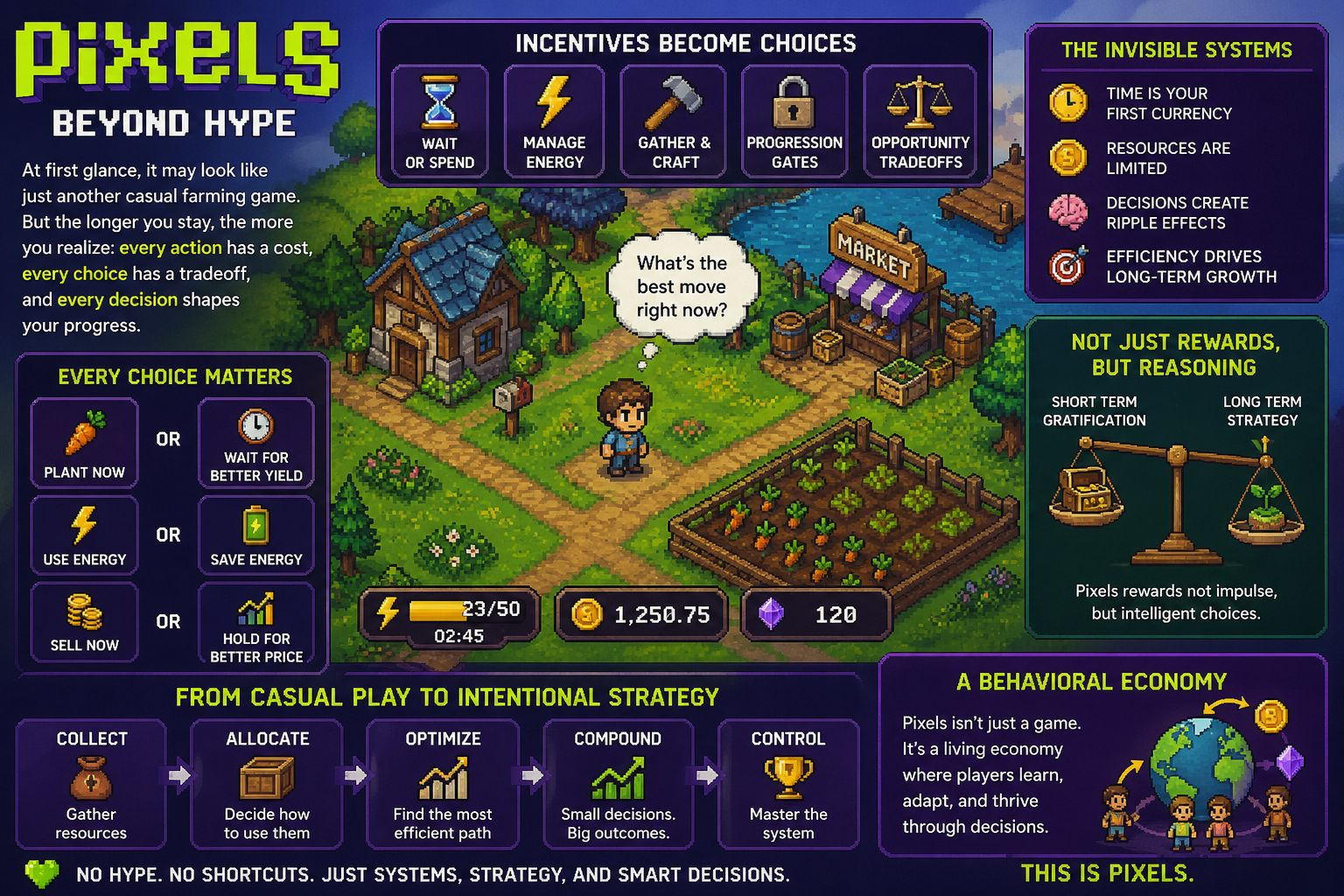
i belive pixels builds beyond hype, turning rewards into calculated choices under pressure and limited resources. at first glance, it may look like just another casual farming game, something simple you can play passively without thinking too much. but the longer you stay, the more you begin to notice the invisible systems shaping every move you make. nothing feels forced, yet everything has a cost. time becomes the first currency you start managing, and slowly you realize that every action carries an opportunity tradeoff. this is where the experience quietly shifts from casual gameplay into something far more intentional and strategic.
the interesting part is how pixels handles incentives. instead of overwhelming players with constant rewards, it introduces friction in subtle ways. waiting times, energy limits, crafting requirements, and progression gates all create moments where players must decide what matters most. do you wait and preserve your resources, or do you spend to accelerate progress? these decisions are not framed as monetization pressure, but as gameplay choices. that distinction is important because it changes how players perceive value. rather than feeling pushed, they feel like they are navigating a system, learning it, and optimizing within it.
over time, this design transforms player behavior. instead of chasing short bursts of rewards, players begin to think in terms of efficiency, planning, and long-term positioning. the economy starts to feel less like a faucet of free tokens and more like a network of interconnected systems where every decision has ripple effects. resources are not just collected, they are allocated. time is not just spent, it is invested. this creates a deeper level of engagement, one that goes beyond surface-level excitement and taps into the psychology of strategy and control.
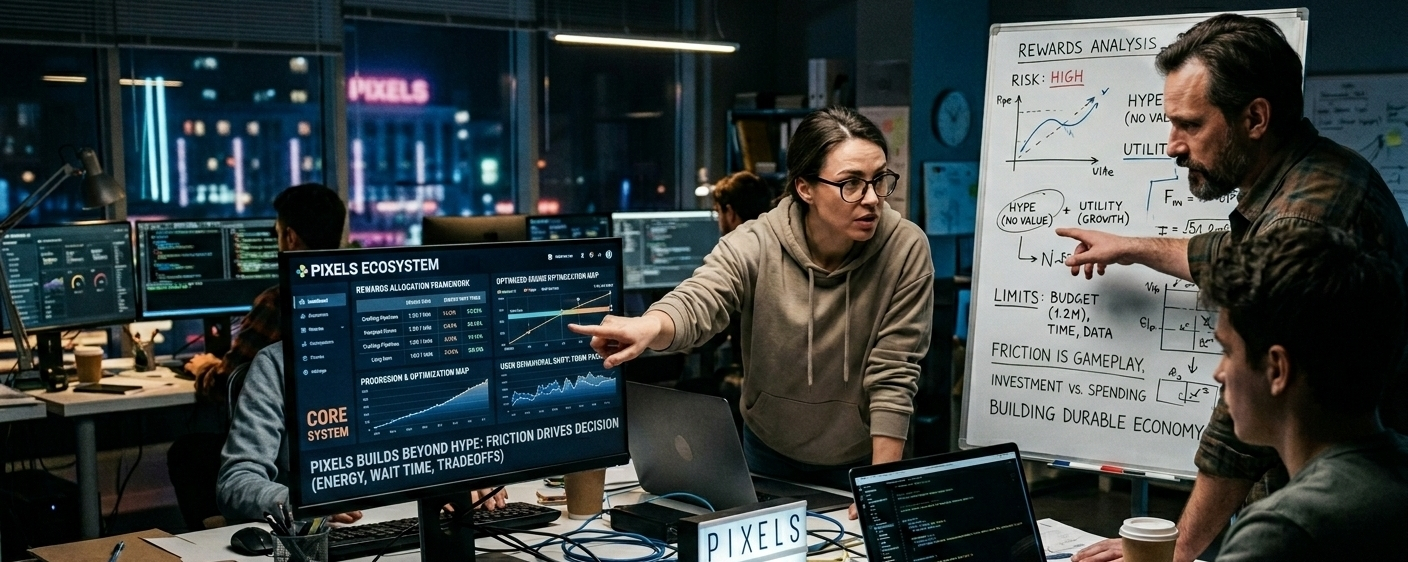
this is why pixels feels different from many gamefi projects that rely purely on hype cycles. it is not trying to capture attention with explosive rewards or short-term incentives. instead, it builds a slower, more durable experience where players stay because they understand the system and see their place within it. by turning incentives into decisions under constraint, pixels is not just creating a game, it is shaping a behavioral economy. and in the long run, that kind of design has a much stronger foundation than anything driven purely hype.