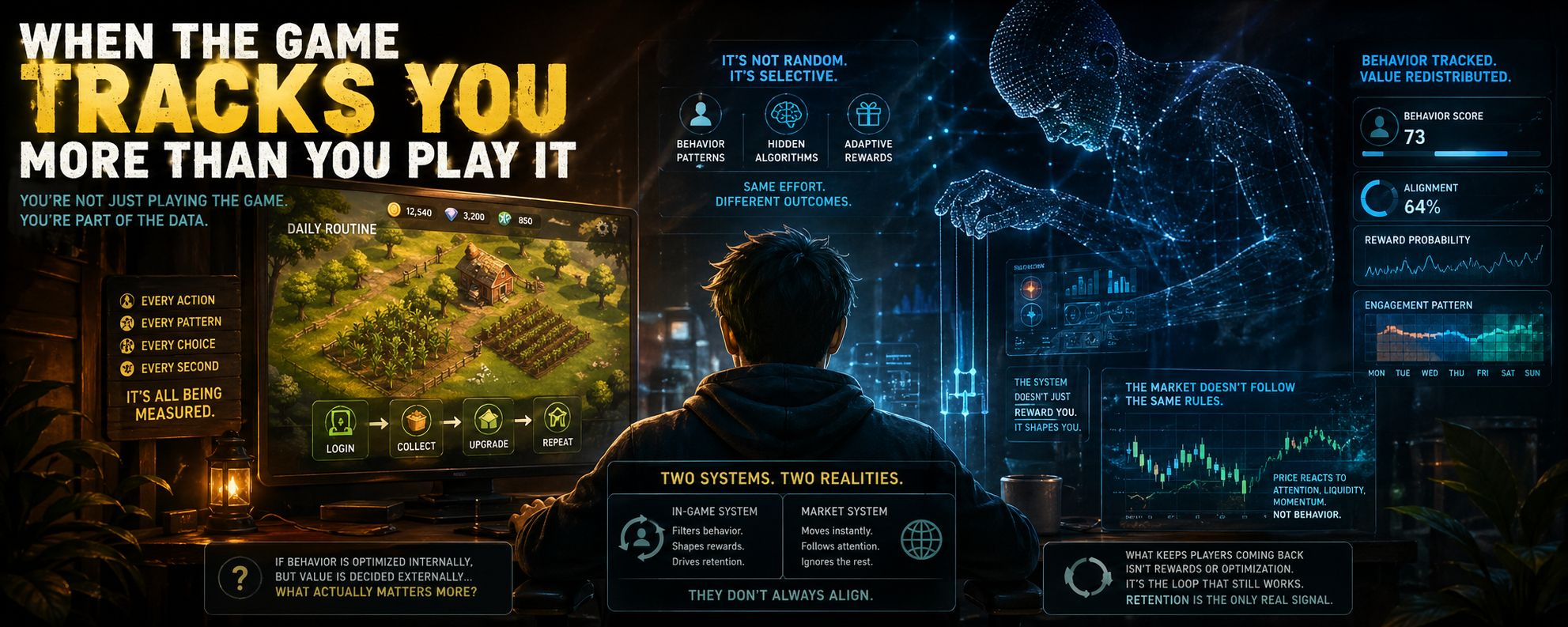
I didn’t notice the moment it started happening. Nothing felt broken. Nothing even felt new. The loop was still the same — log in, check crops, collect, upgrade, repeat. It moved the way it always had, familiar enough to run without thinking. But somewhere inside that routine, something felt slightly off. Not wrong… just different in a way that was hard to point at.
At first, I ignored it. I kept playing the same way I always do, trying to stay consistent and not overthink it. But slowly, without really deciding to, I started changing small things — logging in at slightly different times, choosing certain actions over others, skipping steps that didn’t feel worth it anymore. It wasn’t a conscious strategy. It felt more like a quiet adjustment happening in the background.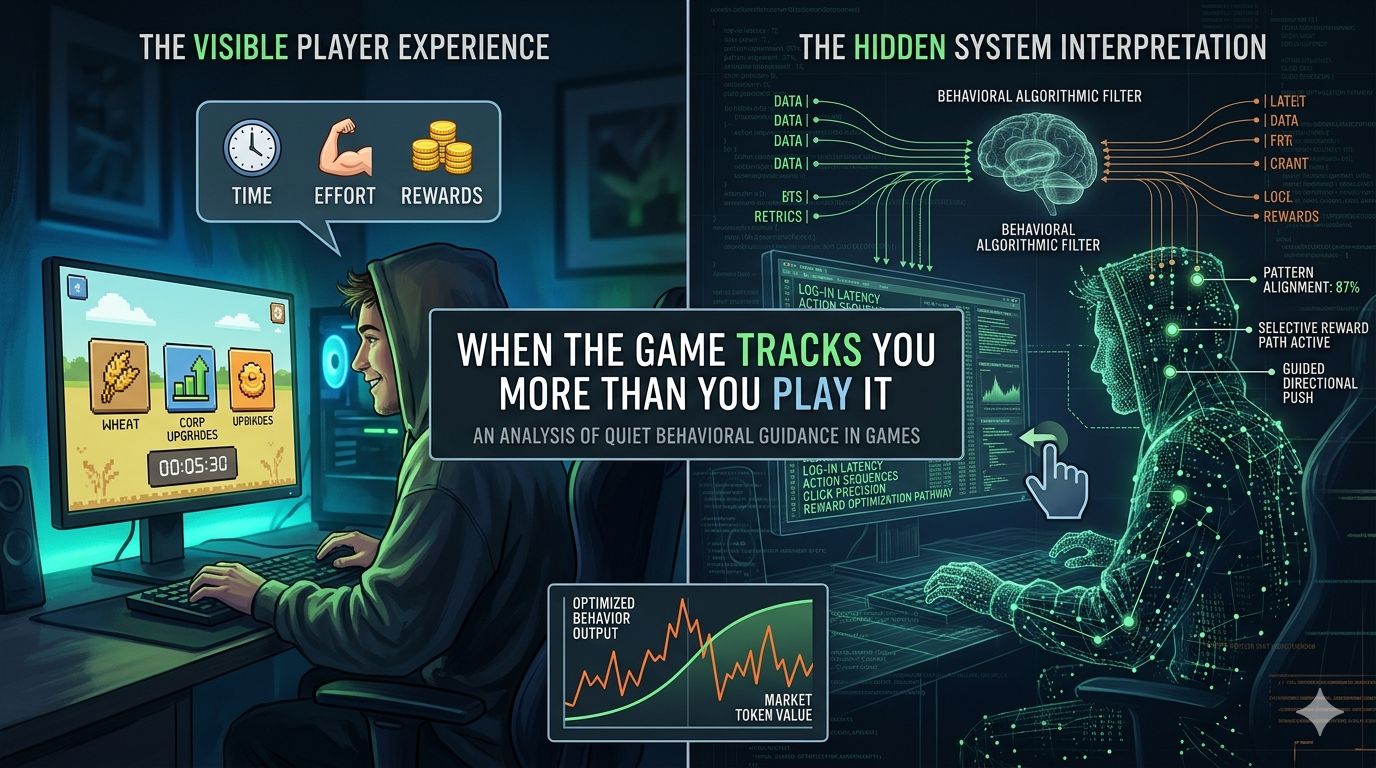
Maybe I’m overthinking it… but at some point, it stopped feeling like I was just playing the game. It started feeling like the game was reading me. Not in an obvious way — no alerts, no clear signals. But over time, certain patterns just worked better. Same effort… different outcomes.
At first I told myself it’s just balancing. Every system tweaks numbers, that’s normal. But this didn’t feel random, and it didn’t feel evenly distributed either. It felt selective. Like the system wasn’t responding to how much I was doing… but how I was doing it.
Once you feel that difference, you don’t really play the same way anymore. You stop asking “what can I do more of?” and start noticing “what actually converts?” Time stops being the main input. Effort stops being the main signal. It becomes something else — something closer to alignment.
Alignment with what isn’t clearly visible. And maybe that’s intentional. You don’t see it directly, you feel it over time. Certain loops start to feel lighter, others start fading even if they take the same effort. Not instantly… just gradually enough that you adjust without realizing.
At some point, it stopped feeling like I was optimizing the system… and started feeling like I was being sorted by it. Not forced, not restricted — just quietly guided. That’s what makes it different.
Most systems are loud about what they reward — do more, get more. Here, it feels indirect. You can stay active and still feel slightly out of sync, then change something small and the outcome shifts. Not dramatically, just enough to make you notice.
Even the friction looks different. Costs, cooldowns, upgrades — they don’t just slow progress, they shape direction. They quietly push behavior one way instead of another. Not blocking you… just guiding you.
After a while, it stops feeling like a loop you control. It feels like a system that is constantly interpreting what players do and redistributing value based on that. Not perfectly, not transparently — but consistently enough to be felt.
That’s when it stopped feeling like just a game. It felt more like an environment where behavior itself becomes the input, and the output depends on how closely you align with something you can’t fully see.
And that creates tension. Because on one side, you’re still playing. But on the other, you’re being measured in ways that aren’t obvious. Not just what you do… but how closely it matches what the system prefers.
Over time, that changes you. You become more precise. More selective. But also less random. And that’s the part I’m not fully sure about. Because randomness is what usually makes games feel alive.
There were moments where I caught myself thinking — am I still playing freely, or just moving in ways the system has already learned to reward? It’s hard to answer, because it doesn’t feel forced. It just feels effective.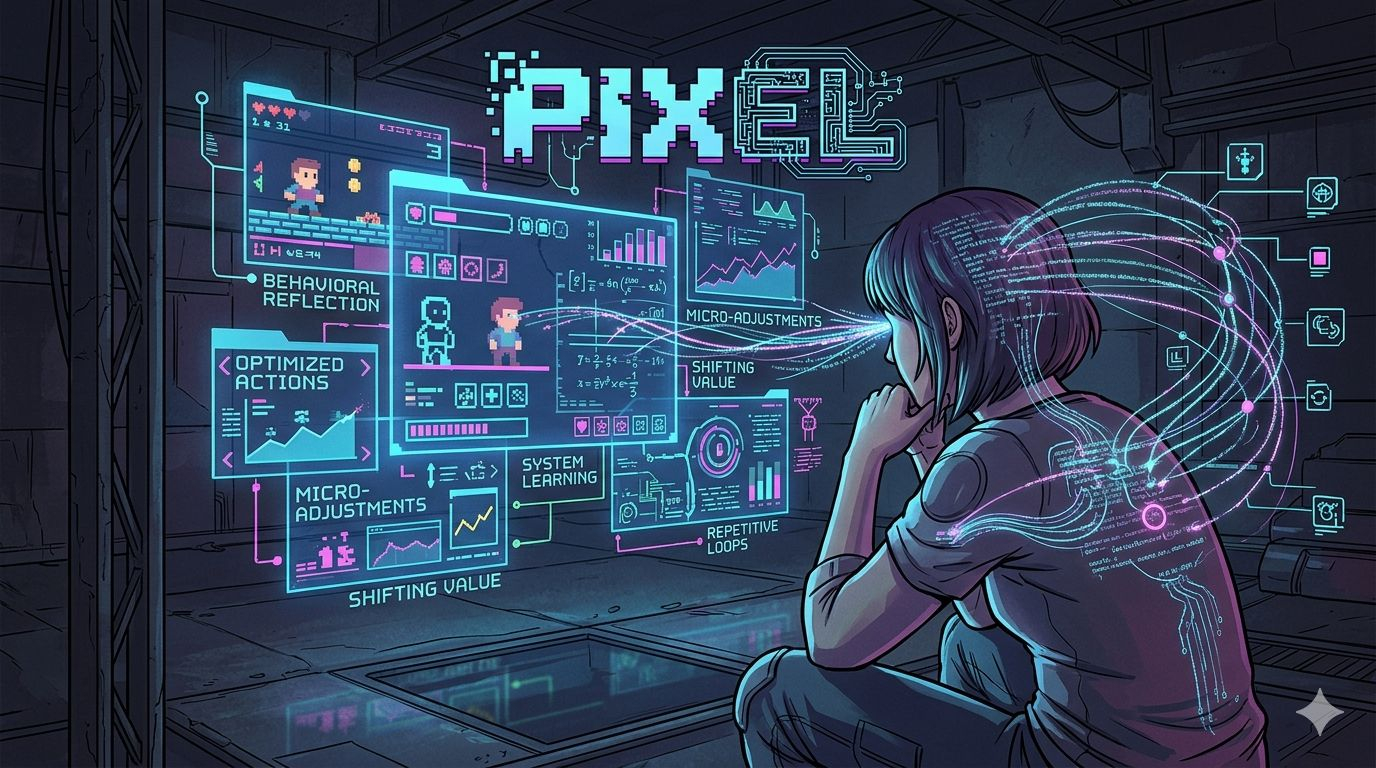
Then there’s the layer above all of this — the market. It doesn’t follow any of this logic. It reacts to attention, timing, liquidity. Completely separate from how behavior is shaped underneath.
So you end up with two systems running in parallel. One is filtering behavior and refining value flow. The other moves instantly based on external pressure. And they don’t always align.
You can have a system carefully rewarding certain patterns… while the token ignores all of that and reacts to momentum instead. That gap is hard to ignore.
Because it raises a simple question: if behavior is optimized internally, but value is decided externally… what actually matters more?
I don’t think there’s a clean answer yet. But what keeps pulling me back isn’t optimization or rewards. It’s the fact that the loop still works. People leave… and then they come back.
And that part matters more than anything else. Because none of this — behavior tracking, reward shaping, system design — means anything if players don’t return on their own. Retention is the only signal that doesn’t fake itself.
So I’ve started looking at it differently. Less like a game you simply play… and more like a system trying to understand how players behave when every action is quietly tracked, filtered, and interpreted.
And maybe that’s the real shift. Not that the game became smarter… but that I slowly stopped noticing how much of my behavior it had already shaped.