
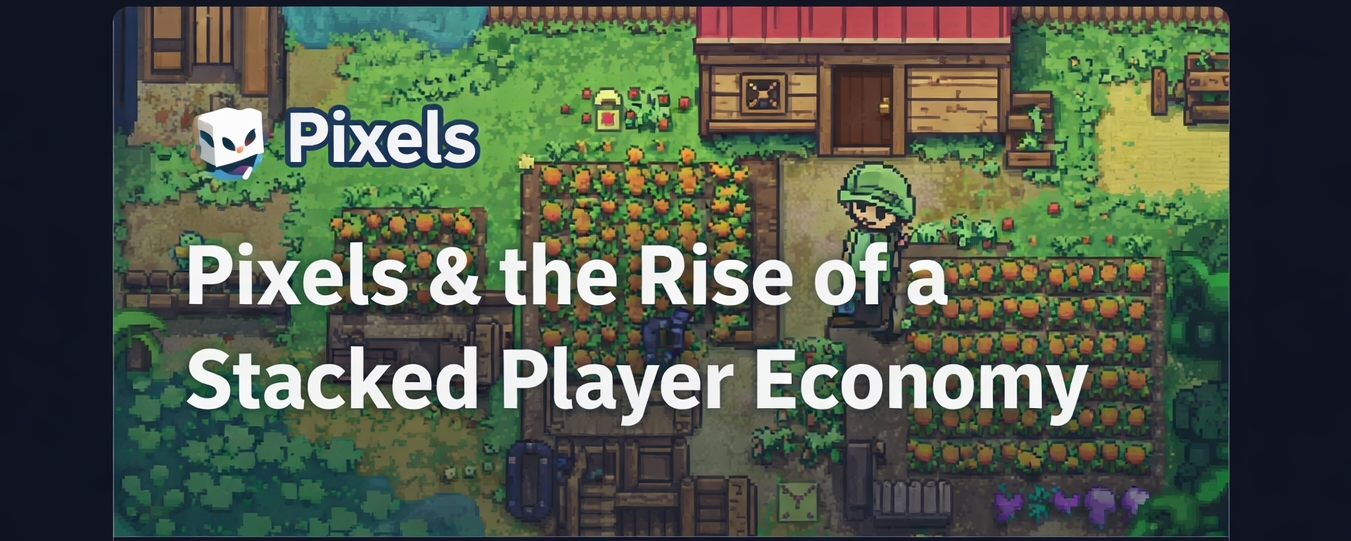
The shift happening inside @Pixels is bigger than most people realize. What started as a simple on-chain farming game is evolving into a layered ecosystem where time, coordination, and strategy actually compound. The Stacked ecosystem is the key driver behind this transformation—it turns isolated gameplay into something persistent and interconnected.
In traditional games, your progress is locked within a single loop. You grind, earn rewards, and often lose value over time as systems reset or inflate. But in Pixels, the Stacked design changes that dynamic. Your actions—whether it’s farming, trading, collaborating, or participating in the community—build on top of each other. This creates a system where effort doesn’t just pay once, it keeps contributing to your long-term position.
$PIXEL plays a central role in aligning this structure. It’s not just a reward token; it becomes a medium that connects gameplay, ownership, and economic activity. As more layers are added to the ecosystem, players are no longer just users—they become participants in a growing digital economy.
What makes this powerful is the social element. Progress in Pixels is no longer just individual; it’s collaborative and network-driven. Guilds, communities, and shared strategies amplify outcomes, making the ecosystem feel alive and adaptive.
The future of Web3 gaming won’t be defined by short-term incentives, but by systems that can sustain value over time. Pixels, through its Stacked ecosystem, is moving in that direction—where playing the game means building something that lasts. #pixel