
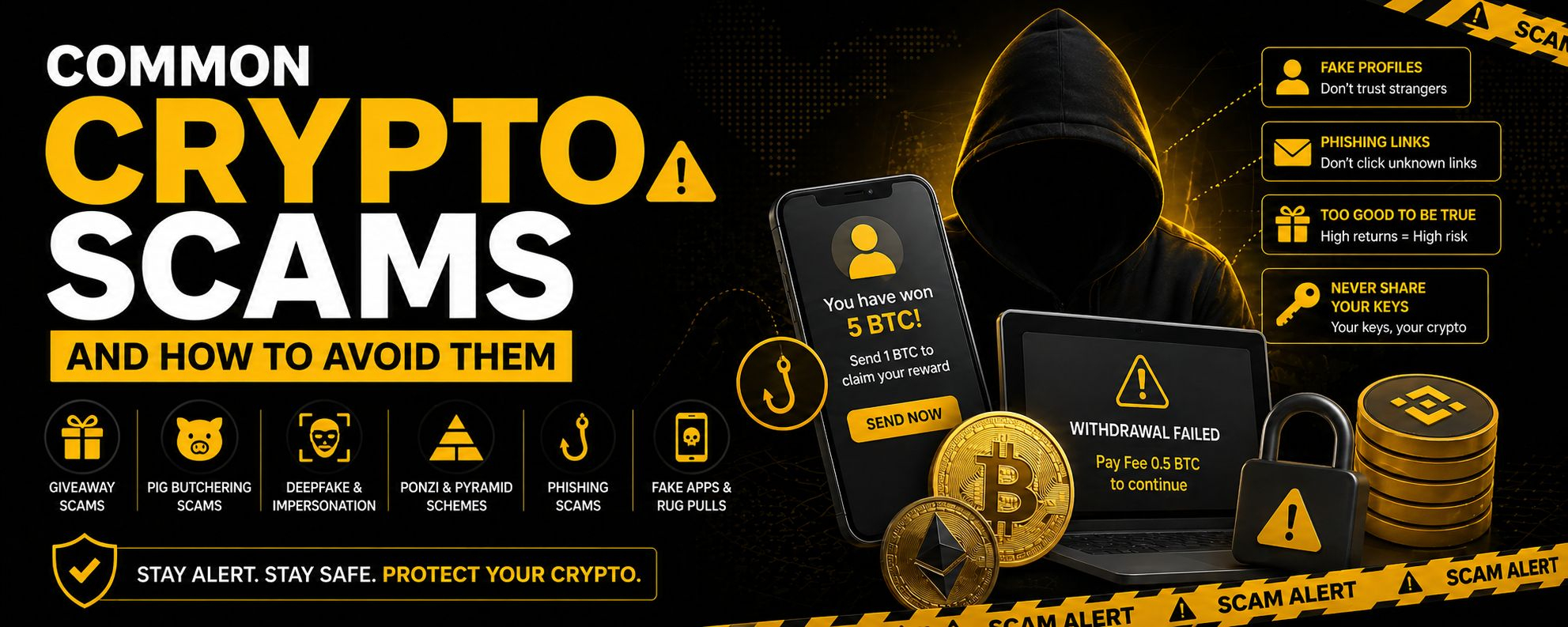

Cryptocurrency is fast, global, and hard to reverse once a transaction is done. These features are useful but they also make crypto a target for scams.
In this guide, you’ll learn the most common crypto scams and how to stay safe.
Why Crypto Scams Are So Common
Crypto transactions:
Cannot be reversed
Can be sent instantly anywhere
Don’t always require identity
Because of this, scammers try to trick people into sending funds willingly.
1. Social Media Giveaway Scams
This is one of the most common scams.
How it works:
A fake account pretends to be a company or influencer
It says: “Send 1 ETH, get 2 ETH back”
Fake comments make it look real
👉 Important rule:
Real platforms like Binance will never ask you to send crypto first.
2. Pig Butchering Scams
This is a more advanced and dangerous scam.
How it works:
A stranger contacts you (dating app, WhatsApp, etc.)
Builds trust over days or weeks
Introduces a “great investment opportunity”
Sends you to a fake trading platform
Shows fake profits
Blocks withdrawals and asks for more fees
🚩 Warning signs:
Someone you don’t know talks about investing
Pressure to use a specific platform
Asking for fees before withdrawing
3. AI Deepfake & Impersonation Scams
Scammers now use AI to look more real.
They may:
Fake videos of celebrities or crypto leaders
Clone voices of trusted people
Pretend to be support agents
👉 Always verify through official websites or apps before trusting any message.
4. Ponzi and Pyramid Schemes
These scams promise high or guaranteed returns.
How they work:
Old investors are paid using money from new investors
No real business or profit exists
Eventually, the system collapses
Famous examples:
Bitconnect
OneCoin
PlusToken
🚩 Red flag: If returns sound too good to be true, they usually are.
5. Fake Mobile Apps
Some scam apps look exactly like real crypto apps.
What happens:
You download a fake wallet or exchange
You deposit funds
The scammer controls the wallet
👉 Always:
Download apps from official websites
Check the developer name carefully
6. Phishing Scams
Phishing tries to steal your login details or wallet access.
Common tricks:
Fake emails asking you to “log in urgently”
Fake websites that look real
Messages pretending to be support
⚠️ Golden rule:
Never share your seed phrase or private key with anyone.
7. Pump-and-Dump & Rug Pulls
These scams use hype instead of hacking.
How they work:
Influencers promote a token
Price goes up quickly
Insiders sell (dump)
Price crashes
Or:
Developers take funds and abandon the project (rug pull)
👉 Always research before investing.
How to Stay Safe
Here are simple safety tips:
✅ Never share your private key or seed phrase
✅ Verify everything through official sources
✅ Be careful with strangers offering investment advice
✅ Avoid “guaranteed profit” promises
✅ Double-check website URLs and apps
✅ Don’t rush scammers create urgency
Final Thoughts
Crypto scams are becoming more advanced, especially with AI. But most scams still rely on the same thing: tricking you into trusting them.
If you stay cautious, verify information, and avoid emotional decisions, you can protect yourself from most threats.
In crypto, security is your responsibility.
#CryptoScams #awareness #educational_post #BinanceSquareFamily #Binance