The energy market is gearing up for a major supply shock. Between maritime blockades and stock saturation, Iran is running out of steam. Here’s the lowdown on the situation:
🚢 155 Million Barrels in "Stasis"
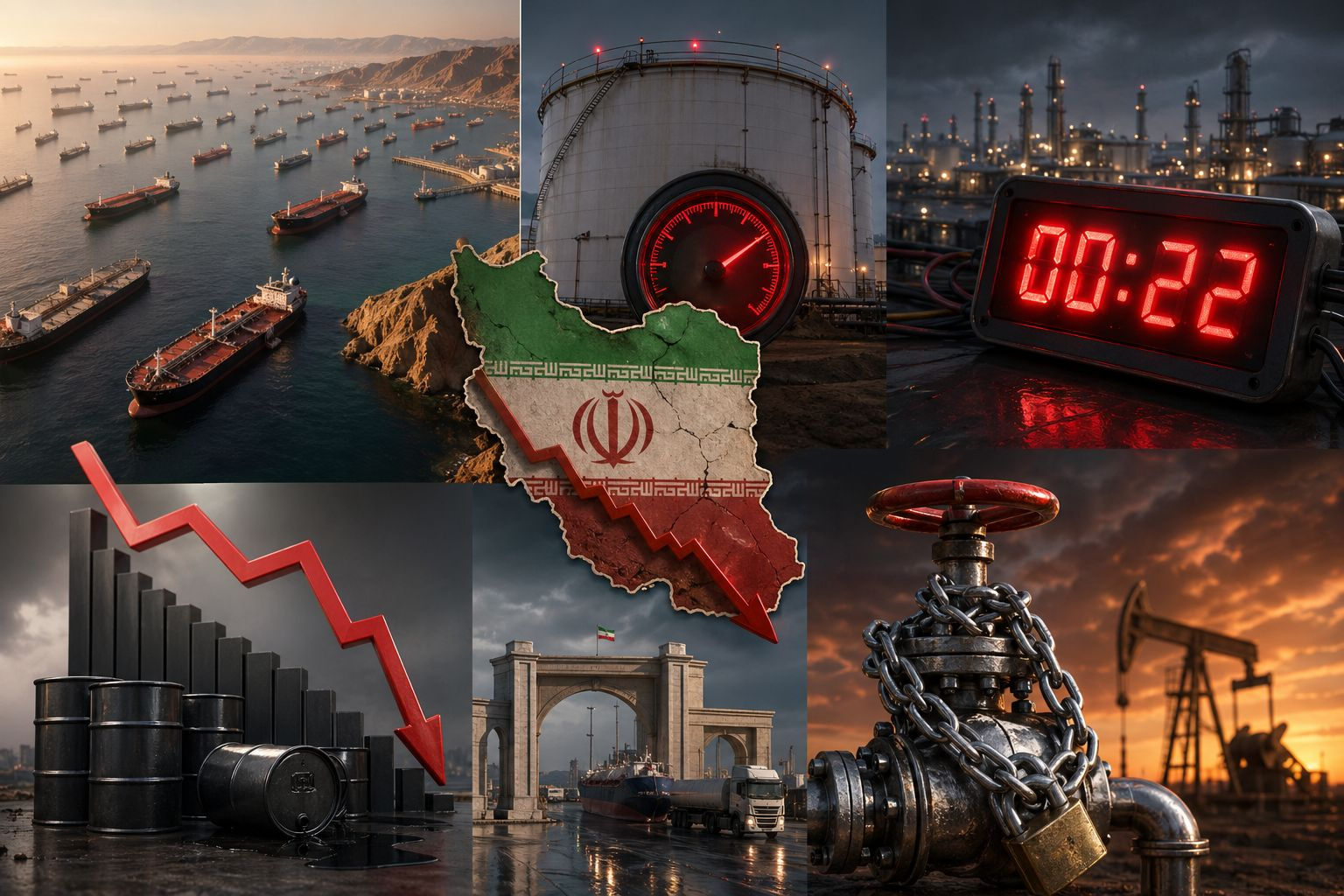
Floating storage is going through the roof. About 155 million barrels of Iranian crude are currently stuck at sea, especially near the port of Chabahar. With the Strait of Hormuz under blockade, exports are paralyzed: tankers have turned into giant warehouses with no destination.
⏳ Countdown: T-22 days until Saturation
Iran's domestic storage capacity is on the brink. Estimates suggest only 12 to 22 days remain before the tanks are full.
The consequence? Once storage is maxed out, Iran will have to seal its wells.
The risk: Closing an oil well is a heavy, costly, and often irreversible technical operation in the short term.
📉 Exports in free fall (-70%)
The outflow has collapsed by 70%. This blockage forces the country into a massive and mandatory production cut of 1.5 million barrels per day (bpd) starting mid-May 2026.
💰 A Financial Time Bomb
If payment delays have acted as a temporary "buffer" for the state's budget, reality is catching up with Tehran. Losing 1.5M bpd is like cutting the country's main financial artery. The economic shock is set to be catastrophic.
📍 Chabahar: The Epicenter of the Shock
Chabahar port is now the focal point for global markets. The total congestion in this area is the number one indicator of the effectiveness of the "hermetically" sealed maritime embargo imposed by the United States.
The bottom line: We're hitting a breaking point. If production halts due to lack of storage, the impact on global energy prices could be immediate and brutal.
$CL $BZ $NATGAS #EnergyCrisis #OilMarket #iran #macroeconomy