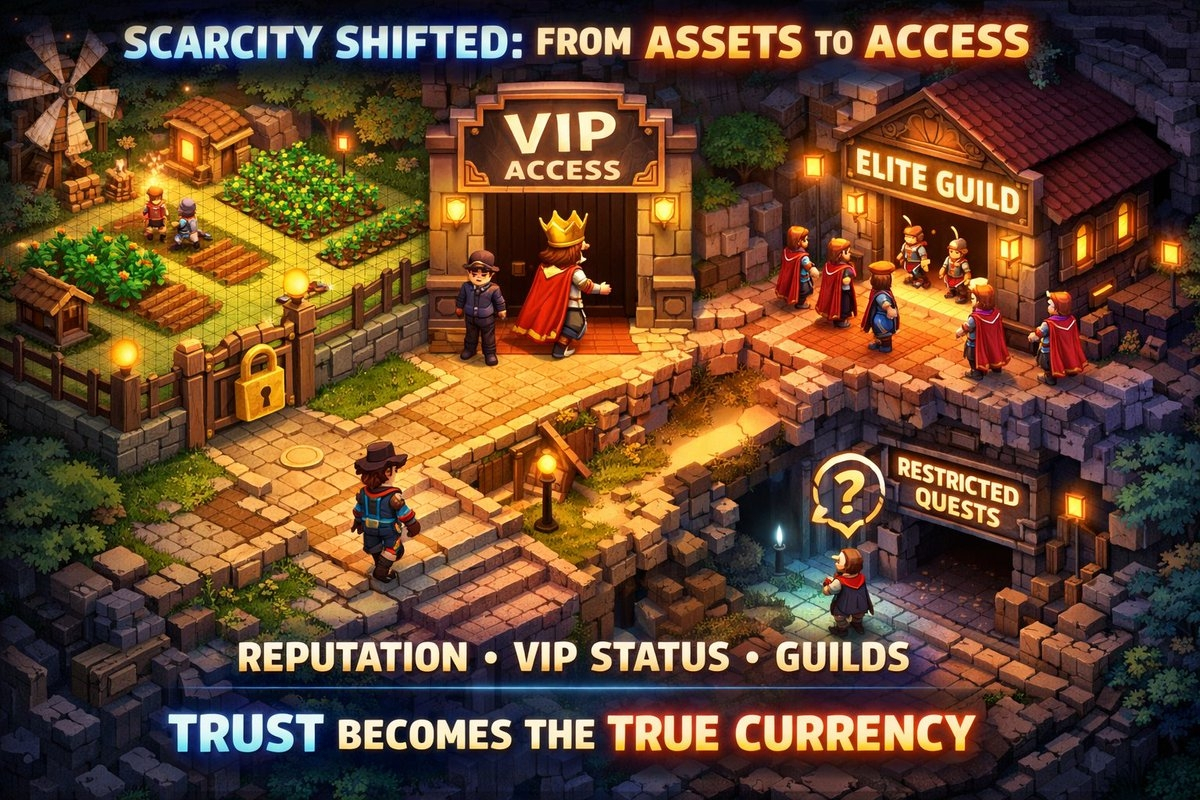
Most Web3 games have had the same problem for years, and honestly, it's a pretty obvious one once you've spent enough time around this space. They weren't really games. They were financial products wearing game costumes, dangling token rewards in front of players and hoping nobody would notice the shallow mechanics underneath. For a while, that worked. People showed up because the money was good. Then the rewards dried up, the token charts rolled over, and suddenly those "thriving communities" looked more like abandoned shopping malls.
That's the ugly truth.
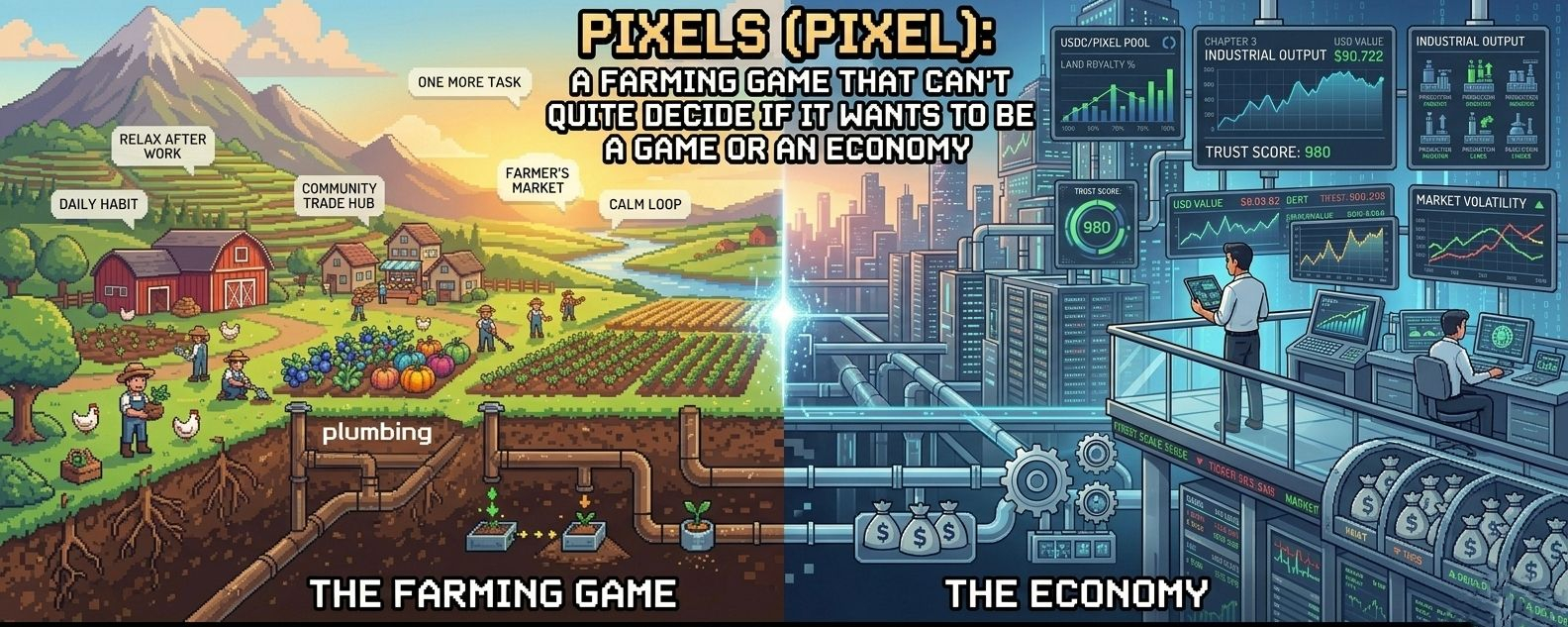
Pixels feels different. Not perfect. Not immune to the usual crypto madness. But different in a way that actually matters. The first time you look at it, you might think it's just another pixel-art farming game. Crops, resources, crafting, land, a charming little world where everyone seems busy doing something productive. It looks simple. Maybe even too simple. But that simplicity is deceptive. Underneath it sits one of the smartest behavioral systems we've seen in Web3 gaming.
And that's really what Pixels is selling, whether people realize it or not.
Not just gameplay. Not just tokens. Habit.
That distinction matters a lot more than most investors appreciate.
Built on Ronin Network, Pixels benefits from infrastructure that actually makes sense for gaming. This sounds obvious, but in crypto, obvious things are often treated like revolutionary breakthroughs. Nobody wants to pay outrageous gas fees every time they harvest a crop or craft an item. That would be ridiculous. It would kill the experience instantly. Ronin solves that problem by being fast, cheap, and largely invisible to the player, which is exactly how blockchain should work in games.
The best technology disappears.
You shouldn't have to think about it.
That's one lesson this industry has learned the hard way.
Pixels didn't become one of Ronin's flagship titles by accident. The move from Polygon to Ronin was a massive turning point. User numbers exploded. Wallet activity surged. Liquidity followed attention, as it usually does. But the important part wasn't the migration itself. It was what happened afterward. Players stayed. In crypto, attracting users is easy if you throw enough incentives at them. Retaining them? That's where the bodies are buried.
Pixels actually managed it.
And when you really dig into why, it becomes pretty fascinating.
The gameplay loop is almost deceptively ordinary. Plant crops. Wait. Harvest. Craft. Trade. Explore. Upgrade. Repeat. On paper, it doesn't sound groundbreaking. But the magic of great game design rarely shows up on paper. It's in the rhythm. The timing. The way one action naturally leads to the next. You log in intending to check one thing, and thirty minutes later you're reorganizing inventory, planning production chains, chatting with guild members, and somehow wondering where your afternoon went.
That's not luck.
That's design.
A lot of blockchain projects still think utility means complexity. It doesn't. Utility often means removing friction until participation becomes second nature. Pixels understands this better than most. The game doesn't force blockchain down your throat. It simply lets ownership emerge naturally through play. That's a subtle but critical difference.
Traditional games rent you your progress. Pixels lets you own parts of it.
That changes how players behave.
When an item has real value, when land can generate resources, when your effort compounds into something transferable, your relationship with the game shifts. It becomes more than entertainment. Not purely an investment, either. Something in between. A digital economy layered over a genuinely enjoyable game loop.
That's a powerful combination.
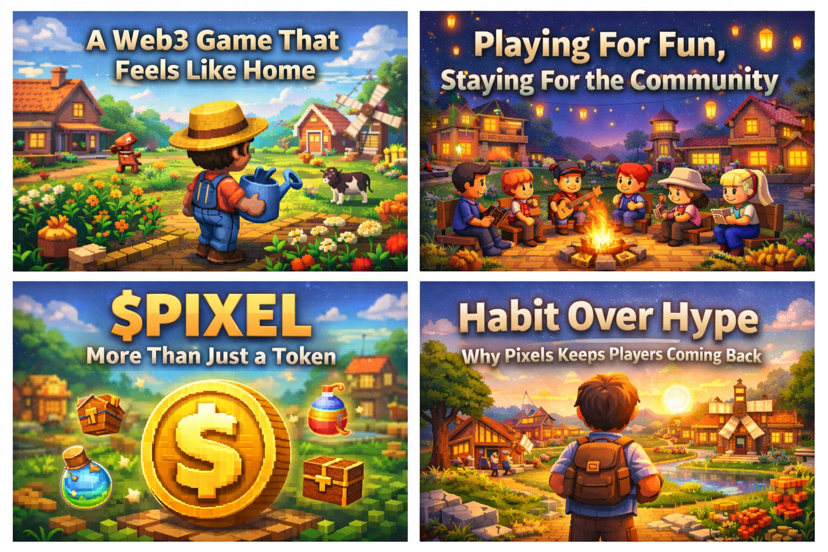
Of course, this is still crypto, and crypto never makes things easy. The PIXEL token exists at the center of everything, which creates both opportunity and risk. Tokenized economies are delicate creatures. Reward players too generously, and inflation eats the system alive. Restrict rewards too much, and engagement falls off a cliff. There isn't some magical formula that solves this forever. It's constant balancing. Constant adjustment. Constant trade-offs.
One bad patch can cause chaos.
Anyone who tells you otherwise hasn't managed a live economy.
Yet Pixels has handled this balancing act surprisingly well so far. Not flawlessly, but well enough to inspire confidence. The token serves actual in-game purposes, which sounds like a low bar, but in Web3 gaming it's astonishing how often projects fail even that test. PIXEL isn't just there to be traded. It's used. Spent. Circulated. Consumed.
That's healthy.
Healthy systems survive volatility better.
And volatility, let's be honest, is the one thing crypto always guarantees.
Then there's the social layer, which might be the most underrated part of the whole ecosystem. Games don't become sticky because of mechanics alone. Mechanics attract players. Relationships keep them around. Pixels leans heavily into that reality. Guilds, marketplaces, collaborative tasks, shared goals these aren't cosmetic features. They're retention infrastructure.
People come for rewards.
They stay for people.
That pattern repeats across every successful online game ever made.
Web3 doesn't change human nature.
It just gives it new tools.
The art style helps, too. Pixel graphics aren't a compromise here; they're an advantage. Lightweight, recognizable, easy to expand, and timeless in a way that hyper-realistic games often aren't. Chasing graphical perfection can become an endless money pit. Pixels sidesteps that trap entirely. The visuals communicate exactly what they need to communicate, no more, no less.
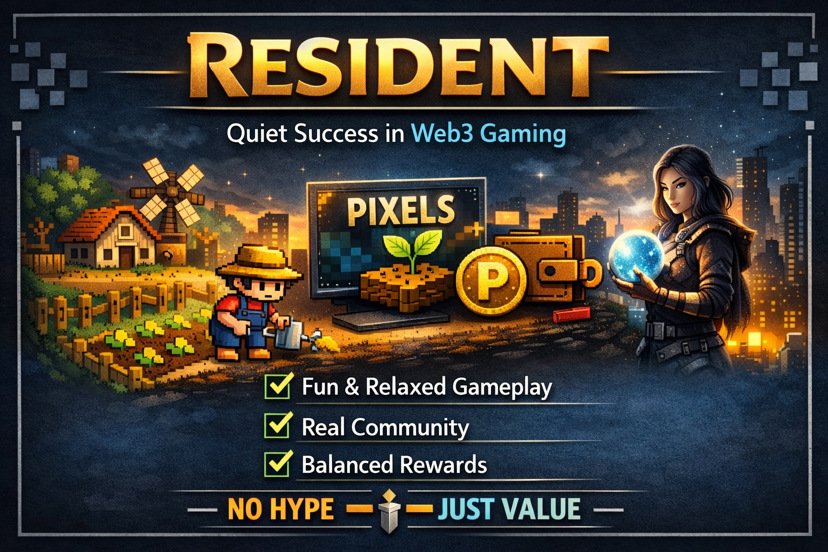
Sometimes less really is more.
Especially in browser-based and cross-platform environments.
Now, none of this guarantees long-term dominance. That's where people often get carried away. Success in Web3 gaming is brutally fragile. Tastes change. Competitors improve. Token cycles turn vicious. Today's leader can become tomorrow's cautionary tale with surprising speed. We've seen it happen over and over again.
Pixels still faces enormous challenges.
Economic sustainability remains the biggest one. It always is. Creating a virtual economy that rewards players, supports creators, attracts investors, and remains fun over multiple years is incredibly difficult. Probably harder than most outsiders realize. It's part game design, part monetary policy, part sociology, and part pure improvisation.
A small imbalance can spiral quickly.
And crypto communities aren't exactly known for their patience.
Competition will intensify, too. Traditional studios are moving into blockchain, slowly but inevitably. When that happens at scale, early movers like Pixels will need more than community goodwill to maintain their position. They'll need relentless execution.
No shortcuts.
No coasting.
The market is too unforgiving for that.
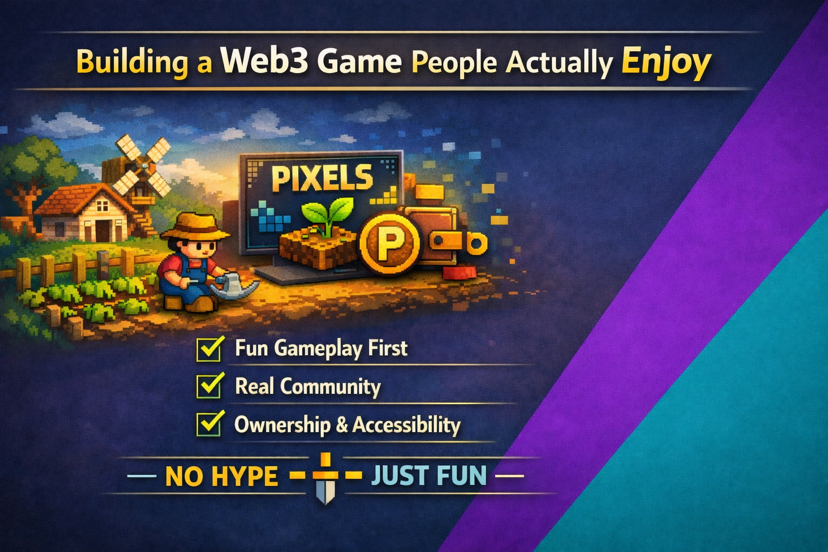
But here's the thing I keep coming back to: if you removed the token tomorrow, would people still play? With most Web3 games, the answer is painfully obvious. With Pixels, I think many would. Maybe not all, but enough. Enough to matter. That's a huge advantage.
Because genuine engagement compounds.
Speculation doesn't.
Speculation is loud, exciting, intoxicating even. But it's temporary. Habits are quieter. More durable. Far more valuable over the long run. Pixels seems to understand this at a fundamental level. It isn't merely building a game economy. It's building daily routines.
And routines are incredibly hard to break.
That's why social media companies obsess over them. It's why mobile gaming became such a monster industry. It's why loyalty, once established, can become almost irrational.
Pixels taps directly into that same psychology.
The blockchain layer simply amplifies the incentives.
Ronin's role here shouldn't be overlooked either. Ronin Network has quietly become one of the most credible gaming ecosystems in crypto. It understands what many Layer 1s still don't: gamers don't care about consensus mechanisms. They care about smooth experiences. Fast transactions. Minimal friction. Ronin delivers that.
Infrastructure matters.
But only when players barely notice it.
That's the sweet spot.
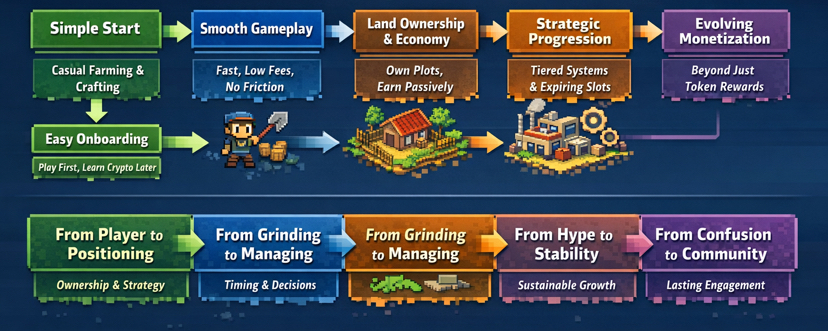
Will PIXEL become one of the defining gaming tokens of this cycle? Maybe. Maybe not. Anyone pretending certainty is either naïve or selling something. Crypto has a way of humiliating confident predictions. But the ingredients are here. Strong retention. Active community. Functional token utility. A network built specifically for gaming.
That's a rare mix.
And rare usually gets noticed.
In the end, Pixels represents something bigger than itself. It's proof that Web3 games don't have to choose between fun and financial ownership. They can have both, if designed correctly. That's been the promise all along. Most projects simply failed to deliver it.
Pixels, at least so far, actually has.
That's why people keep watching.
That's why players keep returning.
And that's why, when the next wave of blockchain gaming arrives, Pixels will almost certainly be part of the conversation. Maybe as a leader. Maybe as a blueprint. Possibly both.
@Pixels #pixel $PIXEL